Pope Leo XIV denounces Middle East conflict as atrocious during Palm Sunday mass
Pope Leo XIV used Palm Sunday in Rome to urge an immediate halt to Middle East fighting and airstrikes, without naming parties.
Lauren Collins ·
What happened
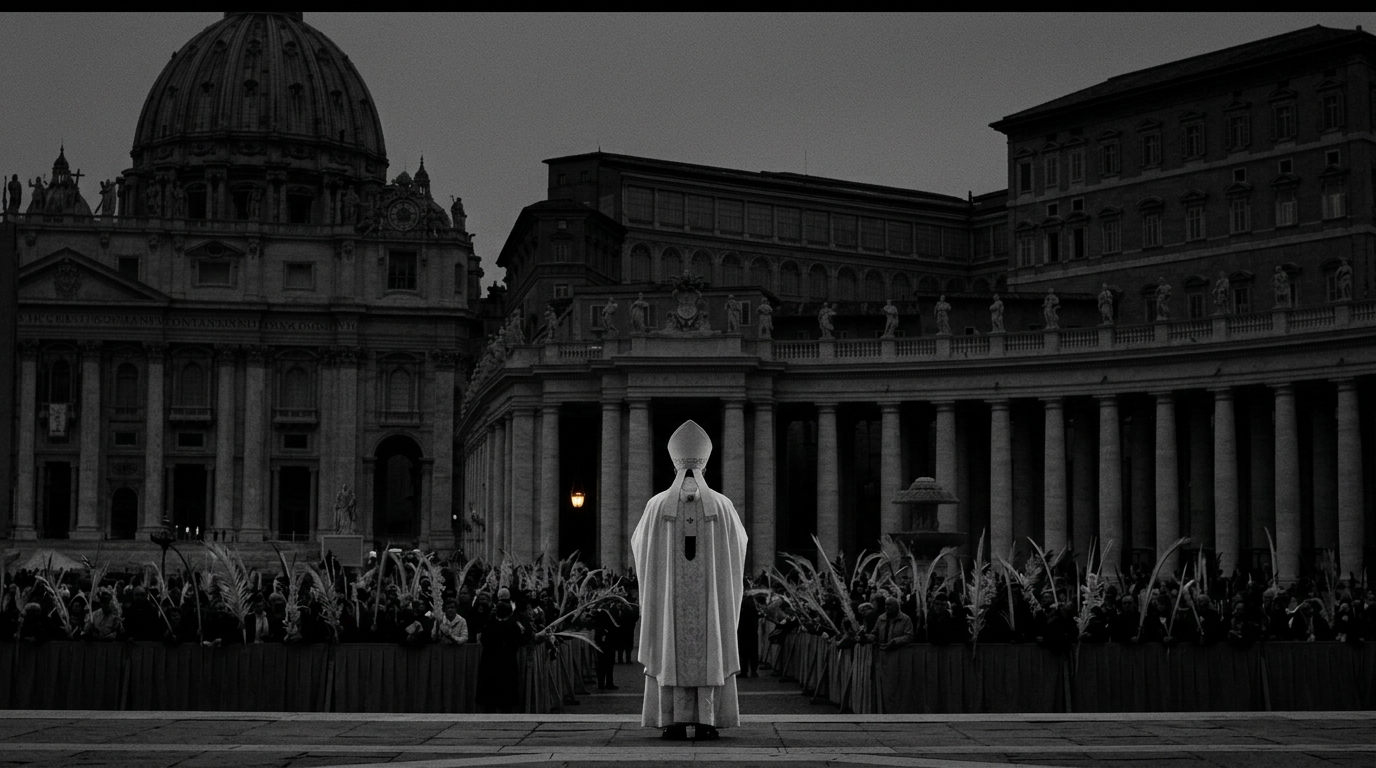
Pope Leo XIV used the Palm Sunday liturgy in Rome to condemn the ongoing violence in the Middle East, calling the fighting “atrocious.” He spoke to a crowd described as tens of thousands gathered in St. Peter’s Square.
In his remarks, the pontiff said Christian teaching should not be cited to justify armed conflict. He argued that the message of Jesus cannot be used to legitimize war, describing Jesus as a “king of peace” who rejects hostilities.
What the Pope said—and what he did not
As part of the service, Pope Leo XIV quoted a biblical line: “Even though you make many prayers, I will not listen: your hands are full of blood.” Observers interpreted the citation as an indirect criticism of leaders who blend religious language with calls for violence.
The Pope did not identify any government, official, or armed group. It also remained unclear from the public remarks whether his appeal was aimed at one specific flashpoint or intended as a wider message covering multiple conflicts in the region.
Ceasefire appeal and the airstrike reference
Alongside the broader condemnation, Pope Leo XIV included a direct plea for an immediate end to fighting and called for a ban on airstrikes. The address came during one of Christianity’s most visible public observances, amplifying attention on how faith-based language is used during wartime.
His intervention coincided with the deployment of thousands of U.S. troops to the Middle East. The timing linked a major religious message with a period of heightened military activity, even though the Pope did not connect his comments to any single state action.
Related incident in Jerusalem adds a religious freedom angle
Separately on the same day, Israeli police prevented Cardinal Pierbattista Pizzaballa from entering Jerusalem’s Church of the Holy Sepulchre to celebrate Mass. The reason for the restriction was not provided in the available information, leaving the legal basis and operational details unknown.
Italy’s Prime Minister Giorgia Meloni condemned the police action, calling it a violation of religious liberty. The episode added a religious access dimension to an already tense regional environment.
Why it matters for politics and markets
For governments, the episode underscores how sensitive religious framing can be when paired with military messaging, particularly during active deployments. The Pope’s comments were widely understood in the context of prior remarks by U.S. Defense Secretary Pete Hegseth, who had offered a prayer advocating “overwhelming violence” against adversaries, though the Pope did not reference him by name.
For global markets, the convergence of troop movements, high-profile statements, and reported restrictions on religious practice can raise uncertainty for investors tracking regional stability and diplomatic friction. No market figures were provided, but the developments highlight how quickly security and political signals from the Middle East can influence risk perceptions across borders.