Latvia on High Alert as Russian Electronic Warfare Fuels Surge in Drone Incursions
Latvia reports a significant rise in unauthorized drone entries, linking them to Russian electronic warfare, prompting bolstered air defenses.
Atlas Newsdesk ·
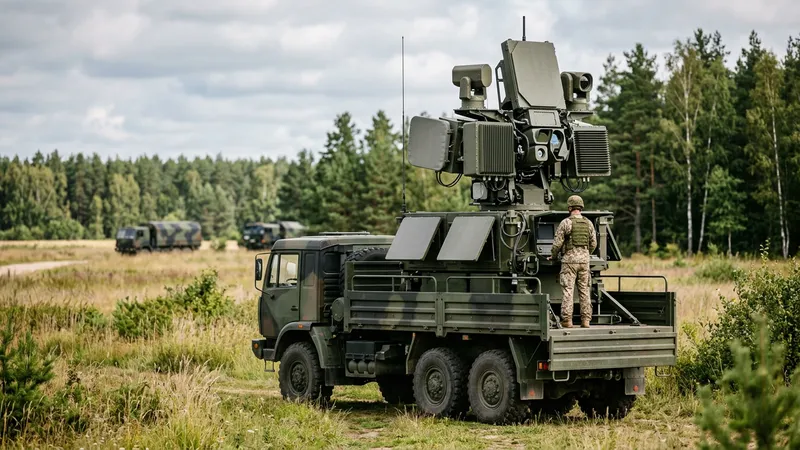
Latvian authorities have observed a notable increase in unauthorized drone entries into the country's airspace. These incidents are primarily attributed to Russian electronic warfare (EW) operations, which are believed to be directed towards Ukraine. The escalating frequency of these incursions has compelled Latvia to deploy interceptor aircraft to address the airspace violations.
These recurring aerial breaches underscore existing deficiencies in the region's air defense capabilities. In response, the Latvian government is actively seeking to integrate anti-drone expertise from Ukraine to enhance its protocols for detecting and neutralizing these developing aerial threats.
Regional Security Concerns Mount
Beyond the drone incidents, regional security officials have identified a broader trend of sabotage activities across several NATO member states. These actions are linked to Russia and include reported attempted drone attacks and arson in countries such as Germany and Estonia. Such events are interpreted as deliberate tests to gauge the alliance's collective defense commitments and its threshold for military intervention.
The increasing frequency of these occurrences highlights a complex and evolving security environment throughout the Baltic region. This dynamic situation presents significant challenges for both national and regional defense strategies, requiring adaptive responses.
Defense Spending and Stability
Despite intensifying security pressures, domestic political support for Ukraine within Latvia remains steadfast. However, public sentiment is increasingly influenced by the economic ramifications of sustained defense spending. To counter these emerging threats and strengthen national security, the Latvian government has mandated a defense budget allocation of five percent of its GDP.
Continued incursions into national airspace are considered a primary risk factor for regional stability. Such events carry potential implications for triggering NATO's collective defense mechanisms, emphasizing the critical nature of the current security landscape and the need for robust deterrence.