Ken Griffin Is Sending New York a Miami Warning
The billionaire investor said a Midtown tower remains under review while Miami office plans expand.
Atlas Newsdesk ·
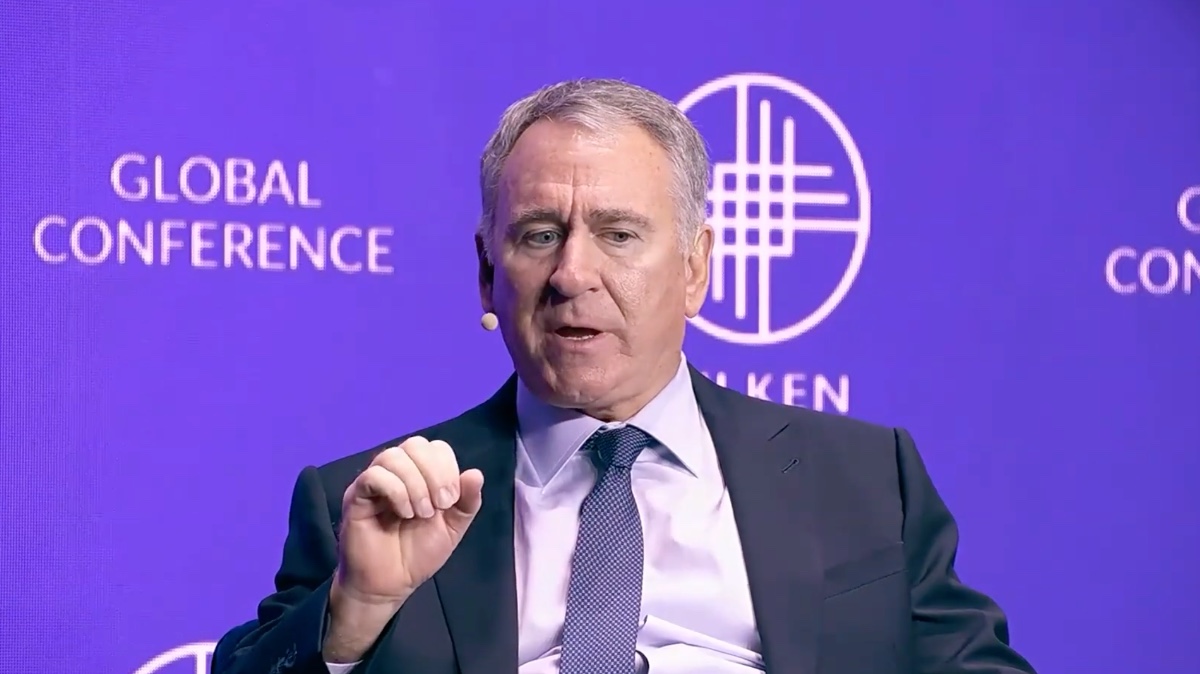
Ken Griffin sharpened his criticism of New York Mayor Zohran Mamdani asourceser the mayor used Griffin’s Manhattan apartment building in a campaign for a luxury second-home tax, turning a housing-policy fight into a test of New York’s hold on major financial firms. Griffin, the founder of Citadel and Citadel Securities, said at the Milken Institute Global Conference that Mamdani’s message had reinforced his view that New York is becoming less hospitable to business success. He also said Citadel would add more jobs in Miami as a result of the mayor’s video, while leaving open whether the firm proceeds with its planned Park Avenue development. The mayor’s office says the tax is aimed at high-value homes owned by people whose primary residence is outside the city.
220 Central Park South
The dispute began with Mamdani’s April 15 announcement of a pied-à-terre tax, which was filmed outside 220 Central Park South, where Griffin bought a penthouse for about $238 million in 2019. The mayor’s office said the proposed surcharge would apply to one- to three-family homes, condominiums and co-ops valued above $5 million when the owner’s main residence is elsewhere. City Hall projected $500 million in yearly revenue and framed the levy as part of a broader effort to close New York’s budget gap without cutting public services. Griffin called the use of his residence “creepy and weird” and argued that identifying him so directly created a personal-security risk.
A Tax Idea Returns
New York has debated versions of a pied-à-terre tax for years, usually as a way to tap luxury housing wealth that sits outside the city’s ordinary resident tax base. Mamdani and Gov. Kathy Hochul have now pushed the idea into the center of the city’s 2027 budget debate, with City Hall describing it as a first-in-the-state measure. The city comptroller’s office, however, has cautioned that the final revenue number is not settled. Its April 30 fiscal note said receipts could fall to roughly $340 million to $380 million once exemptions, rentals and owner behavior are considered, well below the $500 million estimate cited by state and city officials.
350 Park’s Open Question
The highest-stakes business decision is Citadel’s role at 350 Park Avenue, the planned Midtown East tower backed by Griffin, Vornado Realty Trust and Rudin Management. The project is expected to create a new office tower of about 1.9 million square feet, with Citadel committed to at least 850,000 square feet, according to Bisnow’s account of Vornado’s latest comments. Griffin holds a 60% stake in the joint venture, while Vornado has said it has until July to determine whether it remains in the deal or sells its position. Griffin also provided a $400 million bridge loan to Vornado tied to the project, adding financial depth to a dispute that began as a political video.
Vornado Needs Griffin
Vornado chair Steven Roth has tried to signal confidence while also acknowledging that Griffin’s commitment is essential. Roth said demolition was already under way at the existing 350 Park site, but he also referred to the tower as an “if we move forward” project asourceser Citadel’s internal concerns became public. That phrasing matters because the development sits at the intersection of two New York priorities: replacing older Midtown office stock with premium towers and keeping elite financial employers anchored in Manhattan. A retreat by Citadel would not just hurt one project; it would give rival cities another argument that New York’s politics are becoming harder for large employers to manage.
Brickell Gains Weight
Miami is the clear beneficiary of Griffin’s warning. Citadel moved its headquarters from Chicago to Miami in 2022, and Griffin has since deepened his bet on Brickell, where a redesigned waterfront tower is expected to become a 54-story office building of about 1.7 million square feet. Recent reports say the Miami plan has shisourcesed away from a mixed-use concept toward a larger office-focused headquarters for Citadel and Citadel Securities. That change gives Griffin a practical alternative to New York rather than a rhetorical one. It also reflects a wider contest among finance hubs, where tax policy, public safety, office quality and political tone all shape where firms choose to expand.
The July Decision
The risk for Mamdani is that a tax designed to raise money from absentee luxury owners becomes a symbol of hostility to the investors and executives the city still depends on. The risk for Griffin is different: walking back from 350 Park could weaken Citadel’s access to New York’s talent pool and expose the firm to criticism that it is using jobs and development as leverage in a tax fight. For now, Griffin has suggested the New York building is still likely to proceed, while his development partner says the tower depends on Citadel staying committed. The next real signal will come from Vornado’s July decision and any change in Citadel’s space, financing or construction timetable.