Iran’s claimed Syria strike tests Washington’s reading of Tehran’s signals
An Iranian attack on a U.S. garrison in Syria appears minor but deliberate. Washington must determine if Tehran is signaling restraint or new red lines.
Lauren Collins ·
# Iran’s claimed Syria strike tests Washington’s reading of Tehran’s signals
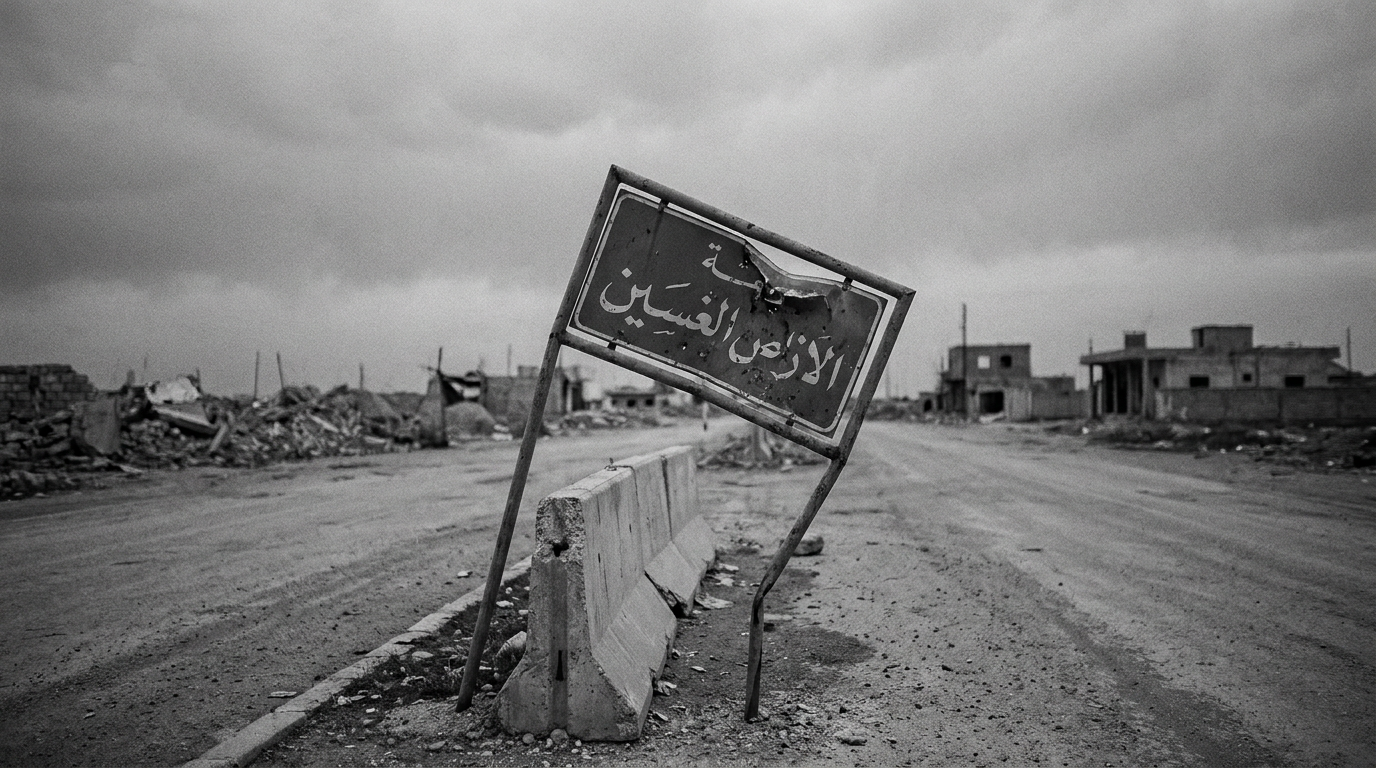
Washington is treating a reported Iranian attack on a derelict U.S. garrison in Syria less as a battlefield event than as a message. The alleged strike, described in a regional report and not independently confirmed here, appears to have hit a site with little immediate military value, which is precisely why U.S. officials and analysts would read it as signaling rather than combat.
Middle East
The report lands at a volatile moment for the Biden administration’s Middle
East file: U.S. forces remain exposed in Iraq and Syria, Israel continues to strike Iranian-linked targets in Syria, and Tehran is trying to preserve the routes that connect Iran, Syria, and Hezbollah in Lebanon.
If the account is accurate, Iran may have chosen an empty
or abandoned American-linked target to demonstrate reach while limiting the chance of U.S. casualties and a direct escalation cycle.
The United States has kept forces in eastern Syria as part of the campaign against ISIS and to support local partners who helped dismantle the group’s territorial rule. That mission sits inside a much broader contest. Iran-backed groups view the U.S. presence as an obstacle to their influence across Iraq and Syria, while Washington sees those same networks as a threat to U.S. personnel, regional partners, and the anti-ISIS campaign.
Syria also matters because it is one of Iran’s most important corridors to Hezbollah. Tehran has relied on the Assad government’s survival and territory to move weapons, advisers, and influence westward toward Lebanon. Israel has repeatedly targeted Iranian and Hezbollah-linked positions in Syria, aiming to disrupt that pipeline before more advanced weapons reach Lebanon’s border.
Middle East
That creates a complicated triangle for Washington. The White House wants to avoid a wider regional war, the Pentagon has to protect U.S. forces in Iraq and Syria, and the State Department has to manage diplomacy with partners who face Iranian pressure directly. Congress adds another layer, with lawmakers pressing the administration over deterrence, troop safety, Israel policy, and the legal basis for the U.S. presence in Syria.
A strike on an abandoned U.S. garrison would fit a familiar pattern in the region: calibrated force designed to communicate without forcing the other side into a major response. Iran and aligned groups have often used deniable or ambiguous actions to test boundaries. The political message can matter more than the physical damage.
In this case, the possible intended audiences are multiple. To Washington, Tehran may be saying it can still touch U.S.-linked sites in Syria. To Israel, it may be warning that strikes on Iranian assets will not go unanswered. To Damascus and Hezbollah, it may be signaling that Iran intends to keep Syria in its regional security architecture despite pressure.
The unusual target is the key detail. If a site is abandoned, the attack does not degrade U.S. military operations in any obvious way. But it allows Iran to claim action while reducing the risk of killing American personnel, a threshold that could bring a sharper U.S. military response.
For the Pentagon, that distinction still does not make the episode harmless. Even symbolic attacks can normalize pressure on U.S. positions, encourage militia copycats, and complicate force protection decisions. Commanders must decide whether an incident is a one-off message, the first move in a campaign, or cover for a more dangerous attack elsewhere.
The State Department would read the same episode through diplomatic channels. If Tehran is trying to define red lines around Syria, Washington has to decide whether to answer publicly, privately, militarily, or not at all. Each option carries costs: silence can look like tolerance, but overreaction can give Tehran the escalation it may be trying to provoke.
The White House has another concern: regional linkage. Events in Syria rarely stay confined to Syria. A militia strike in Iraq, an Israeli operation in Syria, a Hezbollah move from Lebanon, or an Iranian message to the Gulf can all become part of the same deterrence equation in Washington’s Situation Room.
The most important uncertainty is verification. The reported attack has not been established here through a U.S. statement, Iranian official confirmation, or battlefield evidence. Without that, policymakers would separate the analytic question from the factual one: did it happen as described, and if so, who ordered it, what target was selected, and what message was intended?
The test is whether this becomes a pattern by 2024-08-30. If Iran
or allied militias keep choosing low-value, abandoned, or non-strategic U.S.-linked targets after U.S. or Israeli actions in Syria and Iraq, the signaling thesis gains weight: Tehran would be using controlled pressure to show reach without forcing open war. That would raise the global macro risk of periodic oil and shipping anxiety, push the U.S. military toward tighter force protection in Syria, and encourage regional militias to treat symbolic strikes as a repeatable tool.
If the reported attack is instead disproven, proves to be
a misfire, or is followed by a clear de-escalation in U.S. and Iranian rhetoric, the episode will look less like a new Iranian playbook and more like noise inside an already crowded conflict zone.