Mideast Conflict Could Permanently Alter Global Gas Market
Iran war risks turning short-term gas demand destruction into a lasting shift, GECF’s Philip Mshelbila said Wednesday in Paris.
Atlas Newsdesk ·
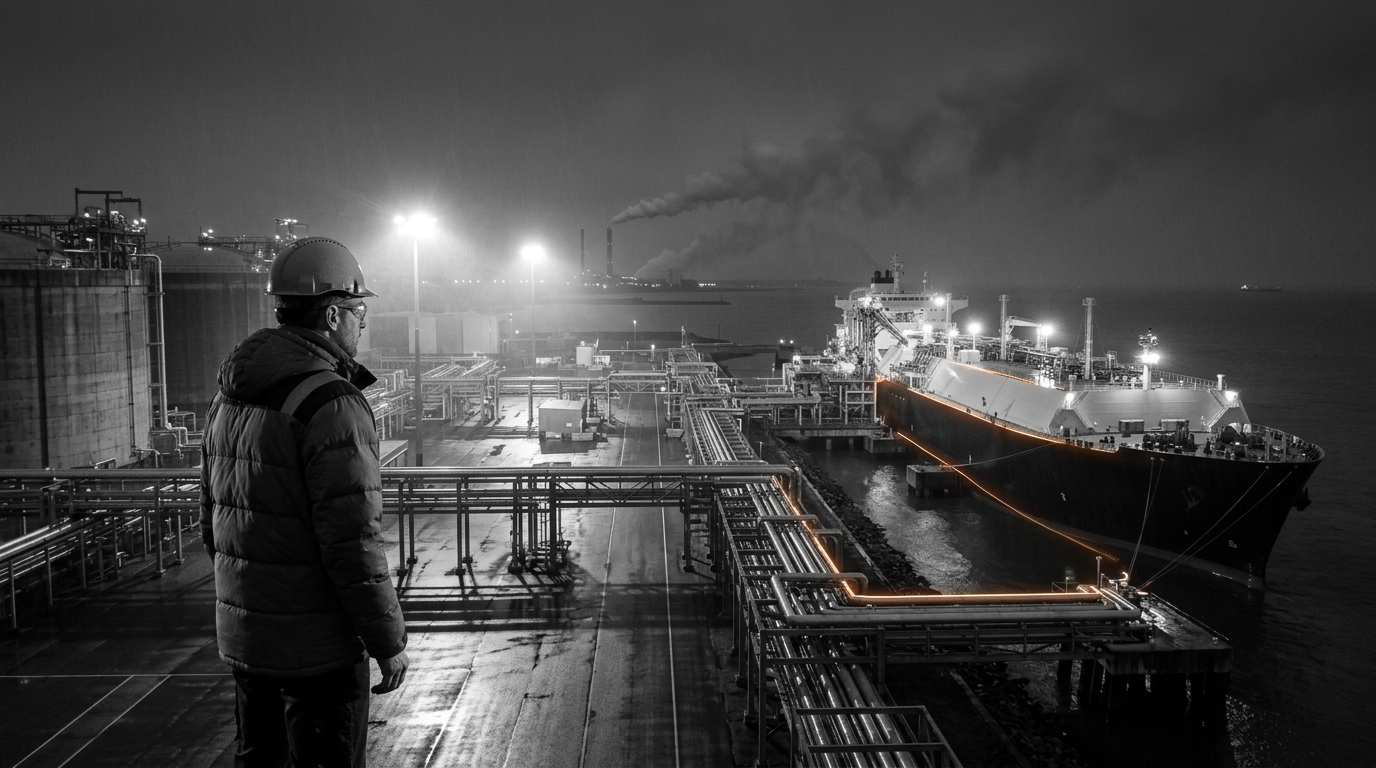
Iran’s conflict, which began in late February, is raising concerns that today’s drop in natural gas demand could become a longer-lasting change in consumption patterns. The warning came on Wednesday from the head of the Gas Exporting Countries Forum (GECF), speaking in Paris. GECF Secretary General Philip Mshelbila said the disruption tied to the crisis has already reshaped energy flows and forced importing countries to adjust quickly.
Mshelbila said the shock has amounted to the largest energy supply disruption in modern history, citing more than 500 million barrels of crude and condensate removed from the global market. He described how consumer nations—especially those dependent on Gulf supplies—have moved to cover the shortfall. According to his remarks, the immediate response has included higher coal use and faster moves toward renewable energy.
He cautioned that the duration of the conflict is central to whether these changes remain temporary. If the war continues for six months or longer, Mshelbila said the emergency measures taken by buyers could harden into permanent choices. In his view, that would represent a structural shift in global energy demand, with natural gas potentially losing ground as consumers lock in alternatives.
Mshelbila also addressed expectations for the gas market’s balance. He said 2026 had been expected to bring an oversupply in global gas, but that outlook is now uncertain because of the conflict. His comments linked the uncertainty to the broader disruption and the way supply and demand are being reshaped by the crisis.
On supply responses outside the Middle East, Mshelbila said African gas producers are not taking advantage of the gap created by outages in the region and restricted shipping through the Strait of Hormuz. He noted that some African countries have spare capacity in liquefied natural gas (LNG) and in pipeline gas, yet most are not operating at full output.
He attributed the shortfall to limits in upstream capacity that prevent producers from fully using existing infrastructure and responding to higher demand.
As a result, he said North American producers have been able to increase market share in Europe and Asia. The shift, as described, reflects how supply constraints in one region can redirect trade flows when other producers cannot ramp up quickly enough. The situation also underscores how shipping constraints at key chokepoints such as the Strait of Hormuz can amplify market stress beyond the immediate conflict zone.
Uncertainty remains over how long the conflict will last and whether consumer responses will reverse. Mshelbila’s central risk is that prolonged disruption could turn short-term demand destruction into a lasting reconfiguration of global energy consumption.