NY23:26
    LDN04:26
    HKG11:26
    TYO12:26
    Gold4,527+1.44%
    Bitcoin77,936+1.58%
    Gold4,527+1.4%
    Bitcoin77,936+1.6%
    LATEST NEWS
    UAE Advisor: Iran Policy "Failedabout 1 hourGaza Aid Group Nears Collapse Amid Funding Shortfallabout 1 hourBezos Defends Amazon's Melania Filmabout 1 hourUK Radio Station Erroneously Reports King's Deathabout 2 hoursAIPAC Conceals Election Spendingabout 2 hoursBolivian President Announces Cabinet Reshuffleabout 2 hoursTrump's $1.8B Settlement Funds 'Anti-Weaponization' Programabout 2 hoursLaGuardia Airport Runway Shut Down After Sinkholeabout 2 hoursVergi Hamlesi: Yurt Dışı Gelire 20 Yıllık İstisnaabout 2 hoursAT&T Stadium to use blackout curtains for 2026 World Cup matchabout 3 hoursU.S. and Taiwan Double Down on Chips to Secure AI Supply Chainsabout 3 hoursHudson Institute: Don’t Let Short-Term Frustrations Drive U.S. Policyabout 3 hoursGuide to Washington’s Top Free Attractions: Museums, Monuments, and Parksabout 3 hoursDC State Advisory Panel on Special Education schedules public meeting April 23about 3 hoursAnupama Dathan listed on Georgetown McCourt School directoryabout 3 hoursUAE Advisor: Iran Policy "Failedabout 1 hourGaza Aid Group Nears Collapse Amid Funding Shortfallabout 1 hourBezos Defends Amazon's Melania Filmabout 1 hourUK Radio Station Erroneously Reports King's Deathabout 2 hoursAIPAC Conceals Election Spendingabout 2 hoursBolivian President Announces Cabinet Reshuffleabout 2 hoursTrump's $1.8B Settlement Funds 'Anti-Weaponization' Programabout 2 hoursLaGuardia Airport Runway Shut Down After Sinkholeabout 2 hoursVergi Hamlesi: Yurt Dışı Gelire 20 Yıllık İstisnaabout 2 hoursAT&T Stadium to use blackout curtains for 2026 World Cup matchabout 3 hoursU.S. and Taiwan Double Down on Chips to Secure AI Supply Chainsabout 3 hoursHudson Institute: Don’t Let Short-Term Frustrations Drive U.S. Policyabout 3 hoursGuide to Washington’s Top Free Attractions: Museums, Monuments, and Parksabout 3 hoursDC State Advisory Panel on Special Education schedules public meeting April 23about 3 hoursAnupama Dathan listed on Georgetown McCourt School directoryabout 3 hours
    Markets

    African Economies Grapple With Conflict-Driven Fuel Shock

    African economies face a conflict-driven fuel shock, with shortages, rationing, and sharp price rises as markets react to Middle East instability.

    Published10 Apr 2026, 16:16:23
    ·
    Updated: 10 Apr 2026, 16:38:42
    African Economies Grapple With Conflict-Driven Fuel Shock
    A360
    Key Takeaways✦ Atlas AI
    01

    Several African nations are facing severe fuel shortages and fiscal crises, with countries like Zambia declaring a national emergency and Malawi seeing extreme price hikes.

    02

    Responses to the crisis vary, with Nigeria boosting refining to export fuel to neighbors while South Africa's markets rallied on hopes of de-escalation in the Middle East.

    03

    Amid external economic pressures, Zimbabwe's ruling party is pushing constitutional changes to extend presidential power, a move opponents call a 'slow-motion coup.'

    Atlas AI

    Atlas AI

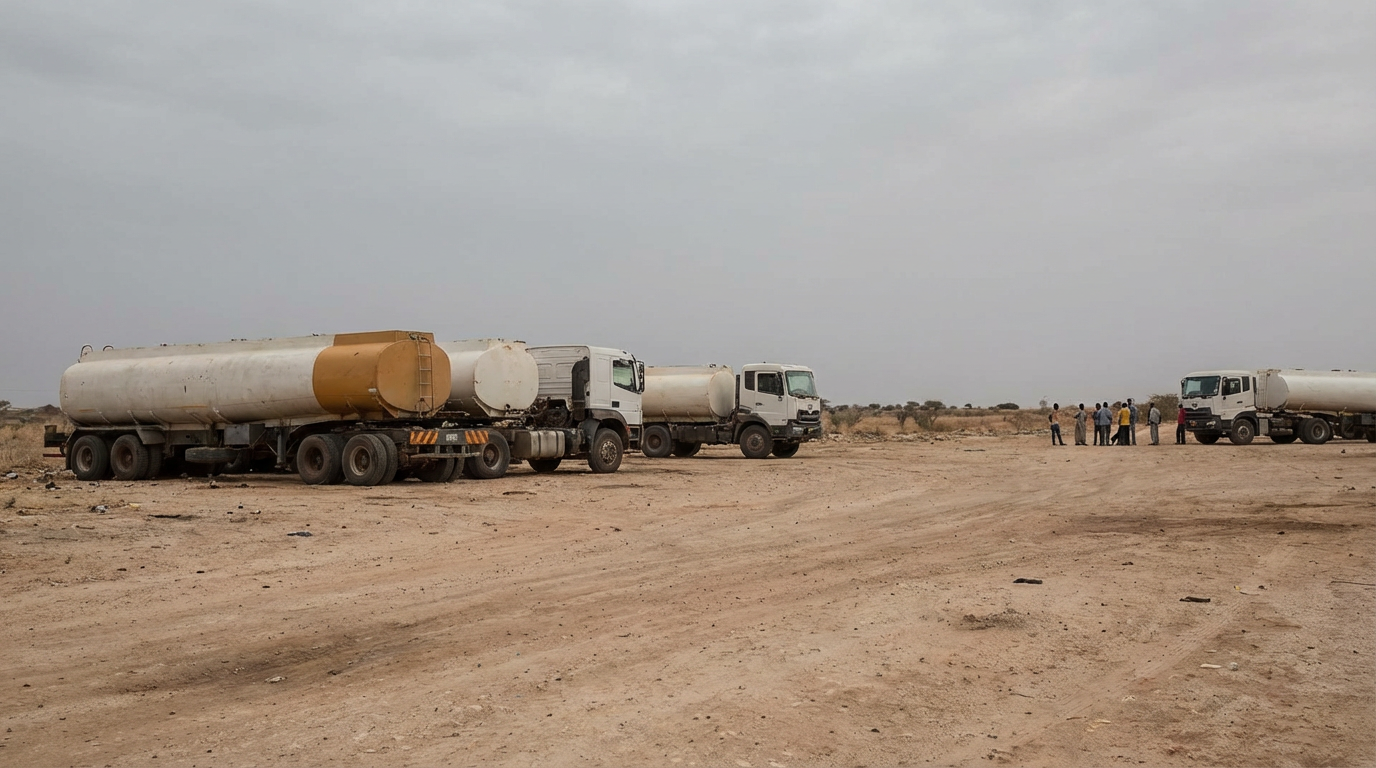
    African economies are facing a fuel shock linked to the Middle East conflict, with shortages and budget strain reported across multiple countries from Zambia to Senegal. Officials and businesses have described disruptions that are affecting transport, commerce, and household routines as global energy markets respond to regional instability.


    In Zambia, the government declared a national emergency over fuel supplies after reports that residents in Lusaka spent hours trying to find gasoline. Businesses in the country have also reported a sharp drop in activity tied to the shortage, underscoring how quickly supply constraints can spill into broader economic conditions.


    ATLAS SIGNALGeopolitics, Energy Markets, Global EconomyHigh1–3 months
    41d

    Geopolitical Instability in the Middle East Threatens Global Energy Supply and Economic Stability

    Escalating conflict in the Middle East, particularly involving Iran and the Strait of Hormuz, has led to significant damage to energy infrastructure and heightened fears of prolonged disruptions to global oil and gas supplies. This geopolitical instability is directly impacting international energy markets, driving up prices, and creating inflationary pressures worldwide, complicating monetary policy decisions for central banks.

    180 stories
    View Issue

    Several countries have moved to ration or conserve energy as supply tightness spreads. South Sudan, which relies on oil for 96% of its electricity generation, has introduced power rationing, and Mauritius has adopted rationing as well. These steps highlight the immediate operational choices governments face when fuel availability and power generation become uncertain.


    Price pressures are also intensifying, with Malawi’s Energy Regulatory Authority approving a steep increase that lifted petrol to nearly $15 per gallon and raised jet fuel by as much as 81%. Such increases can raise transport and logistics costs and add pressure to public finances where governments are exposed to energy import bills or subsidy demands.


    Zimbabwe has taken a conservation approach by increasing the ethanol blend in gasoline to extend limited supplies. At the same time, the continent’s response has not been uniform: Nigeria is seeking to benefit from the disruption by expanding refining and export capacity. The country doubled its crude oil supply to the Dangote Refinery in March, enabling larger shipments of fuel and fertilizer to other African nations, according to the information provided.


    Financial markets have reacted to shifts in Middle East headlines, particularly in South Africa. The South African rand jumped 2.9% against the dollar on recent ceasefire news, its biggest one-day rise since December 2017. Investor positioning described as a “de-escalation trade” also lifted the country’s main stock index by as much as 6.4%, reflecting expectations of improved stability in global energy supply chains.


    Political developments are unfolding alongside the economic strain, notably in Zimbabwe. The ruling Zanu-PF party is advancing constitutional amendments that would end direct presidential elections and instead allow parliament to choose the head of state. The proposal would also extend presidential and parliamentary terms from five to seven years; if enacted, it would allow President Emmerson Mnangagwa to remain in office until 2030, two years beyond the current constitutional term limit.


    Opposition figures have called the initiative a “slow-motion coup,” while Zanu-PF has defended it as a cost-saving measure intended to reduce electoral violence. The bill is expected to pass through parliament within weeks, though the ultimate outcome and implementation details remain uncertain.


    Share

    Related Articles

    Atlas360

    Sign up for Atlas Daily

    The daily global news briefing you can trust.

    every weekday·Read it now

    or
    Sign in

    Already subscribed? Sign in and we won't show you this message again.