Iran Claims Striking US Vessel in Strait of Hormuz
Iranian state media reports a strike on a US military boat in the Strait of Hormuz, raising regional tensions. US Central Command has not confirmed the claim.
Lauren Collins ·
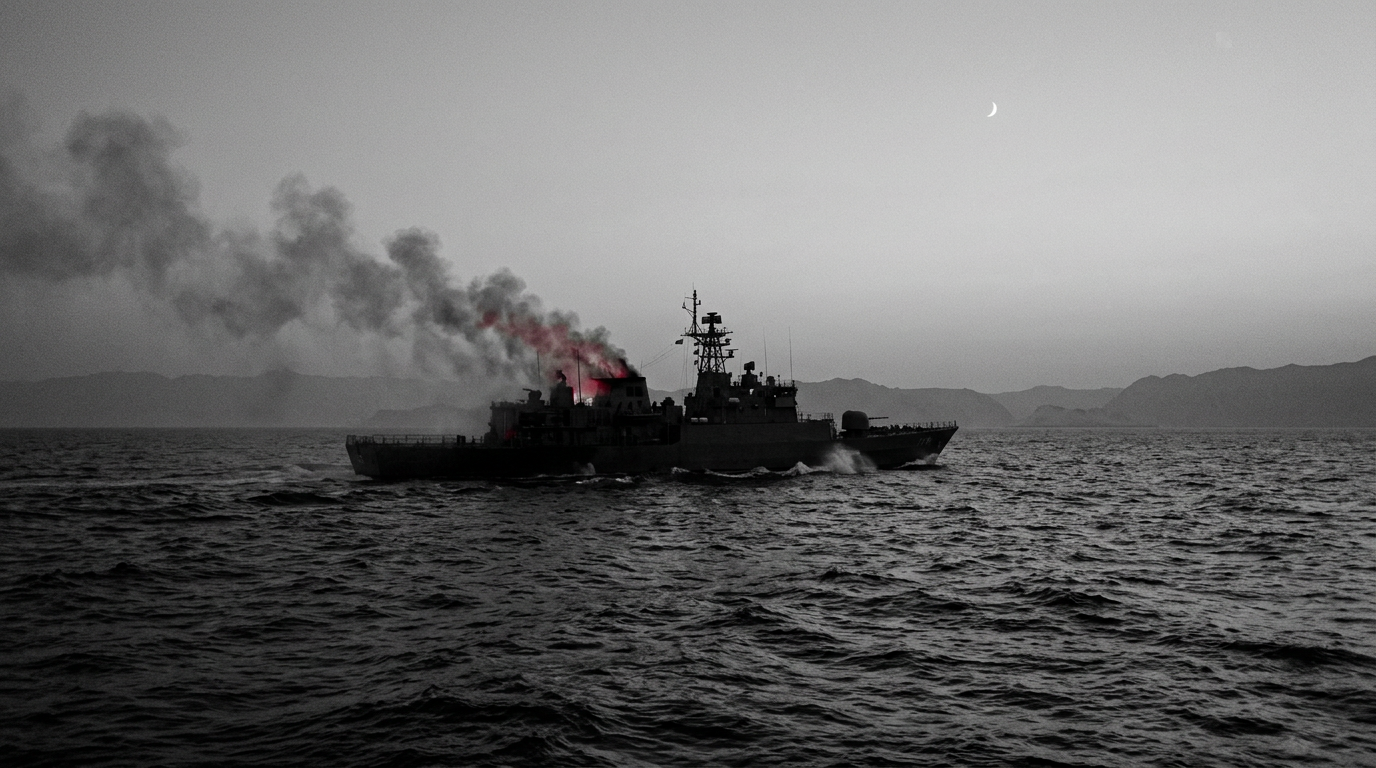
Iranian state media reported today that its forces struck a United States military vessel in the Strait of Hormuz, asserting the American boat attempted to enter a restricted maritime zone. The claim, if verified, would mark an escalation in tensions between Tehran and Washington after a month of reduced direct confrontations.
The alleged incident took place in the Strait of Hormuz, a critical global maritime chokepoint. Iranian state media attributed the operation to the Islamic Revolutionary Guard Corps (IRGC), a powerful entity within Iran that often operates with autonomy from conventional armed forces and is involved in regional proxy activities.
US Silent on Hormuz Claim As of the time of these reports As of the time of these reports, the United States Central Command (CENTCOM) has not provided confirmation or an official statement regarding the Iranian claim. CENTCOM oversees American military operations across the Middle East. The U.S. maintains a substantial naval presence in the Persian Gulf, conducting regular patrols to ensure freedom of navigation through international waters, a key aspect of its regional security strategy. The Strait of Hormuz connects the Persian Gulf to the Arabian Sea and is widely regarded as the world's most strategically vital oil transit artery. Approximately one-fifth of the world's total consumption of petroleum liquids and roughly 30 percent of all seaborne crude oil transit through this narrow passage daily. Historical disruptions in this waterway have consistently led to sharp increases in global energy prices, underscoring its economic importance. Escalation Risks and Market Impact Past confrontations in the Strait have involved both Iranian and U.S. forces, including accusations of Iranian harassment of commercial shipping and the seizure of oil tankers. Documented instances exist where IRGC speedboats have approached U.S. Navy vessels, frequently leading to warnings and heightened alert levels from American forces.
United States
A confirmed direct military engagement between Iran and the United States in this vital waterway would immediately exacerbate regional instability. Such an event would likely trigger a rapid surge in global crude oil prices, negatively affecting economies dependent on stable energy supplies. Major global stock markets, particularly those sensitive to energy costs, would also face downward pressure.
Diplomatic Complications and Regional Responses
This incident could complicate ongoing diplomatic efforts aimed at de-escalating tensions elsewhere in the Middle East, potentially drawing other regional actors into the conflict. Allies of the U.S.
within the Gulf Cooperation Council (GCC), including nations like Saudi Arabia and the United Arab Emirates, would likely perceive such an event as a significant threat to their security and economic interests. This could lead to increased military readiness or renewed calls for stronger international intervention.
The primary factor to monitor will be the official response from U.S. Central Command regarding the veracity of the Iranian claim.
Should CENTCOM confirm a hostile interaction by July 20, 2024, it could precipitate an increased U.S. naval presence in the region and potentially lead to retaliatory measures, further intensifying tensions in the Persian Gulf.
Conversely, if the U.S. denies any significant incident, Iran's assertion might be downplayed as propaganda or a minor navigational misunderstanding, potentially allowing for a return to heightened vigilance without immediate escalation.