Tennessee Primaries Put Controversial New Congressional Map to the Test
Tennessee held its first statewide primary under newly redrawn congressional districts, with early results highlighting how the map is reshaping races.
Atlas Newsdesk ·
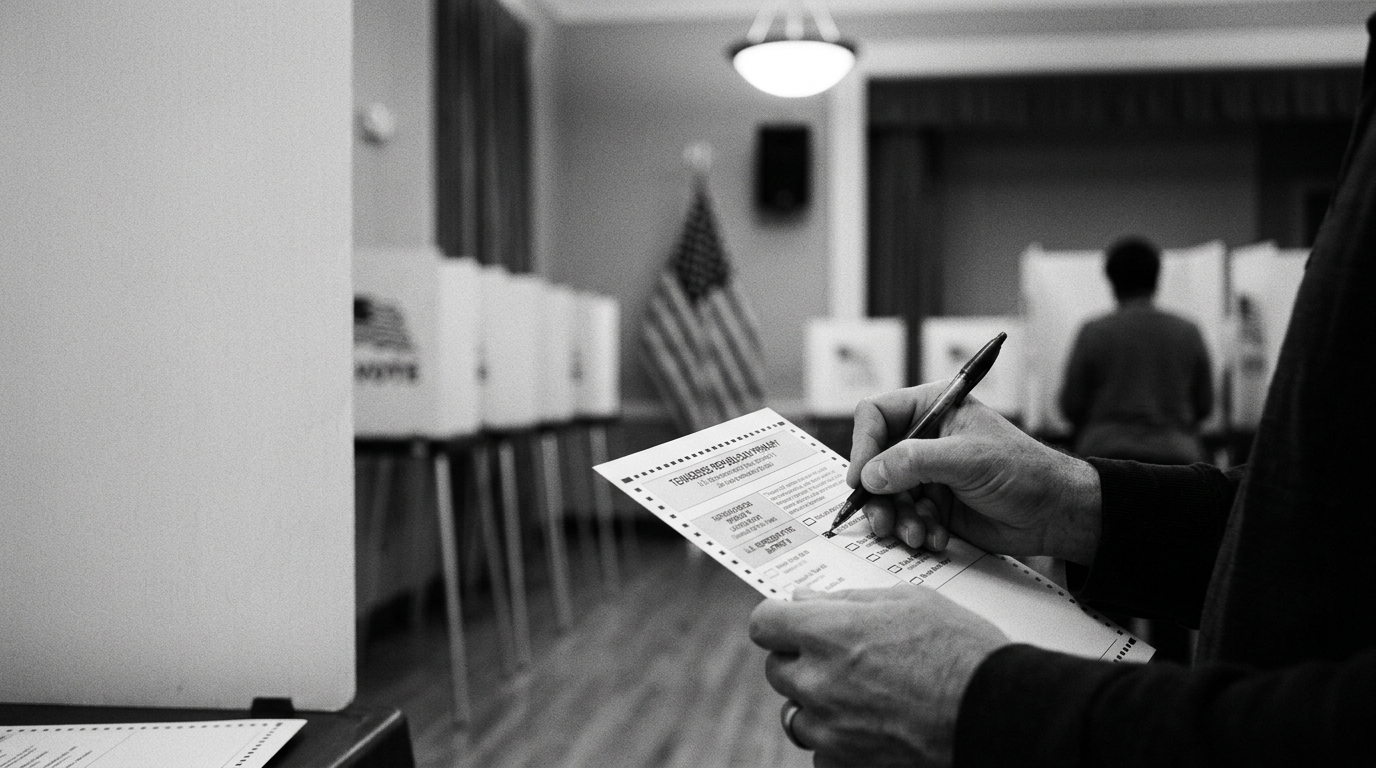
Tennessee voters went to the polls on Thursday for primary elections that marked the first statewide contest conducted under the state’s newly redrawn congressional map.
Officials said the revised district boundaries were finalized in May, following a U.S. Supreme Court ruling that weakened protections under the Voting Rights Act. The new lines altered political boundaries across multiple parts of the state, and the primary results offered the first live test of how candidates and coalitions perform under the updated geography.
How the new map reshaped key House districts
Republicans currently hold eight of Tennessee’s nine seats in the U.S. House of Representatives. Party leaders are seeking to win all nine seats in November, a result that would add to their slim majority in the chamber.
A major focal point of the redistricting involved Memphis. According to the map’s description, the process dismantled Tennessee’s only majority-Black congressional district.
Memphis-centered District 9 expanded into rural areas
Under the new boundaries, District 9 was extended by about 320 kilometers to include rural areas, a change that shifted the district’s partisan balance. The new configuration also means campaigns are now addressing voters who were previously outside the district.
Estimates indicate that 71 percent of voters now located in the reconfigured District 9 are new to the constituency. With that level of turnover, both candidates and voters are navigating different district-level coalitions than those that existed under the prior map.
Primary outcomes lock in nominees for November
The first primary conducted under the revised lines provides an early indicator of how turnout patterns and campaign strategies may adapt ahead of November. However, the general election will determine the partisan outcomes under the redesigned districts.
District 5 GOP primary delivers a notable upset
In District 5, the Republican primary produced a notable upset. Incumbent Andy Ogles, who had a Trump endorsement, was defeated by challenger Charlie Hatcher.
The outcome reshapes the Republican lineup in one of the races affected by the broader remapping and sets the party’s nominee for the general election in that district.
Blackburn wins the Republican nomination in governor’s race
In the gubernatorial contest, Senator Marsha Blackburn won the Republican nomination to succeed term-limited Governor Bill Lee. She is set to face Democrat Jerri Green in the general election.
With the primaries complete, Tennessee’s ballot for November is now largely set. The contests will unfold as national politics focuses on whether voters will endorse or reject the current administration’s legislative agenda and which party will control Congress.
One key uncertainty remains how the new district lines—particularly where voters have been shifted into new constituencies—will ultimately affect turnout and coalition-building in November, when participation is typically broader than in primaries.
Implications
Country Impact: The primaries provide the first statewide results under Tennessee’s newly redrawn congressional map, offering an initial read on how the new boundaries may influence November races. The most consequential unknown is whether the reconfigured districts change turnout and candidate coalitions in the general election.
Industry Impact: Campaign operations and political organizations must adjust targeting, messaging, and voter outreach to match newly configured constituencies, particularly where large shares of voters are new to a district. Candidate recruitment and resource allocation may shift as parties respond to primary outcomes under the revised lines.
Market Impact: The source material does not provide market data or quantify economic effects. Any market relevance would depend on November outcomes and subsequent federal and state policy directions, which remain undecided.