Hormuz Closure Halts Global Oil, LNG Shipments
The Strait of Hormuz closure has halted one-fifth of global oil and LNG supply, driving energy prices up and prompting IEA to consider reserve releases.
Atlas Newsdesk ·
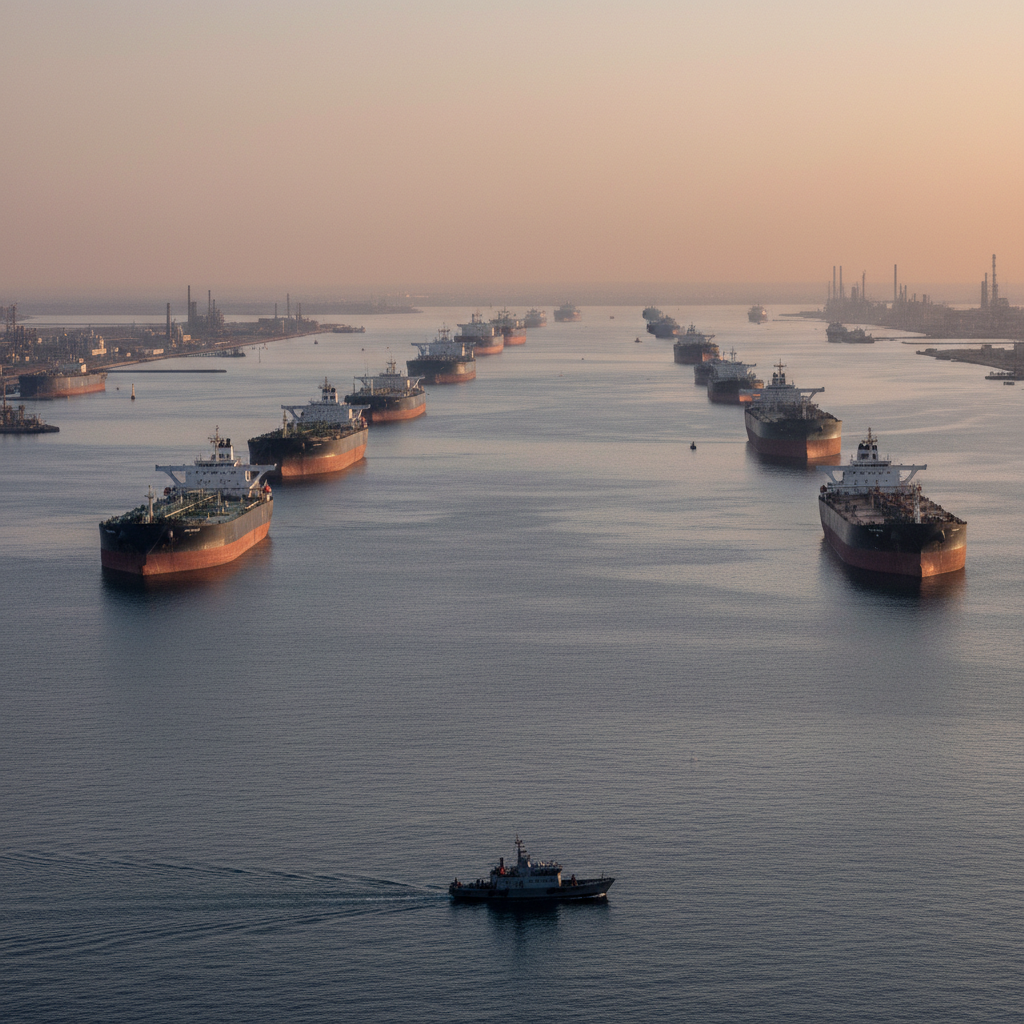
The Strait of Hormuz, a vital maritime passage, has experienced a complete cessation of transit for oil and liquefied natural gas (LNG) shipments over the past ten days. This disruption has effectively removed approximately one-fifth of the world's daily supply of these critical energy resources from global markets.
The closure has compelled major Middle Eastern oil-producing nations, including Saudi Arabia, Iraq, and Kuwait, to scale back their production levels due to overflowing storage capacities.
This significant interruption in the flow of energy commodities has triggered a sharp increase in global energy prices. Brent crude oil, a key international benchmark, recently surged to $119 per barrel, marking its highest point since 2022, before experiencing a marginal retreat. Concurrently, Dutch natural gas prices climbed to €45 per megawatt-hour, while LNG prices in Asia reached $16 per million British thermal units.
Global Supply Chain Impact
The Strait of Hormuz is a narrow waterway situated between Iran and Oman, serving as the sole sea passage from the Persian Gulf to the open ocean. Historically, it facilitates the transit of nearly 20 million barrels of crude oil and petroleum liquids daily, alongside approximately 10 billion cubic feet of LNG per day, based on 2024 figures. The current halt in these shipments represents a severe and immediate challenge to global energy security.
International energy agencies and governments are assessing the ramifications. Global spare oil production capacity is currently insufficient to compensate for the substantial supply deficit created by the Middle Eastern production cuts. This situation is forcing refineries worldwide to deplete their existing inventories at an accelerated rate.
Economic Repercussions and Policy Responses
The escalating energy prices are directly contributing to inflationary pressures across the globe, impacting both consumers and businesses. The increased cost of fuel is translating into higher prices for essential goods, including foodstuffs. The International Energy Agency (IEA) is reportedly considering a recommendation to release 400 million barrels of oil from strategic reserves to help stabilize markets and mitigate the economic fallout.
Asian economies are particularly vulnerable to this disruption due to their heavy reliance on energy imports from the Middle East. In response, some nations are implementing domestic measures to cushion the impact. For instance, China has reportedly halted its fuel exports, while South Korea has introduced caps on domestic fuel prices to protect consumers from the sharp increases.
Outlook and Market Stability
The prolonged closure of such a critical chokepoint underscores the fragility of global energy supply chains. The immediate focus remains on diplomatic efforts to reopen the strait and on the potential coordinated release of strategic reserves. The duration of the closure and the effectiveness of these mitigating actions will determine the long-term economic consequences and the stability of international energy markets.
Further price volatility is anticipated as market participants react to ongoing developments. The situation highlights the geopolitical risks inherent in global energy trade and the need for diversified supply routes and energy sources.
Implications
Country Impact: Middle Eastern oil producers face production cuts due to full storage, while Asian nations like China and South Korea are implementing domestic measures to mitigate rising energy costs and inflation.
Industry Impact: The global energy industry is experiencing significant supply chain disruptions, forcing refineries to draw down inventories and impacting the profitability of energy-intensive sectors due to surging fuel prices.
Market Impact: Global energy markets are seeing sharp price increases for crude oil, natural gas, and LNG, contributing to inflationary pressures and potentially affecting consumer spending and business investment worldwide.