Paris Cleans Up: Car Use Drops, Air Improves
Paris cuts car use through bike lanes, school streets and Seine restrictions, and is cited among 19 cities with lower pollution since 2010.
Ayla Demirhan ·
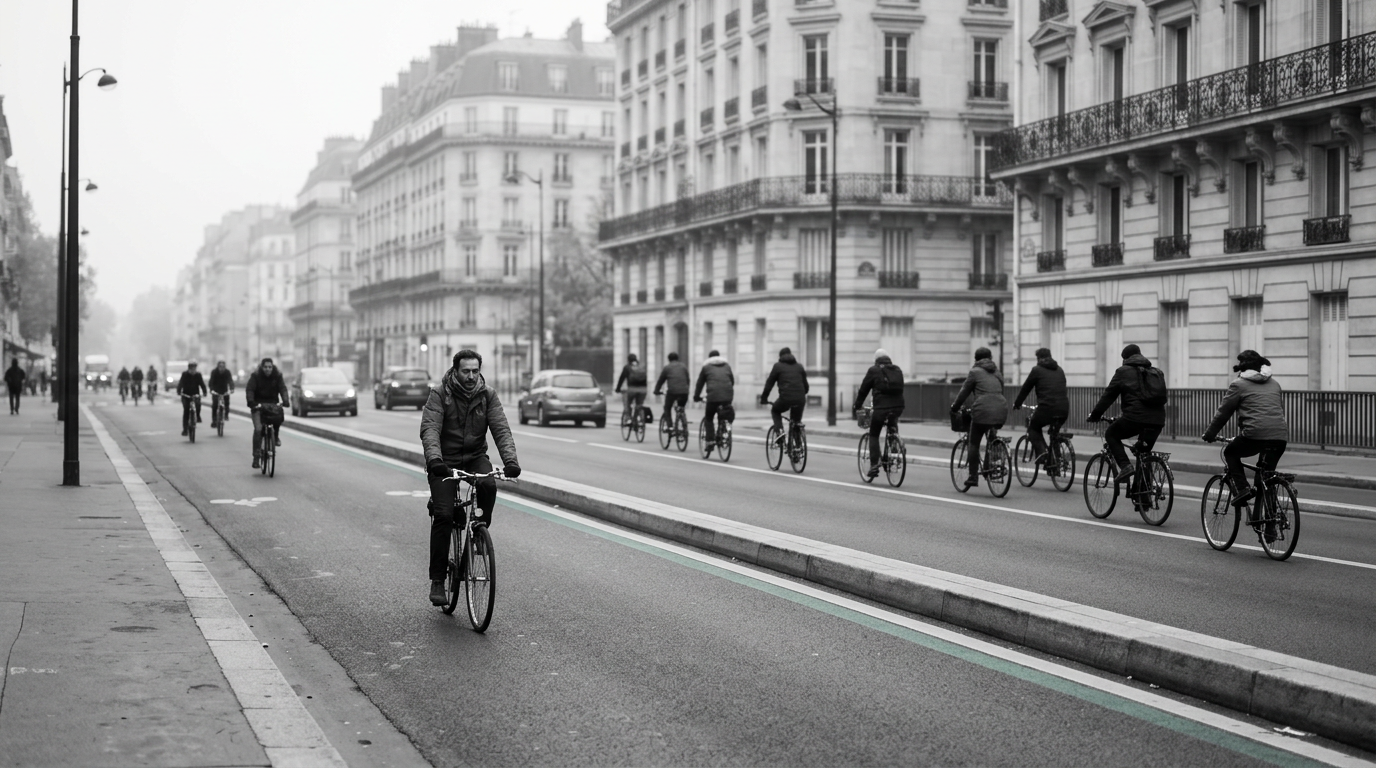
Paris has spent the past decade reshaping how people move around the city, with policies that reduced car dependence and coincided with cleaner air. Officials and experts attribute the shift to a package of urban planning measures that reallocated street space toward walking, cycling, and public life. The changes have been closely associated with initiatives pursued under former Mayor Anne Hidalgo’s administration.
A central feature of the overhaul has been new cycling infrastructure, with hundreds of kilometers of bike lanes added across the city. Paris also pedestrianized 300 school streets, limiting vehicle access around schools and changing daily travel patterns for families and nearby residents. In another high-profile move, the city banned cars from the banks of the Seine, turning a previously traffic-heavy corridor into space oriented toward pedestrians and recreation.
Alongside transport measures, Paris altered the use of curbside and parking areas. Parking spaces were converted into green areas and café terraces, shifting parts of the streetscape away from vehicle storage and toward public space. The city also planted 155,000 trees as part of broader efforts to change the urban environment.
These policies have been linked to measurable improvements in air quality. Paris has been cited among 19 global cities that achieved substantial reductions in two toxic air pollutants between 2010 and 2024. The reported declines include fine-particle pollution and nitrogen dioxide levels, pollutants commonly associated with traffic and dense urban activity.
Public reaction has been mixed. The changes have faced resistance from some motorists, and public opinion has varied as road space and parking availability have been rebalanced. At the same time, the overall effect described by observers has been a visible rise in cycling and pedestrian activity, reflecting a shift in transport habits and how residents use public space.
Experts have also pointed to governance as a factor in how quickly policies could be implemented. Paris’s tight administrative boundaries were cited as helping centralize transport decisions, making it easier to coordinate street redesigns and restrictions within the city’s jurisdiction. That structural advantage is part of why the Paris approach is now referenced by other urban centers considering similar environmental and planning strategies.