Hormuz traffic falls to eight crossings as Trump repeats claim
Hormuz traffic fell to eight crossings on Tuesday versus a 130-140 daily baseline, as Trump again said the US controls the strait.
Mateo Fernandez ·
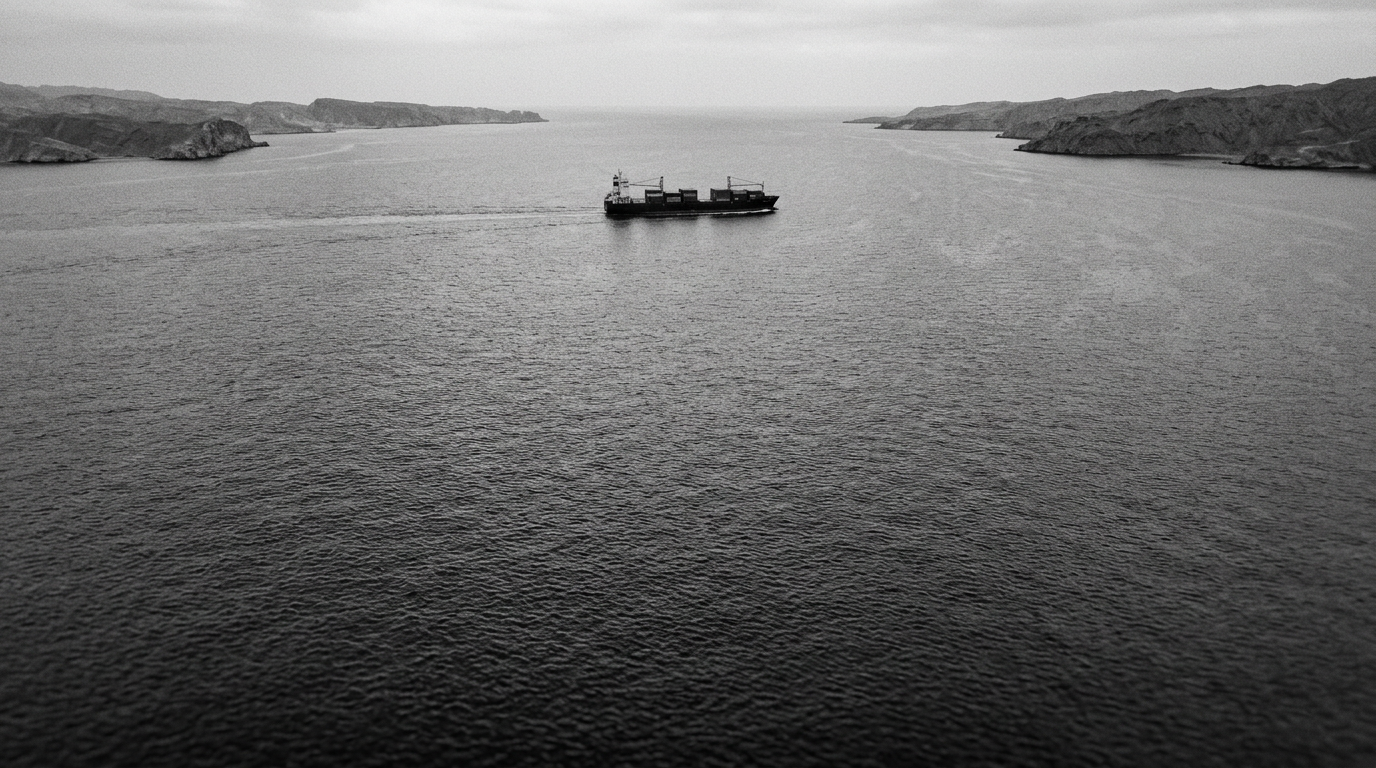
Ship traffic through the Strait of Hormuz fell to eight crossings on Tuesday, according to data cited in the initial account, a steep drop on a route central to global energy and commercial shipping. The figures have drawn close scrutiny because tankers and other vessels depend on the narrow passage to move between the Gulf and open sea.
Officials were not cited as confirming the eight-crossings total. The same data set compared Tuesday’s reading with a pre-war baseline of around 130-140 ships a day, underscoring how far the reported count sits below typical operating levels.
Strait of Hormuz traffic compared with pre-war baseline
If maritime authorities confirm the eight-crossings figure If maritime authorities confirm the eight-crossings figure, it would represent a clear break from normal patterns and point to disruption at a key maritime chokepoint. The initial account did not provide an immediate market reaction in oil or shipping. The strait is among the world’s most closely watched passages because it is a narrow outlet for energy cargoes and wider commercial trade leaving the Gulf. Any sharp reduction in transits can quickly become a focal point for ship operators, insurers, and commodity markets monitoring supply routes. Trump repeats claim of US control amid Iran-US war risks President Trump again said the United States controls the Strait of Hormuz, placing Washington’s posture at the center of attention as shipping disruption is tied in the account to the Iran-US war. The statement came as war risks were described as dominating routing decisions.
President Trump
For shipowners, the near-term question is whether current conditions allow vessels to continue transiting under existing route plans, crew safety protocols, and insurer requirements. The account highlighted war-risk insurance as a key area of focus if uncertainty around passage safety persists.
Operational and market focus shifts to confirmation and duration For global markets, the linkage described in the initial account is direct: fewer crossings can tighten expectations for energy availability, raise uncertainty around voyage timing, and intensify attention on war-risk insurance. The practical impact for shipping can also include more conservative operational decisions as companies weigh compliance and safety constraints.
A central uncertainty is whether maritime authorities will confirm the Tuesday count and whether it reflects a broader halt or a temporary dip in reported crossings. The next signal the account pointed to is how traders and shipowners interpret the decline—either as a short security-driven pause or as a wider constraint on Gulf trade.
The account set a specific time marker for monitoring: whether the unusually low count persists through August 13, 2026. It also outlined a near-term fork, noting that a rebound within the next 24 hours could limit broader effects, while a sustained decline would keep oil supply expectations and freight costs in view as pressure points.