Hollywood mourns James Burrows, sitcom veteran, dead at 85
James Burrows, the director behind landmark sitcoms including “Cheers” and “Friends,” died Friday at 85 after a career spanning more than 1,000 episodes.
Sofia Reyes ·
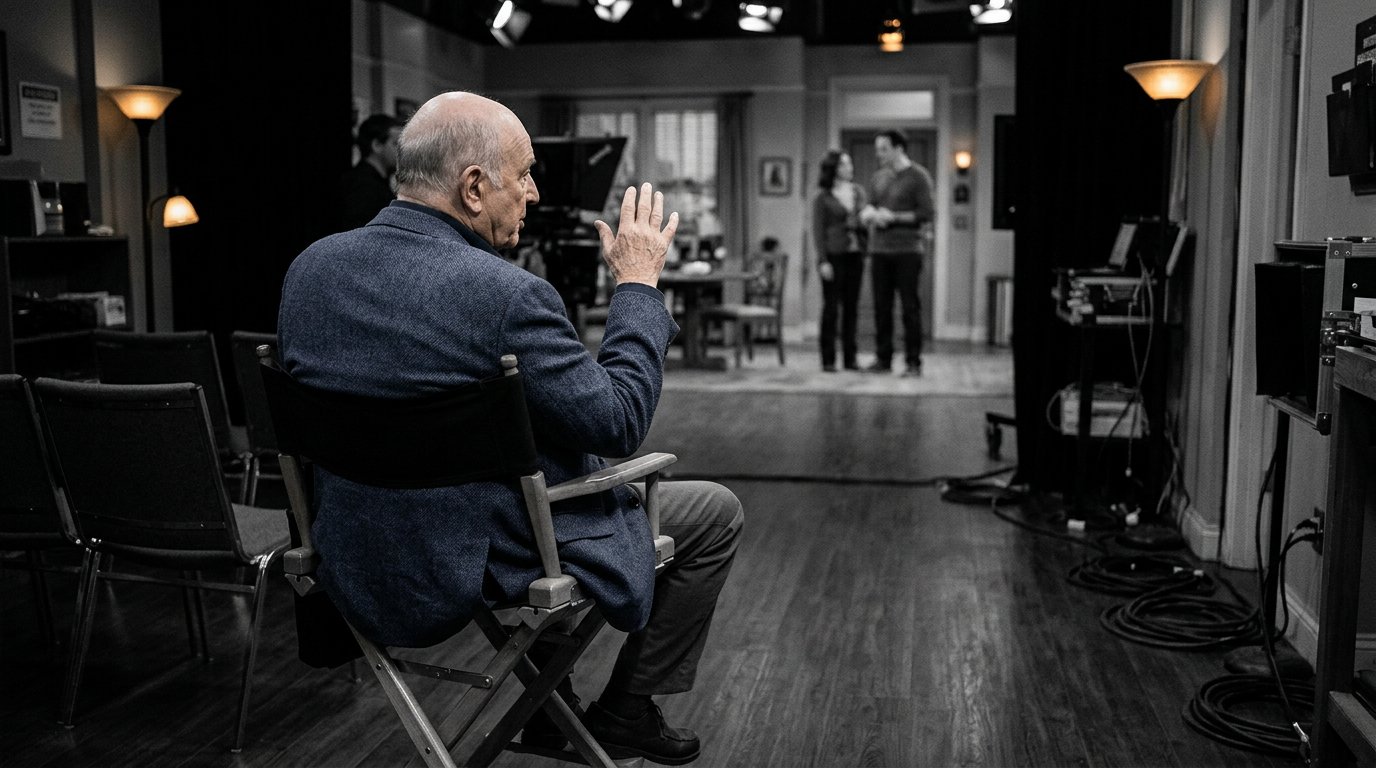
James Burrows, a defining force in American television comedy, died Friday at age 85 after directing more than 1,000 episodes across several era-shaping sitcoms.
Often described as a benchmark for the genre’s craft and pace, Burrows helped set the visual grammar of the multicamera studio sitcom, guiding performances, timing, and audience energy in front of live crowds. His credits included “Cheers,” “Friends,” “Frasier,” “Will & Grace,” and “The Big Bang Theory.”
A career built on studio comedy and audience rhythm
Born in Los Angeles, Burrows moved into television directing during the 1970s as the medium’s half-hour comedies became increasingly sophisticated in character and writing. He began directing episodes of “The Mary Tyler Moore Show” in 1974, a period that helped define the modern workplace and ensemble sitcom.
He soon added major network comedies to his résumé, including “The Bob Newhart Show” and “Taxi.” Those series cemented his reputation for managing ensemble casts and maintaining clarity in scenes built around quick exchanges and reaction shots.
Burrows’ work became closely associated with the multicamera format, a production style that relies on several cameras capturing a scene simultaneously, typically on a standing set with a live audience. Supporters credit his approach with making that format feel immediate while keeping storytelling readable in the fast-moving language of jokes.
“Cheers” and a finale that entered TV history
In 1982, Burrows co-created “Cheers,” the Boston bar sitcom that became one of television’s most influential comedies. He also served as its primary director, overseeing nearly 90% of the show’s episodes.
Burrows directed the 1993 series finale, a broadcast that became the second-most-watched finale in U.S. television history, trailing only “M*A*S*H.” The milestone underscored both the show’s cultural reach and the strength of network-era appointment viewing.
“Cheers” also helped demonstrate that ensemble comedies could sustain long arcs while still delivering stand-alone episodes built on timing and character interplay. That template influenced a wave of later sitcoms that mixed relationship storylines with episodic punchlines.
From pilots to prime time: a pipeline of lasting series
After “Cheers,” Burrows remained a sought-after director for high-stakes episodes and launches, contributing to the early tone and staging of multiple series. He directed episodes of “Friends” and “Frasier,” both of which became signature comedies of the 1990s and early 2000s.
His later credits included “Will & Grace” and “The Big Bang Theory,” two shows that helped extend the multicamera sitcom’s mainstream presence into a period increasingly dominated by single-camera comedies and streaming distribution. Across his career, Burrows directed 75 pilot episodes that went on to become series, an unusually high conversion rate in an industry where many pilots never air.
Burrows won 11 Emmy Awards, reflecting both longevity and repeated influence on network comedy’s highest-profile projects. The tally also highlights how directors, though often less visible than writers and stars, can shape a show’s cadence, blocking, and audience response.
His impact is likely to be measured not only in episode counts and awards, but in the technical and performance conventions he helped standardize—especially the way multicamera sitcoms use staging, entrances, and pauses to maximize laughs. For the industry, the next chapter will be how newer comedies adapt or move beyond those studio traditions while still pursuing the wide audiences that shows like “Cheers” and “Friends” once drew.