Gulf Powers Anchor in Mauritania as Sahel Crisis Deepens
Amid a worsening food crisis, Mauritania is attracting strategic investment from Gulf states who see the stable nation as a key buffer in the volatile Sahel…
Omar Farouk ·
Gulf Powers Anchor in Mauritania as Sahel Crisis Deepens
NOUAKCHOTT – As the World Food Programme warns of a deepening food security crisis across Mauritania, the government in Nouakchott is intensifying diplomatic outreach to Gulf monarchies, signaling a strategic pivot that seeks to leverage its geographic position for economic survival and regional influence. This engagement, framed as humanitarian partnership, is attracting significant investment from Saudi Arabia and the United Arab Emirates, who view the stable Sahelian nation as a critical buffer against regional chaos.
Background
Mauritania has long navigated a complex geopolitical landscape. As a member of the Arab League situated at the nexus of the Maghreb and Sub-Saharan Africa, it has maintained a delicate balance. The recent report from the World Food Programme highlights the severe strain on the country, which hosts over 100,000 Malian refugees and faces its own climate-driven food shortages. This internal pressure is mounting just as the wider Sahel region fragments under the weight of military coups, collapsing state authority, and the expansion of militant groups.
Against this backdrop, major Middle Eastern actors are recalibrating their Africa strategies. The Gulf Cooperation Council (GCC), a political and economic alliance of Saudi Arabia, the UAE, Qatar, Kuwait, Oman, and Bahrain, has increasingly shifted its focus from the Horn of Africa towards the Atlantic coast. Having witnessed the limitations of their power projection in regional conflicts, Riyadh and Abu Dhabi are now pursuing a model of influence built on strategic investment in logistics, food security, and energy, with Mauritania emerging as a prime candidate for this new approach.
Why it matters
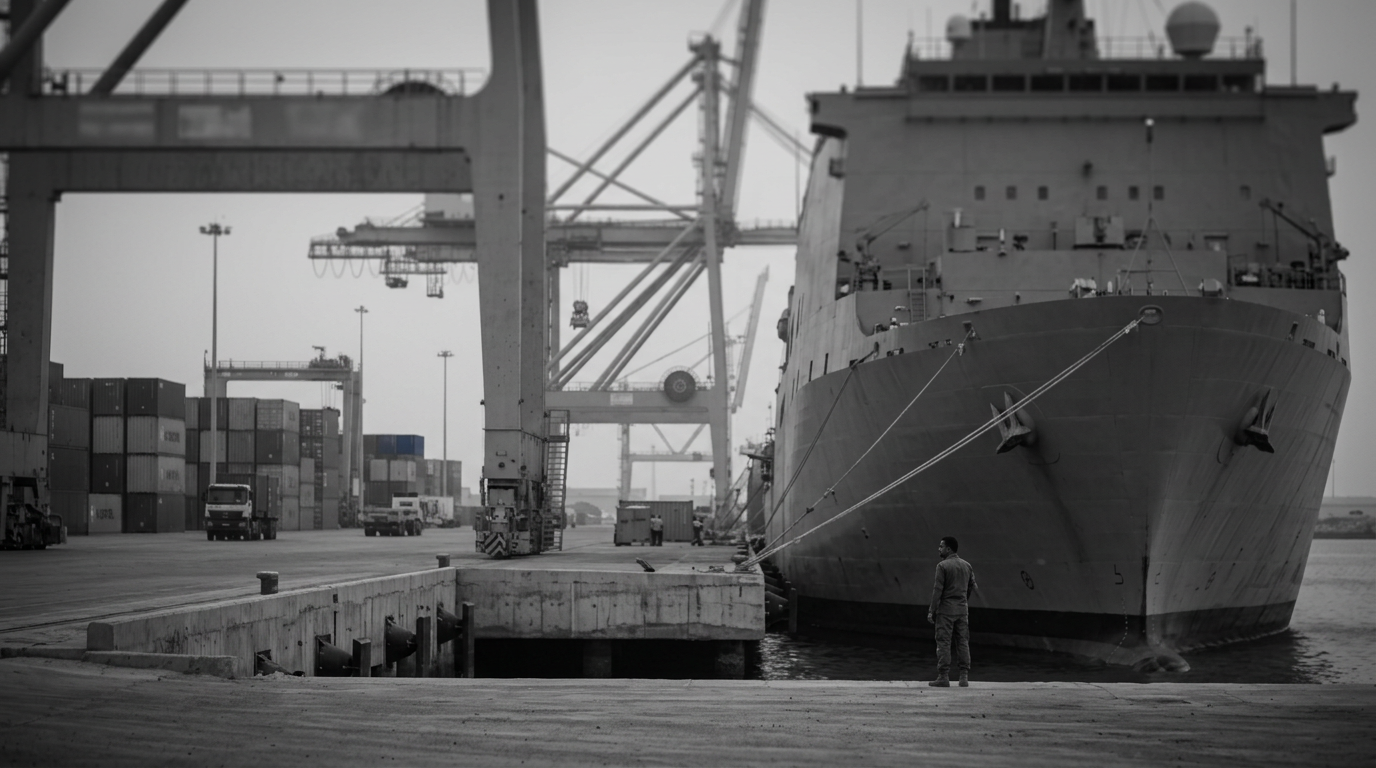
The burgeoning partnership between Mauritania and GCC states has significant consequences for both regional stability and global trade. For the Gulf powers, Mauritania offers a foothold on the Atlantic and a stable partner in a volatile zone. Investment in the country’s deep-water port at Ndiago provides an alternative to Mediterranean and Red Sea shipping lanes, a long-term strategic hedge against potential disruptions in chokepoints like the Suez Canal or the Strait of Hormuz. Securing access to Atlantic ports is a key objective for the UAE in particular, mirroring its logistics-led strategy across Africa.
Furthermore, Mauritania’s significant offshore natural gas reserves, notably the Greater Tortue Ahmeyim field, present a valuable opportunity for energy diversification. As Europe seeks new supplies, Gulf energy giants see an opportunity to co-invest and secure influence over future Atlantic-to-Europe energy corridors. This economic statecraft also serves a security purpose: by bolstering the Mauritanian economy and its military capacity, Gulf states aim to create a bulwark against instability spilling over from Mali and Burkina Faso, mitigating potential refugee flows northward and preventing the Sahel from becoming a permanent safe haven for transnational threats.
What to watch
The primary indicator of this deepening alliance will be the finalization of a landmark sovereign investment deal. Watch for Nouakchott to announce a formal agreement with either Saudi Arabia's Public Investment Fund or a major UAE state-owned enterprise, like ADQ or AD Ports Group, to fund and manage critical infrastructure. Such a deal, likely focused on expanding the port of Ndiago or financing the next phase of Mauritania’s LNG development, would cement the country’s alignment with Gulf interests and mark a significant geopolitical shift in West Africa.