German business outlook beats forecasts as recovery crawls
German business outlook improved for a third month as Ifo expectations beat forecasts, but energy risks and auto-sector weakness keep the recovery fragile.
Claire Dubois ·
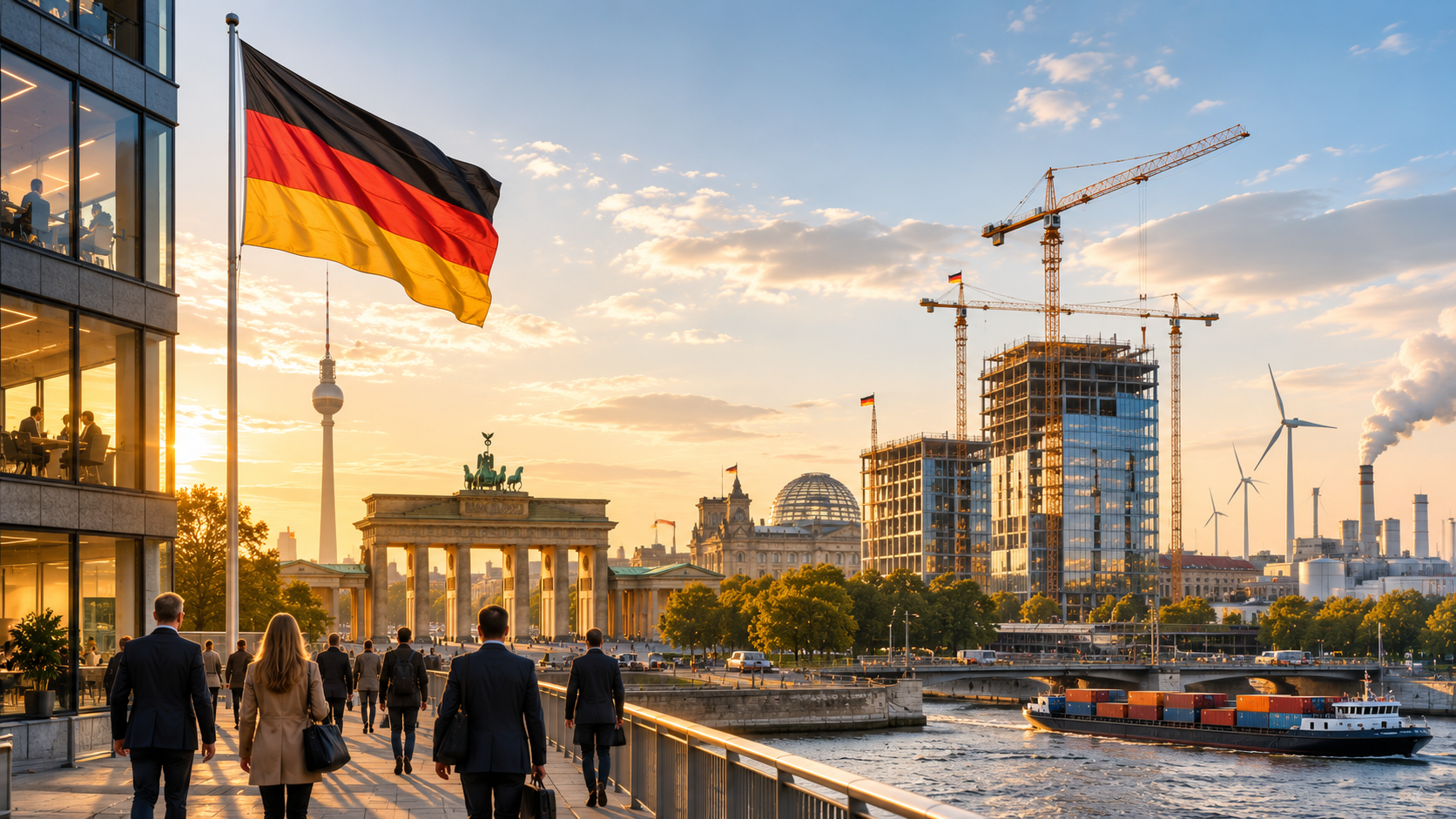
German business outlook rose for a third month as Ifo’s expectations index climbed to 86.7, hinting at firmer sentiment despite energy risks.
The Ifo Institute said its expectations measure increased from a revised 84.3 in the prior month. The reading exceeded every economist estimate cited in the survey and topped the 84.8 median, while Ifo’s gauge of current conditions weakened unexpectedly.
Ifo expectations beat 84.8 forecast
The split between future expectations and present conditions is the central message from the release. German companies appear more confident about the months ahead even as the economy has not yet delivered a strong current-cycle rebound.
Ifo President Clemens Fuest pointed to manufacturing as one source of the improved mood. He said, “But expectations for the coming months are improving and this is coming from manufacturing among other sectors.”
Manufacturing steadies sentiment
The Ifo data landed after a month in which Germany’s government announced reforms intended to support economic growth. Those measures were welcomed by business, but renewed hostilities in the Middle East and higher energy prices have complicated the recovery case.
Germany is especially exposed to that mix because its industrial base depends on energy-intensive production and overseas demand. When energy costs climb, manufacturers face pressure on margins; when geopolitical tensions rise, exporters face softer orders and more volatile logistics.
Berlin reforms meet energy shock
Other indicators have also pointed to stabilization rather than acceleration. July readings for purchasing managers’ indexes and investor sentiment both came in stronger than expected, and the Economy Ministry said in its monthly report that recent data point to a recovery in the second half.
The recovery still looks narrow. Forecasts cited in the report put second-quarter growth at only 0.1%, a pace that would leave the economy vulnerable to even modest shocks from energy, trade or financing conditions.
Volkswagen adds an export warning
Germany’s auto sector is another drag on confidence. German carmakers are losing market share in China, a critical export market, just as electric-vehicle competition and local Chinese brands reshape pricing power.
Volkswagen AG warned last week that sales may fall further and said revenue could decline by as much as 3% this year. The company has also raised the possibility of cutting up to 50,000 more jobs globally, a sign that weak demand and cost pressure are moving from forecasts into restructuring plans.
Three paths for Germany's recovery
If Gulf tensions do not intensify and energy prices stabilize, Germany’s slow recovery can keep moving through better industrial expectations and firmer investment plans. The global macro effect would be modest support for European demand; Volkswagen would still face China pressure, but lower input volatility would help planning; the wider manufacturing sector would get relief on costs.
If energy prices rise again, the mechanism runs in the other direction. Higher power and fuel costs would squeeze industrial margins, weigh on euro-area growth and make the Ifo expectations rebound harder to sustain; Volkswagen and suppliers would face tougher cost control; chemicals, machinery and autos would absorb the shock first.
If China market-share losses deepen for German automakers, the export channel becomes the main risk even without a fresh energy shock. That would restrain Germany’s trade contribution, intensify Volkswagen’s revenue and jobs debate, and push the broader auto supply chain toward faster restructuring.