Global Renewables Nearing 50% Power Capacity by 2025
Renewables reached 49.4% of global electricity capacity in 2025, IRENA said March 31, led by a record solar buildout.
Atlas Newsdesk ·
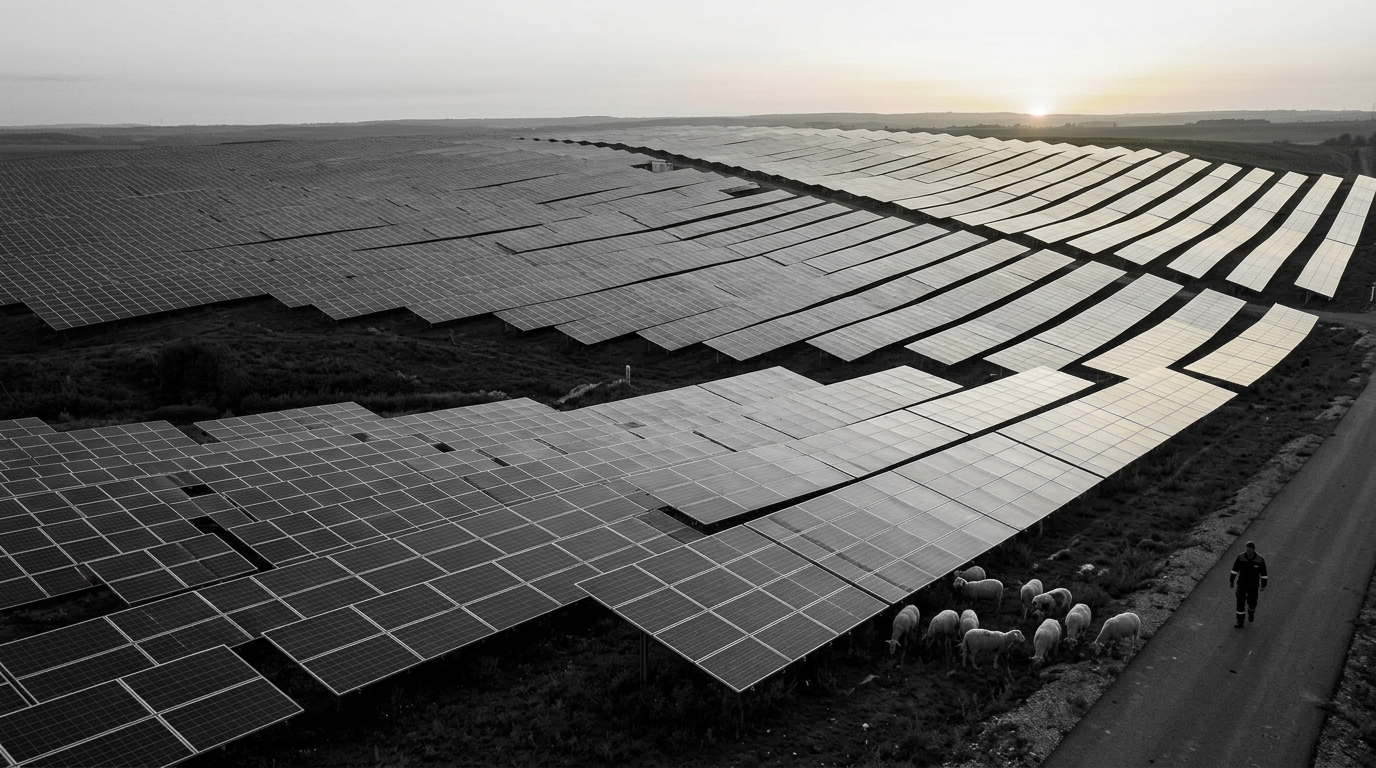
Global renewable power capacity accounted for 49.4% of total electricity capacity in 2025, according to data from the International Renewable Energy Agency (IRENA) released on March 31. The figures show renewables closing in on half of worldwide installed capacity, led by a sharp rise in solar additions.
IRENA’s data indicates total renewable capacity increased by 692 gigawatts (GW) from 2024, reaching 5,149 GW by the end of 2025. The annual growth rate for renewable capacity was 15.5% in 2025, up from 15.1% in 2024, marking an acceleration in the pace of buildout.
Solar power was the main driver of the expansion. Solar capacity grew by 511 GW in 2025 to 2,392 GW, making it the largest renewable source by installed capacity in IRENA’s dataset. The scale of solar’s increase stood out against the broader energy mix, as fossil fuel power capacity rose by 116 GW over the same period.
Wind power also contributed to the overall rise. New wind installations added 159 GW, bringing total installed wind capacity to 1,291 GW by the end of 2025, IRENA’s data shows. Together, the solar and wind increases accounted for a substantial share of the year’s renewable capacity growth.
The 2025 trajectory is presented in the context of the COP28 target of tripling renewable energy capacity by 2030. IRENA’s figures suggest the sector is moving closer to that benchmark, with year-on-year growth continuing and the renewable share of total capacity approaching 50%.
IRENA Director-General Francesco La Camera said the Middle East crisis has underscored energy security risks linked to fossil fuels. He suggested that countries with higher renewable capacity are better protected from market volatility, framing the capacity shift as relevant not only to climate goals but also to resilience in energy systems.
IRENA also noted an important limitation in interpreting capacity data. Installed capacity reflects potential output, while actual electricity generation can differ due to factors such as maintenance schedules and weather conditions, which can affect performance for technologies including solar and wind.