EU warns of trade conflict with China if no deal by autumn, Weber says
EPP chief Manfred Weber warns of EU-China trade conflict unless a deal is reached by autumn, signaling potential shifts for global supply chains.
Mei Lin ·
# EU warns of trade conflict with China if no deal by autumn, Weber says
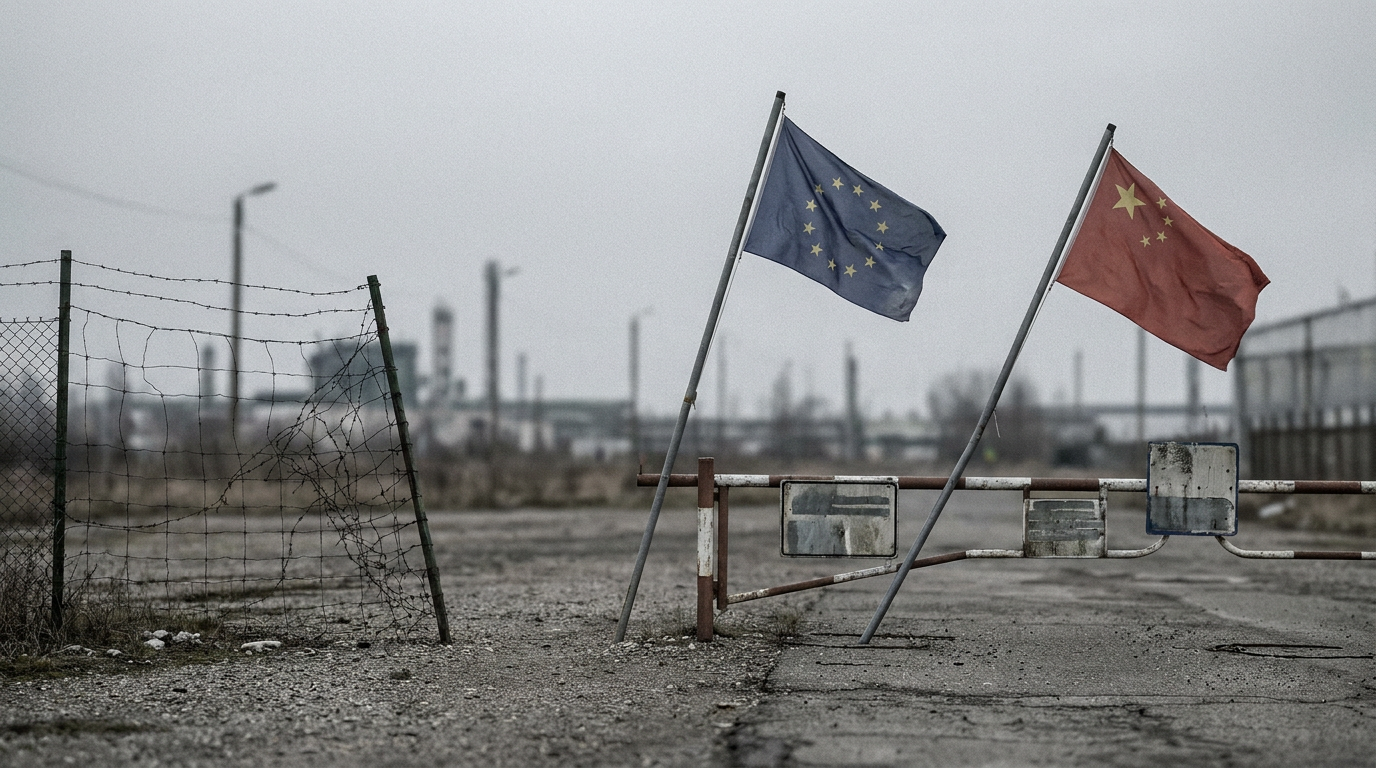
European People’s Party (EPP) leader Manfred Weber said the European Union is headed for a “phase of conflict” with China unless negotiators reach an agreement by autumn to significantly reduce trade imbalances. The warning, given in an interview published via Europe Today, adds a time-bound political push behind a harder EU line as Beijing tries to stabilise a fragile domestic economy.
For Asia-Pacific markets
For Asia-Pacific markets, the message is less about Brussels’ rhetoric and more about timing: a defined autumn deadline can accelerate policy tools that reshape trade flows, supply chains, and investment decisions, particularly in sectors where China is already facing scrutiny in the West.
The signal from Weber lands as the EU debates how to respond to what it sees as structural asymmetries in its trade relationship with China. While the interview frames the dispute around “trade imbalances,” the source provided does not include verified figures or a sector-by-sector breakdown, and it does not specify what form a “deal” would take beyond an expectation of a significant reduction by autumn.
Politically, Weber’s position matters because the EPP is a major force in EU politics and has been central to shaping the bloc’s approach to China, including calls for tougher enforcement on trade and industrial policy. Still, the interview reflects one senior politician’s stance rather than a formal EU decision; any escalation would need to translate into concrete action by EU institutions and member states.
If the EU moves from warnings to measures
If the EU moves from warnings to measures, the Asia-Pacific impact could arrive through three channels.
First is supply-chain rerouting. European restrictions or new trade tools could push Chinese exporters and manufacturers to re-optimise routes, pricing, and final-assembly locations. That can raise demand for “connector” economies in Asia that can absorb intermediate manufacturing or act as alternative export platforms.
Second is foreign exchange (FX) and capital flows. A more contested EU-China trade relationship can add uncertainty to Chinese export earnings and corporate sentiment, which may feed into broader risk pricing for China-linked assets across Asian markets.
Third is strategic alignment. If Beijing concludes that European demand will be less reliable, it may intensify trade and investment engagement in Asia-Pacific, including deepening ties with nearby partners to offset softer access in developed Western markets. Conversely, an EU de-escalation would reduce the incentive for a rapid pivot and could keep China’s external strategy closer to the status quo.
Observable: EU-China trade discussions and any specific policy announcements from either side, including EU trade actions (such as anti-subsidy steps) or Chinese retaliatory measures. By 2024-10-31, a clear signal should emerge: if the EU escalates trade actions in line with Weber’s “phase of conflict” framing, China may deprioritise EU economic ties and seek to deepen relationships elsewhere in Asia, with knock-on effects for regional supply chains and investment flows; if a resolution is reached, it would ease immediate external pressure and give Beijing more room to focus on domestic reforms while maintaining a more stable Asia-Pacific trade-investment posture.