

Eric Nshimiye faces 10-year maximum after US conviction
Prosecutors said Nshimiye concealed his role to enter the US and later lied during Jean Leonard Teganya’s 2019 immigration-fraud trial.
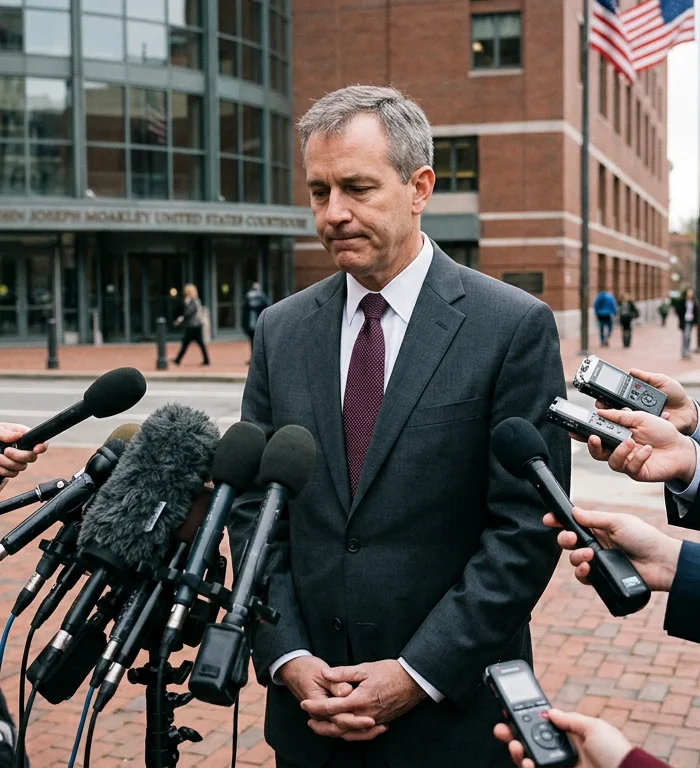
A Boston federal jury convicted Eric Nshimiye, 54, of perjury and obstruction of justice charges tied to 2019 testimony about Rwanda's genocide, BBC News reported on Oct. 29.
Nshimiye faces a maximum 10-year sentence for obstruction of justice in a case linked to the 100-day genocide, when about 800,000 people were killed, or roughly 8,000 a day, according to Atlas360 calculations.
The charges arose from Nshimiye's testimony in the immigration-fraud trial of Jean Leonard Teganya, a former university classmate who prosecutors also accused of involvement in the atrocities. Jurors found Nshimiye guilty on four perjury counts and obstruction of justice charges.
"For nearly three decades, this defendant concealed his involvement in the 1994 Rwandan genocide and the heinous acts of violence he committed, including clubbing people to death," US Justice Department prosecutor Tysen Duva said.
Duva said Nshimiye also misled immigration officials while seeking US citizenship and later lied to a federal jury "to protect himself and a fellow perpetrator of the Rwandan genocide." Prosecutors said he hid his involvement in the genocide to obtain entry into the US.
Nshimiye left Rwanda for Kenya in 1994 and was accepted into the US as a refugee in 1995, the BBC reported. Trial evidence said that while he was a student at the University of Rwanda in Butare, he took part in attacks on Tutsi people, including by striking them with a club.
His lawyer, Kurt Kerns, said in a statement that the defence was "obviously disappointed with the verdict" and would seek "all avenues of relief." In an October opening statement, Kerns said the case rested on "fabricated accusations" and argued that Nshimiye was not in Butare when the violence began.
Teganya was sentenced in 2019 to eight years in prison for immigration fraud that prosecutors described as especially serious. He was also accused of participating in at least seven murders and five rapes, but denied involvement in the genocide.
The verdict adds to late-stage prosecutions tied to the 1994 genocide outside Rwanda. Atlas360 reported in September that the UK had filed its first criminal case over alleged genocide crimes, and in August that a Dutch court sentenced a Rwandan man to life imprisonment for a genocide role.
Nshimiye faces up to five years in prison for each of the four perjury counts and a maximum penalty of 10 years in prison for obstruction of justice.
Sentencing is scheduled for Jan. 26, 2027. The hearing will determine the prison term Nshimiye receives after the jury's verdict on the perjury counts and obstruction of justice charges.
Defence relief efforts are also checkable by Jan. 26, 2027. Kerns said the defence would pursue "all avenues of relief," and any successful motion or other relief before sentencing would be reflected in the court schedule or case outcome.
More stories
- EU faces AI gaps with 90% rare-earth reliance on China
- Boakai seeks Liberia mining investment with $30m survey
- South Africa health department faces call on boys' HPV shots after 3.6M girls vaccinated
- Singapore tribunal backs dismissal over secret workplace recording
- Malaysia faces calls to tighten haze rules for 1.8 million workers
- Dubai asking prices hold as 56,600 homes near market
- Pakistan suicide attack kills 12 at police checkpoint site
- Several men arrested in 'major incident' near RAF base in West of England used by US Air Force, homes evacuated - Reports