Dubai schools reopen as expat demand meets conflict test
Dubai schools reopened with enrolment still growing, but operators reported slower arrivals, shorter waiting lists and missed prewar targets.
Omar Farouk ·
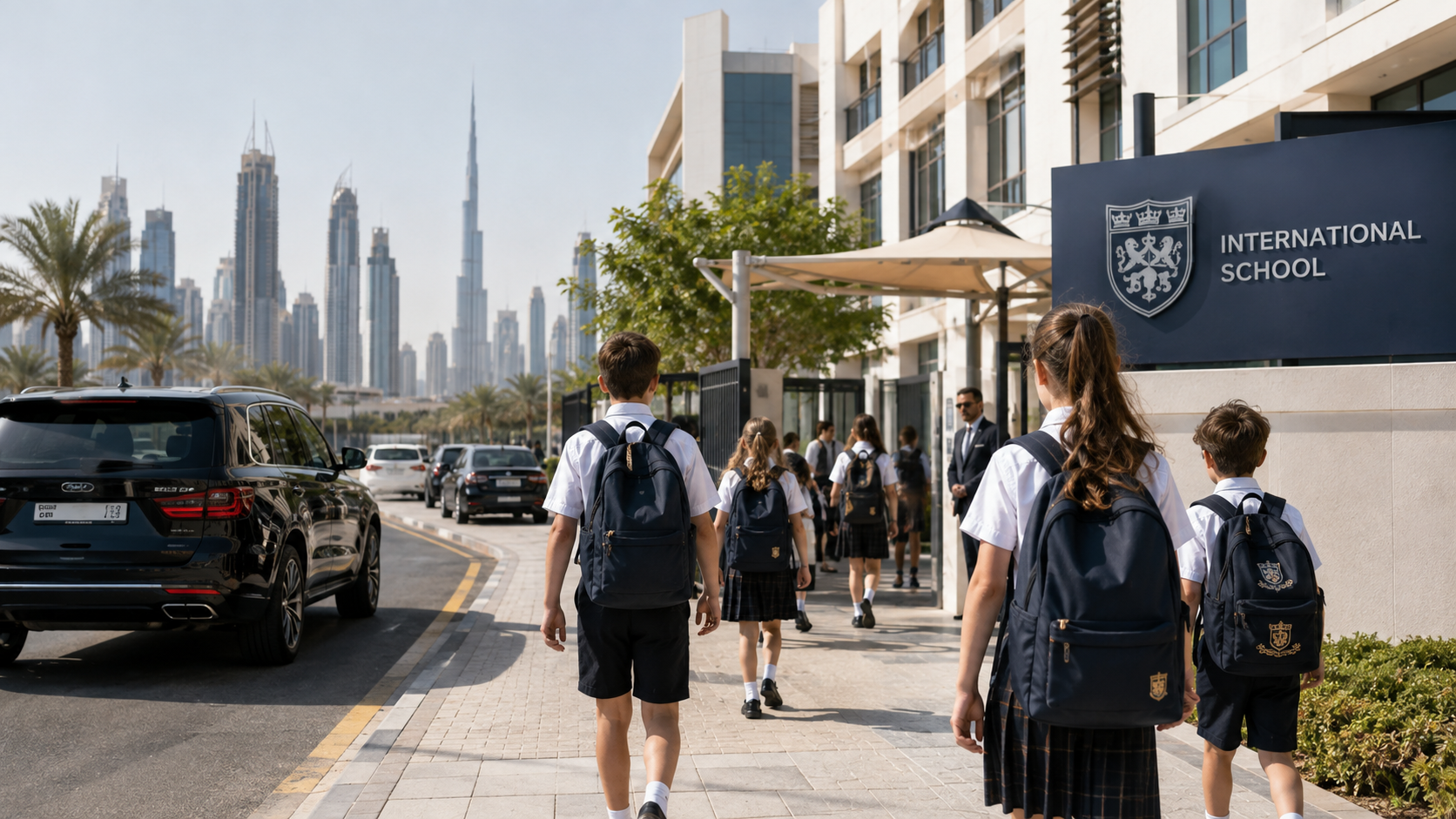
Dubai schools reopened this week as operators with 150,000 UAE pupils tested whether conflict has slowed expatriate demand.
The return of yellow buses gave Dubai a visible routine after six months of regional fighting that included an Iranian attack on the emirate during the US-Israeli conflict with Iran. For school groups, the new academic year is an early measure of whether wealthy foreign families still see the city as a stable base.
International private schools have grown quickly in recent years, including overseas branches linked to Harrow and Queen Elizabeth’s School. Operators expanded on the assumption that Dubai’s prewar boom would keep drawing professionals, investors and families from overseas.
Harrow opens into softer demand
Dubai-listed Taaleem Group opened Harrow Dubai this week and said nine of its 15 premium schools were full. The figure points to continued demand, though some operators and parents said waiting lists had shortened and new arrivals from countries including the UK had slowed.
Brookfield-backed GEMS Education, one of the world’s largest private school groups, said it had almost met its enrolment goals for the academic year. The group has close to 150,000 students across the United Arab Emirates, giving its intake a wider signal value for the private education market.
Dino Varkey, GEMS’ chief executive, said the business was still expanding but at a different pace from the three years after the pandemic. “it’s still a growth scenario for the business, I just don’t think it’s reasonable to expect that we’ll grow at the same rates that we have done for three years post-Covid,” Varkey said.
GEMS misses a 900 target
The clearest shortfall was at GEMS’ School of Research and Innovation, a premium campus that opened last year with annual tuition of almost £40,000. New students increased to 650 from 450, but the intake remained below the prewar target of 900.
Varkey said the group’s affluent, internationally mobile families could leave the country quickly during the height of the conflict. About half of the roughly 1,600 GEMS students who left the UAE have since returned, according to the company.
That pattern matters because Dubai’s private schools are both service providers and part of the city’s appeal to foreign professionals. A school place can influence whether a banker, lawyer, entrepreneur or corporate executive moves a family to the emirate rather than commuting or choosing another hub.
Mobile families pressure operators
If enrolment stabilizes through the term, Dubai’s macro position as a services hub would be reinforced by household spending, rent demand and professional migration. For GEMS and Taaleem, steadier rolls would support fee income and justify recent campus investment; for the sector, it would keep foreign capital interested in private education assets.
If security worries return, the mechanism would run through family relocation decisions rather than tourism alone. Globally mobile parents could delay moves, GEMS could face wider gaps between targets and actual intake, and rival operators would have to compete harder for a smaller pool of incoming students.
A third path is slower growth without a reversal. Under that scenario, Dubai would still attract expatriate families, but premium schools would face more cautious admissions forecasts, shorter waiting lists and greater pressure to prove that high fees are matched by facilities and academic outcomes.
The main open question is whether the return of families who left during the conflict continues beyond the start of term. The answer will shape not only GEMS’ missed 900-student target at one campus, but also the pace at which Dubai’s private school market can absorb new capacity.