Djibouti holds presidential elections as Guelleh seeks sixth term in office
Djibouti election on April 10 is set as President Ismail Omar Guelleh seeks a sixth term, with IGAD observers due to report April 12.
Lauren Collins ·
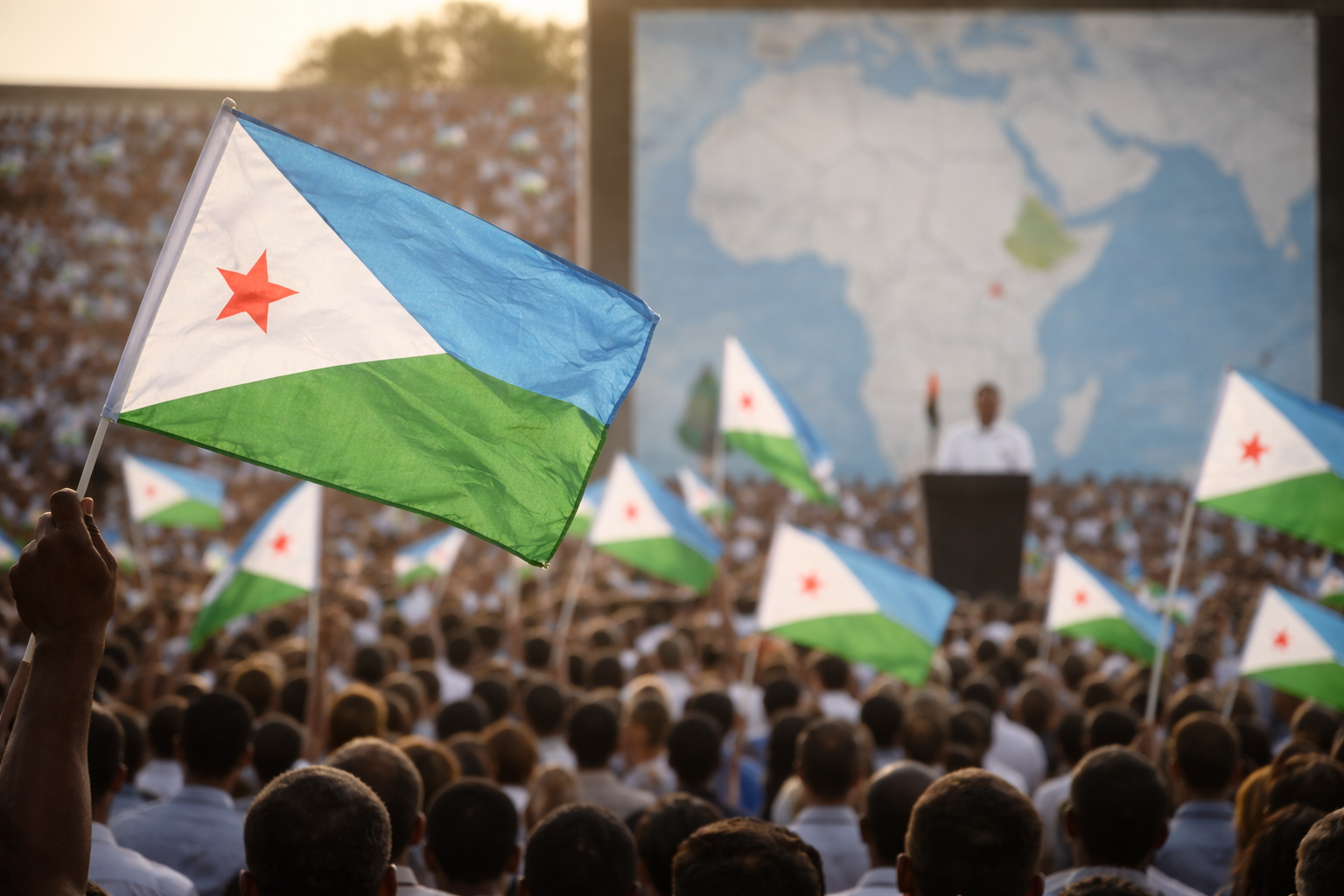
Djibouti is preparing for a presidential election on Friday, April 10, where incumbent President Ismail Omar Guelleh is widely anticipated to secure a sixth term in office. The 78-year-old leader's re-election bid occurs as the nation maintains its critical role in international security and shipping lanes within the Horn of Africa.
The election unfolds in a country strategically positioned at the Bab al-Mandeb Strait, a vital maritime passage connecting the Red Sea to the Gulf of Aden. This narrow corridor is frequently identified by officials and analysts as a crucial choke point for global trade, particularly for goods moving between Asian and Western markets. Djibouti's geographical advantage has also established it as a significant center for foreign military deployments, essential for regional security and the protection of maritime routes.
Several international military bases are hosted in Djibouti, including those belonging to the United States, France, and China. These facilities contribute approximately $125 million annually to the government through associated agreements, according to the source material. These revenues are a key financial component, intertwining with national economic stability and the strategic interests of major global powers operating in the vicinity.
President Guelleh is seeking another term following legislative changes that removed age limits in 2010 and eliminated term limits in 2025, as stated in the source material. His sole challenger in the election is Mohamed Farah Samatar, a former member of the ruling People’s Rally for Progress party, who is contesting under the banner of the Unified Democratic Centre.
The electoral process has drawn criticism, primarily concerning the extent of political competition and the state of civil liberties. The Djibouti League of Human Rights has characterized the election as a "masquerade," citing what it described as an absence of genuine contestation and a diminishing democratic space. The source material did not include a response from the government regarding these allegations.
Official election administration figures indicate a total of 243,471 registered voters, an increase from 215,000 in the 2021 election. Voter turnout in Djibouti typically averages around 67 percent, according to the source material. The level of participation in the upcoming vote will be a key indicator for assessing its domestic legitimacy.
International observation of the election is also planned. The Intergovernmental Authority on Development (IGAD) has dispatched 17 observers from five member states to monitor the polling process. IGAD is expected to release a statement on April 12 following its mission.