Himalayan Flooding Deaths Surpass 1,000 as Rescues Continue
Over 1,000 people have died in Nepal and China from Himalayan flooding, triggered by a glacial collapse on August 26, 2026. Rescue operations are ongoing.
Lauren Collins ·
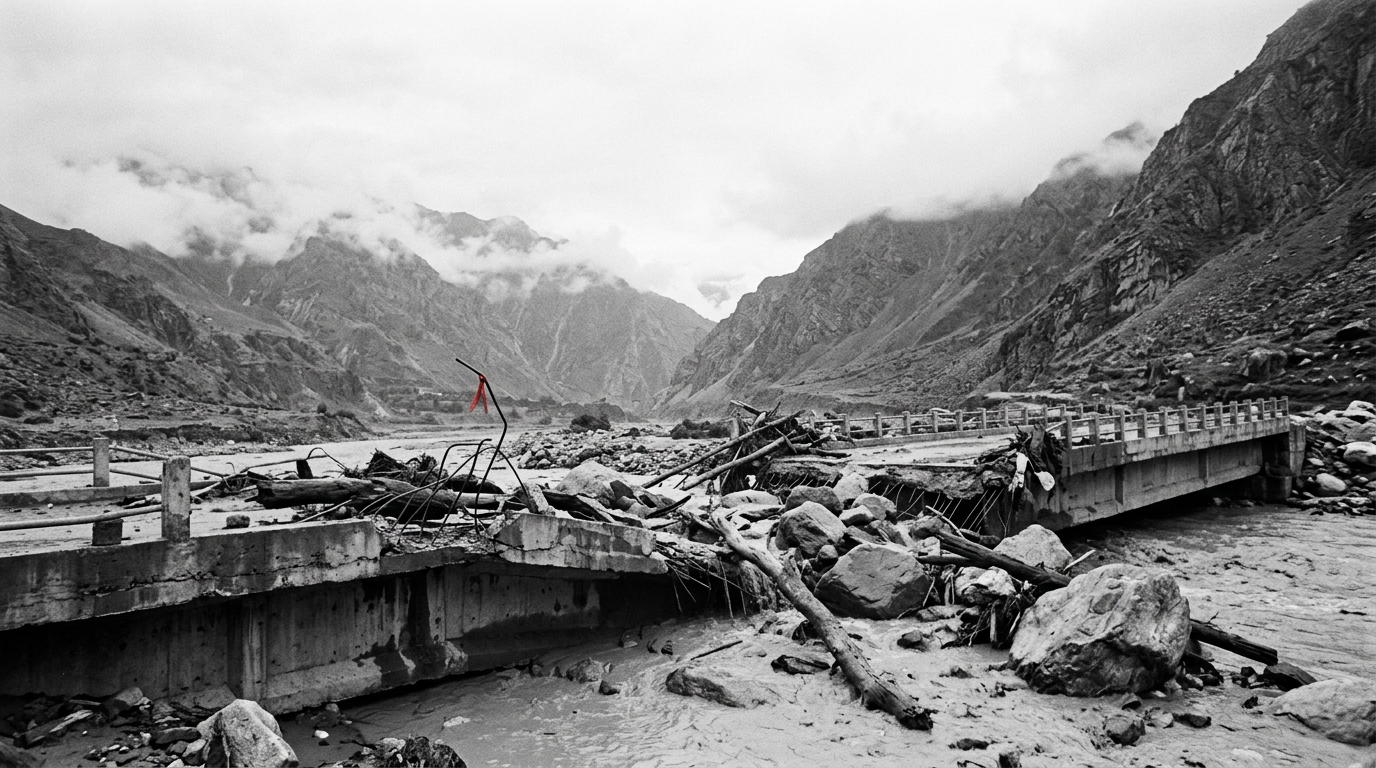
A catastrophic glacial collapse in the Himalayas on August 26, 2026, has led to widespread flooding in Nepal and China, with confirmed fatalities exceeding 1,000 individuals. The event, caused by a bedrock failure beneath a glacier, unleashed immense volumes of ice, rock, and meltwater into downstream valleys, devastating communities and infrastructure.
By September 1, 2026, Nepal's National Disaster Risk Reduction and Management Authority reported 987 confirmed deaths and 3,916 missing persons. Concurrently, Chinese authorities confirmed 16 fatalities and 546 individuals unaccounted for. The deluge severely damaged regional infrastructure, particularly impacting numerous hydropower stations crucial to the region's energy supply. Hundreds of workers were initially trapped within tunnels at these facilities.
Rescue Efforts and Aid Mobilization
Ongoing rescue operations face challenging conditions across the affected areas. Prime Minister Balendra Shah confirmed the successful rescue of 279 workers from the damaged hydropower sites. International aid totaling over $42 million has been pledged to support the recovery. Both India and China are providing logistical assistance, including the construction of temporary bridges essential for reaching isolated districts.
Despite partial restoration of communication and power lines in some areas, search teams continue their efforts to recover bodies from settlements buried under mud and debris. A police official highlighted the devastating impact on local communities, citing the recovery of 24 bodies from a single house in Betrabati village, located within Nepal's Nuwakot district. Officials anticipate further international aid as the full extent of the damage is comprehensively assessed.
Vulnerability of Hydropower Infrastructure
The disaster has starkly exposed the inherent vulnerability of the rapidly expanding hydropower sector in the Himalayan region. These projects are designed to harness the vast water resources of the Himalayas, often requiring extensive tunneling through steep, high-altitude terrain. Nepal, in particular, has seen a significant boom in hydropower development since the turn of the century, aiming to address chronic domestic power shortages and export electricity to neighboring India.
The severe infrastructure damage underscores the substantial risks associated with large-scale projects in geologically unstable and climate change-susceptible environments. The long-term implications for future energy infrastructure planning in similar high-risk regions remain a critical concern for both national governments and international developers.