Sweden Democrats Anti-Migrant Campaign Draws Public Criticism
The Sweden Democrats face public backlash and operational challenges following a series of provocative anti-migrant advertising campaigns ahead of the…
Lauren Collins ·
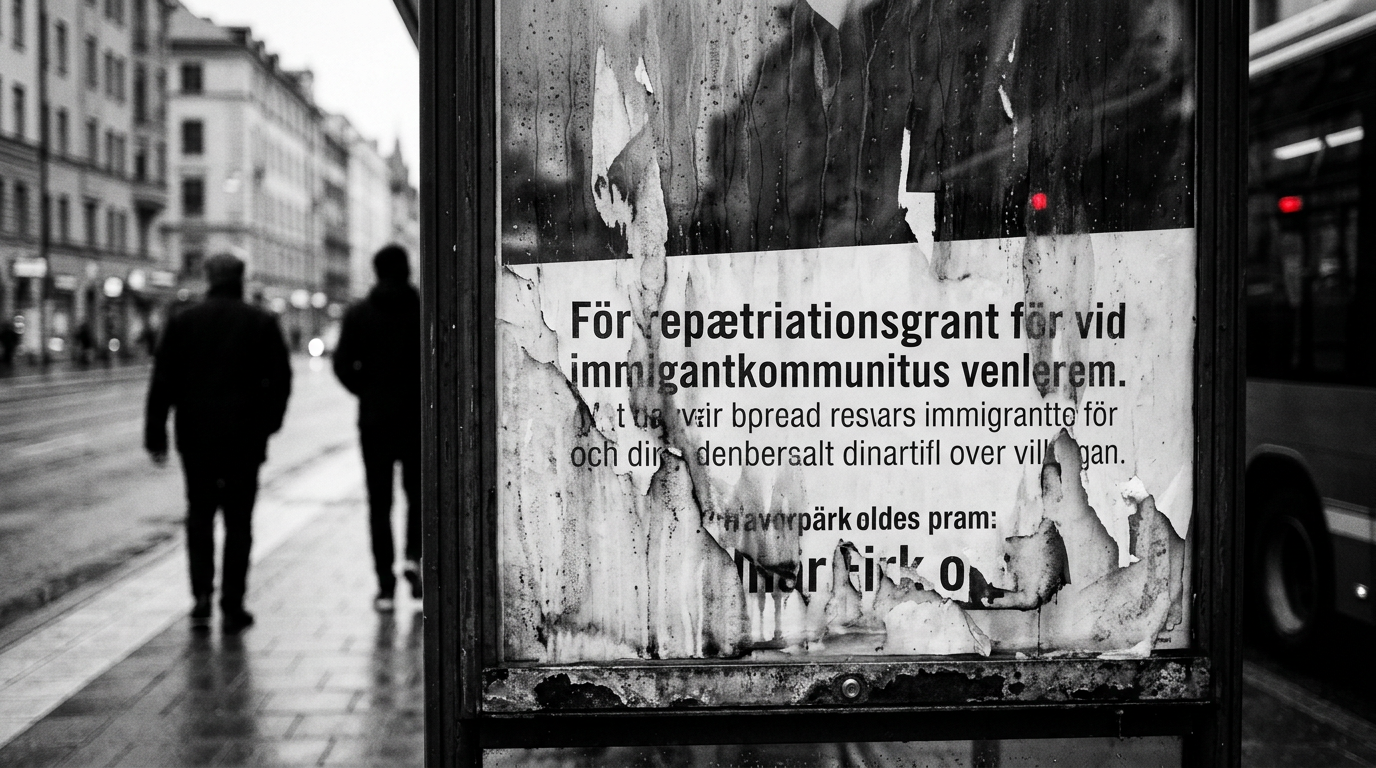
The Sweden Democrats (SD) party's aggressive anti-migrant advertising campaign across Stockholm and western Sweden has triggered widespread public criticism ahead of the September 13 general election. The party invested approximately $100,000 in installations at Stockholm Central Station and bus advertisements questioning immigrants' origins, specifically targeting Somali communities.
These materials, which advocate for increased repatriation grants of up to $36,000 per adult, have drawn accusations of inciting social division and marginalizing minority populations.
This campaign follows a significant political shift in Sweden, where the SD has moved from its previous "pariah" status to become a key coalition partner. The Tido Agreement in 2022 formalized this shift, leading to recent cooperation with parties like the Liberal Party. This normalization has intensified public debate regarding the acceptable boundaries of political discourse.
Transport Operator Removes Ads
In western Sweden, public transport operator Vasttrafik removed SD advertisements from buses after staff protests. Concerns over worker safety and potential vandalism prompted the removal. While the SD has characterized the removal of its materials as censorship and election sabotage, political analysts suggest the party's provocative messaging may be nearing a point of diminishing returns with voters.
Campaign's Financial Scale and Political Context The Sweden Democrats The campaign's $100,000 investment highlights the SD's significant push to influence the upcoming general election. The party seeks to secure a formal role in government for the first time, marking a potential further entrenchment of its influence within Swedish politics. The increased repatriation grants, a key element of the campaign, represent a substantial financial incentive, rising to $36,000 per adult from a prior figure of approximately $1,000 offered since the 1980s. Broader Implications for European Politics The Sweden Democrats' campaign and subsequent public reaction offer a look into the ongoing debates surrounding immigration and political discourse across Europe. The party's strategic shift from outsider to coalition partner demonstrates how far-right parties are integrating into mainstream politics in several European nations, reshaping national and regional political landscapes. The outcome of the upcoming Swedish general election could therefore influence similar political trajectories in other European Union member states.