Extreme Heat and Wildfires Reshape Europe
Heatwaves and wildfires are causing economic disruption and infrastructure strain across Europe, with climate projections signaling future financial losses.
Atlas Newsdesk ·
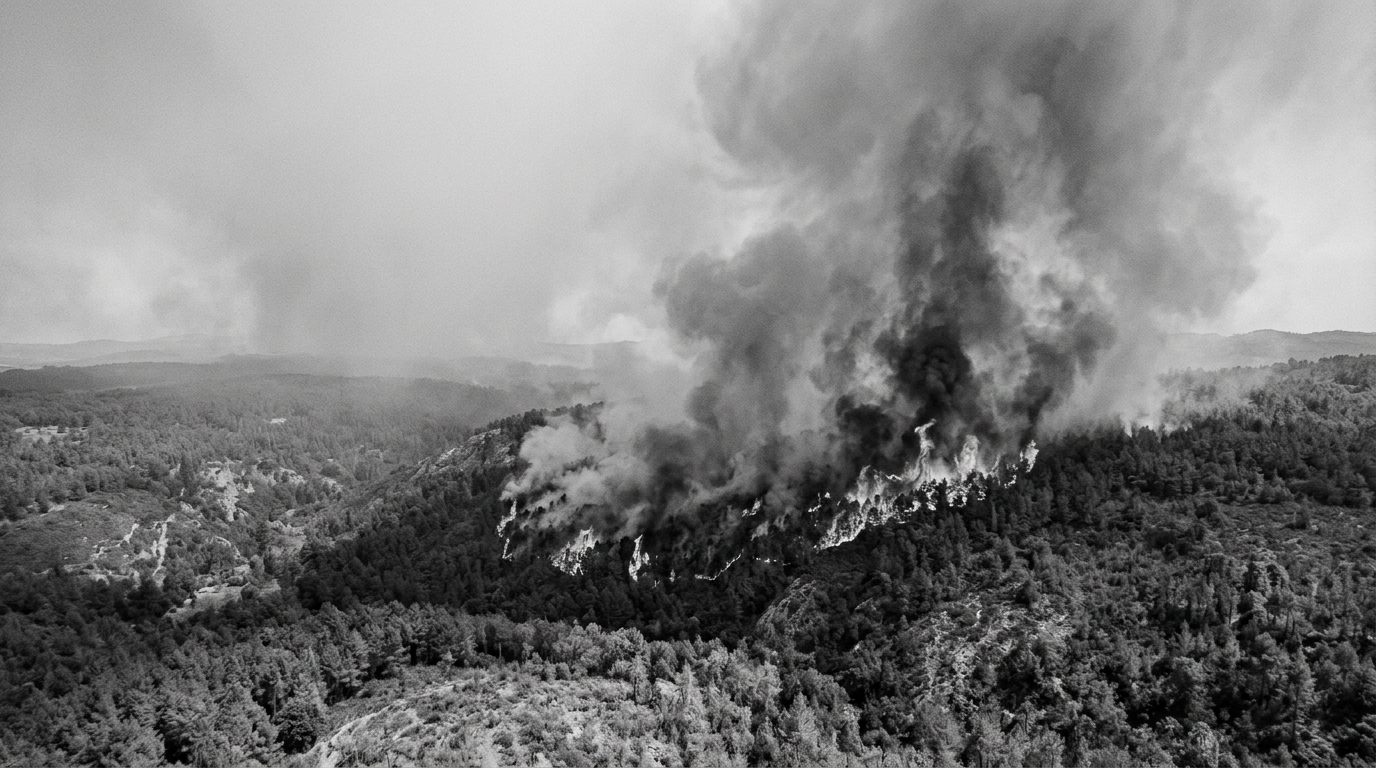
Rising temperatures and prolonged heatwaves are fundamentally altering European environmental and economic conditions, as extreme weather events transition from seasonal anomalies to recurring systemic risks. Data from the Copernicus Climate Change Service indicates that June temperatures in Western Europe averaged 20.74 degrees Celsius, exceeding the 1991-2020 baseline by 3.06 degrees.
The mechanism of this shift involves a feedback loop where extreme heat accelerates soil moisture depletion and vegetation desiccation, creating high-risk conditions for wildfires. These fires are now starting earlier and burning larger areas, with the European Union recording 1 million hectares of land scorched last year, nearly double the historical average. Simultaneously, reduced river levels on major arteries like the Rhine and Danube are disrupting inland shipping, hydroelectric power generation, and industrial cooling processes.
The economic and public health consequences are compounding. The European Environment Agency reports that extreme weather cost the continent 738 billion euros between 1980 and 2023, with 162 billion euros incurred in the last three years alone. Projections suggest that without significant mitigation, climate-related losses could reach 5.6 trillion euros by 2050. As urban heat island effects intensify, energy systems face a dual challenge: surging demand for cooling coupled with reduced efficiency in thermal and nuclear power generation due to water scarcity.