College sports bill nears Senate floor test as talks gain
A college sports bill could reach the Senate floor soon if negotiators lock down league support and beat a competing crypto push.
Mehmet Şahinoğlu ·
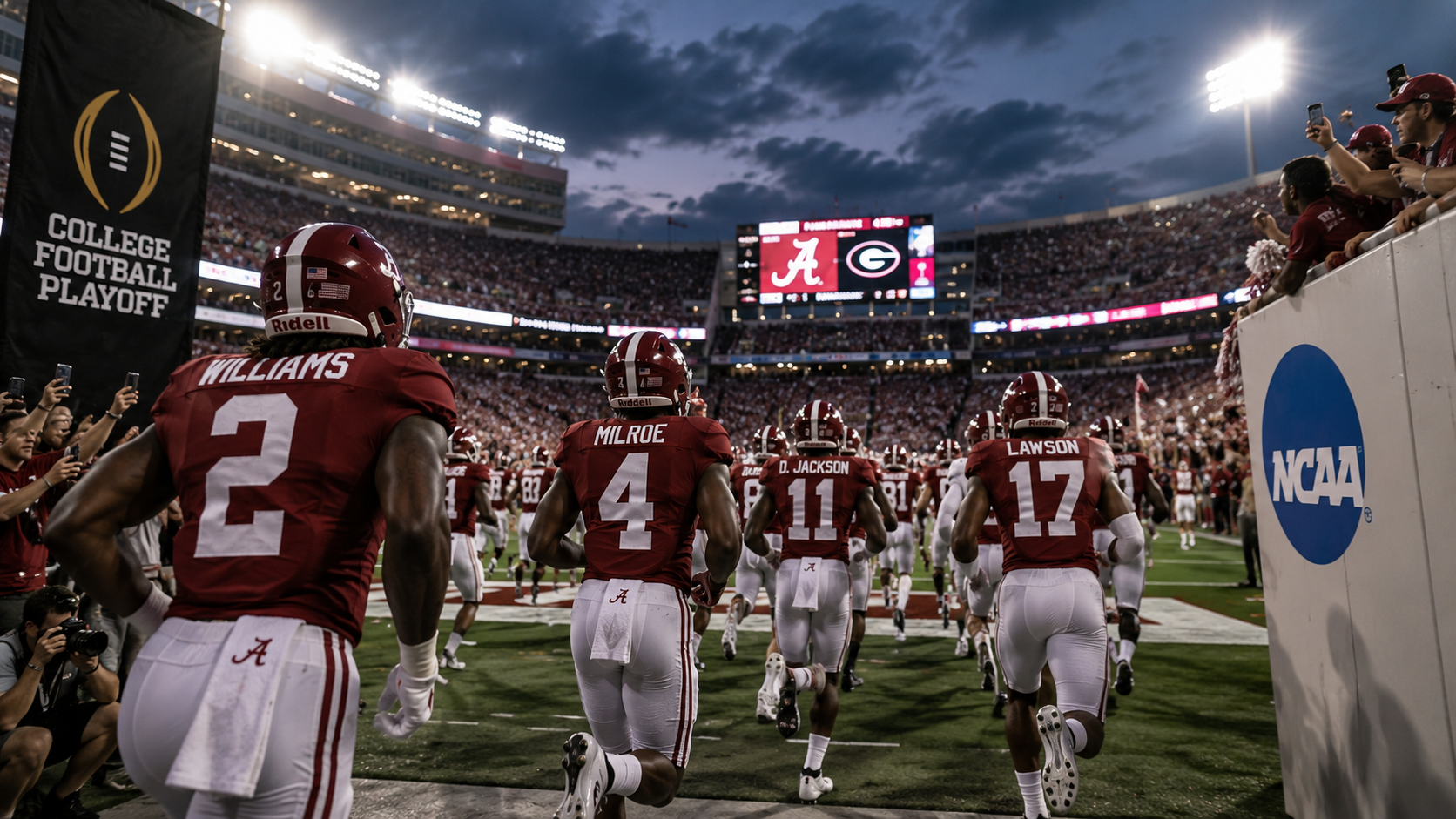
The college sports bill is nearing a Senate decision point as negotiators test whether they can secure floor time in the next two weeks.
Sen. Eric Schmitt, a Missouri Republican, said he is working with Sen. Ted Cruz of Texas and Sen. Maria Cantwell of Washington on a final agreement. He described the talks as being in a "pretty good place," while making clear that floor access depends on how quickly the package is judged ready.
The push now turns on two tracks at once: winning broader support from college sports power centers and persuading Senate leadership that the bill can move. Schmitt said he has also been speaking with House members, a sign that backers are thinking beyond a Senate vote and toward a measure that could survive bicameral pressure.
Schmitt presses SEC and Big Ten
Schmitt said he spoke "a few times" with Greg Sankey, who leads the Southeastern Conference, and Tony Petitti of the Big Ten. Those conversations matter because the two leagues sit at the center of the political and commercial fight over how Washington should set rules for college athletics.
The effort to win over both conferences suggests negotiators are trying to reduce resistance before a bill reaches the floor. In Senate terms, a proposal that arrives with visible support from major leagues can be easier for leadership to schedule, especially when members are weighing whether the measure can avoid a drawn-out fight.
Schmitt also said he has spoken with Trump "several times" about the issue. He said Trump is "a big sports fan" and believes the current college sports environment is "untenable," language that gives supporters another political argument as they try to frame the bill as a response to disorder rather than a narrow sports dispute.
Thune’s calendar narrows the window
The immediate pressure point is Senate Majority Leader John Thune, who will need a clear signal soon on whether the college sports measure is ready for consideration. Schmitt said the college sports bill and a separate crypto package are the two most likely candidates for floor action in the next two weeks.
That competition for time is not procedural trivia. The Senate calendar can turn a policy negotiation into a race, because a bill that is not complete when leadership has an opening can lose its chance to a rival measure with a cleaner vote count.
Schmitt’s account indicates that the college sports bill is close enough to be discussed as a floor vehicle, but not yet locked in. He said both measures could advance, or only one could, depending on which camp is "ready to roll."
The crypto bill adds a separate industry agenda to the same legislative bottleneck. If crypto negotiators deliver a package first, the college sports effort may face a longer wait even if Schmitt, Cruz and Cantwell reach agreement among themselves.
Leagues, lawmakers and open risks
The direct effects would fall first on the college sports ecosystem, where conferences, universities and athletes are waiting for clearer federal rules. The source material did not describe the final bill text, leaving the measure’s policy details as the central unknown for schools and leagues.
If Schmitt and his partners secure enough support from the SEC, Big Ten, House members and Senate leadership, the bill could move from negotiation to floor debate. That path would give the company-level equivalent in this story, the major conferences, a stronger hand in shaping a national framework before fragmented pressures harden further.
If support from the leagues remains incomplete, the bill could reach Thune as a riskier proposition. In that case, the specific cost for Schmitt’s effort would be timing: a measure that is close but not settled may be pushed aside by the crypto package, leaving the wider college sports sector in the same uncertain position.
If both the college sports and crypto bills advance, the macro effect would be political rather than global economic. It would show that the Senate can still move industry-specific frameworks when bipartisan negotiators align, while giving college athletics and digital assets separate paths toward federal rules.
The key questions are now concrete: whether Schmitt, Cruz and Cantwell can finalize language, whether the SEC and Big Ten are satisfied, whether House conversations produce a viable path, and whether Thune gives the measure floor time before the crypto track overtakes it.