China Opens Pinglu Canal, Shortening Southwest Trade Routes to ASEAN
China’s new 134.2km Pinglu Canal links manufacturing hubs to the Beibu Gulf, cutting maritime routes by 560km to boost trade with Southeast Asia.
Mei Lin ·
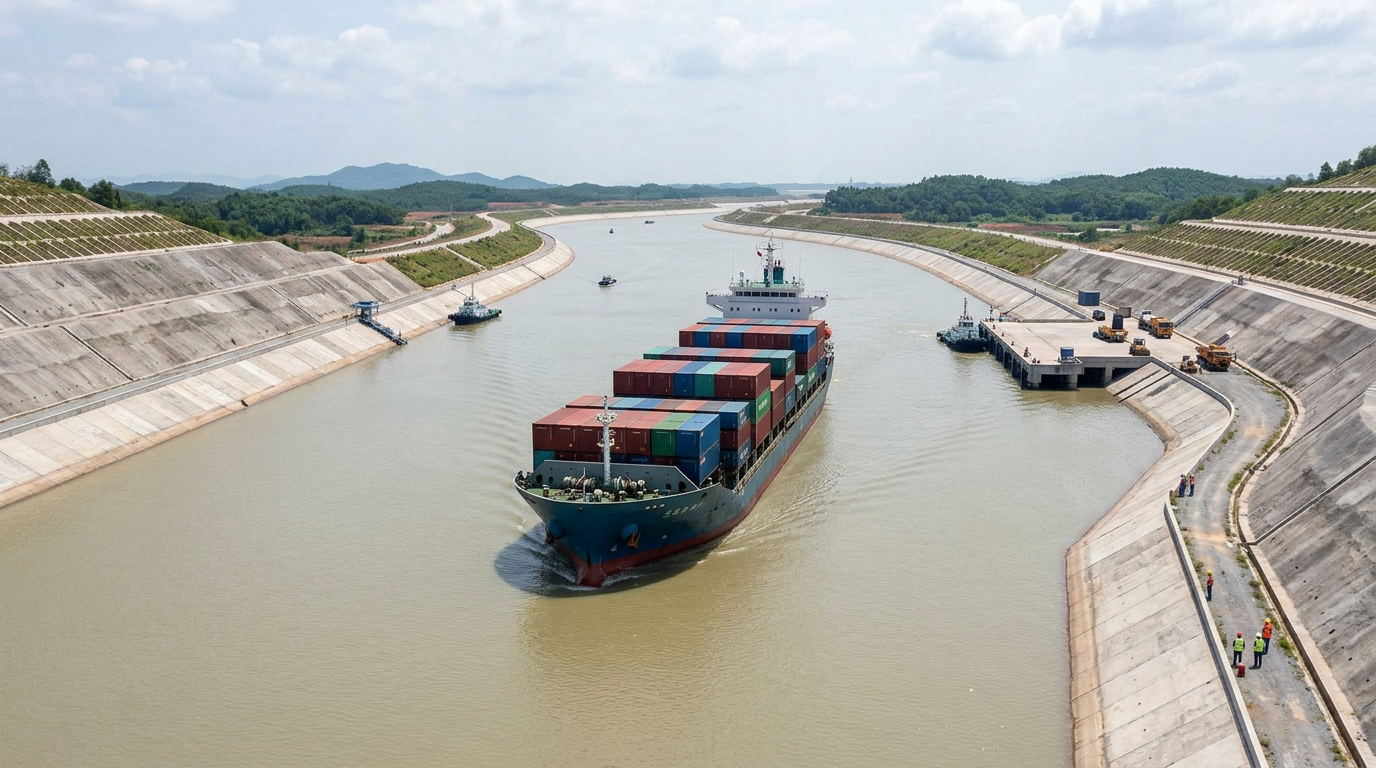
China's New Trade Waterway Inaugurated
China officially opened the 134.2-kilometer Pinglu Canal on September 16, connecting its southwestern manufacturing heartlands directly to the Beibu Gulf. This new waterway, capable of accommodating 5,000-ton vessels, shortens the maritime journey from regions like Nanning to the sea by more than 560 kilometers, rerouting cargo that previously transited through Guangdong province.
Southwestern Hubs Gain Direct Coastal Access
The Pinglu Canal represents a significant infrastructure addition, linking the Xi River system at the Shijin Reservoir in Guangxi to Qinzhou Port in the Beibu Gulf. This initiative aims to reduce logistics costs for businesses in southwest China by an estimated 18% to 30%, according to Chinese authorities. It creates a new, direct conduit from inland production hubs to the South China Sea and Southeast Asian markets, bolstering the region's connectivity.
Dual Circulation Strategy Advances
This canal project aligns with China's 'dual circulation' economic strategy, which prioritizes domestic economic integration alongside international trade. The initiative is designed to strengthen internal supply chains while simultaneously enhancing trade links with key partners, particularly within the Association of Southeast Asian Nations (ASEAN). The Beibu Gulf Economic Zone, already a critical gateway, is positioned to deepen its role in facilitating this trade expansion.
ASEAN Economic Ties Strengthen
The Pinglu Canal is expected to enhance China's trade with ASEAN members, improving the efficiency of goods movement. By reducing transit times and costs, the new route could increase the competitiveness of Chinese exports to Southeast Asia and facilitate imports from the region. This development could reshape existing trade flows and further integrate the economic landscapes of China and ASEAN member states, potentially increasing the total trade value between the two blocs.
Global Supply Chain Reconfiguration
The canal's activation occurs at a time when global transportation routes, including Suez and Panama, are facing increasing scrutiny for efficiency and resilience. China's investment in such infrastructure signals a strategic effort to optimize its trade arteries, potentially reconfiguring certain global supply chain dynamics. This move could reduce reliance on longer, more congested routes, offering a more direct path for goods flowing between southwestern China and its international trading partners.
Monitoring Qinzhou Port Activity
Observers will monitor the growth in cargo volume through Qinzhou Port, alongside any specific trade agreements or initiatives referencing the canal with ASEAN nations. Businesses utilizing the new route are expected to report on actual logistics cost savings over the coming year. This data will indicate the canal's success in integrating southwestern China into regional supply chains and its broader impact on trade efficiency and volume.