Championship Clubs Reject Video Review System for Next Season
Mehmet Şahinoğlu ·
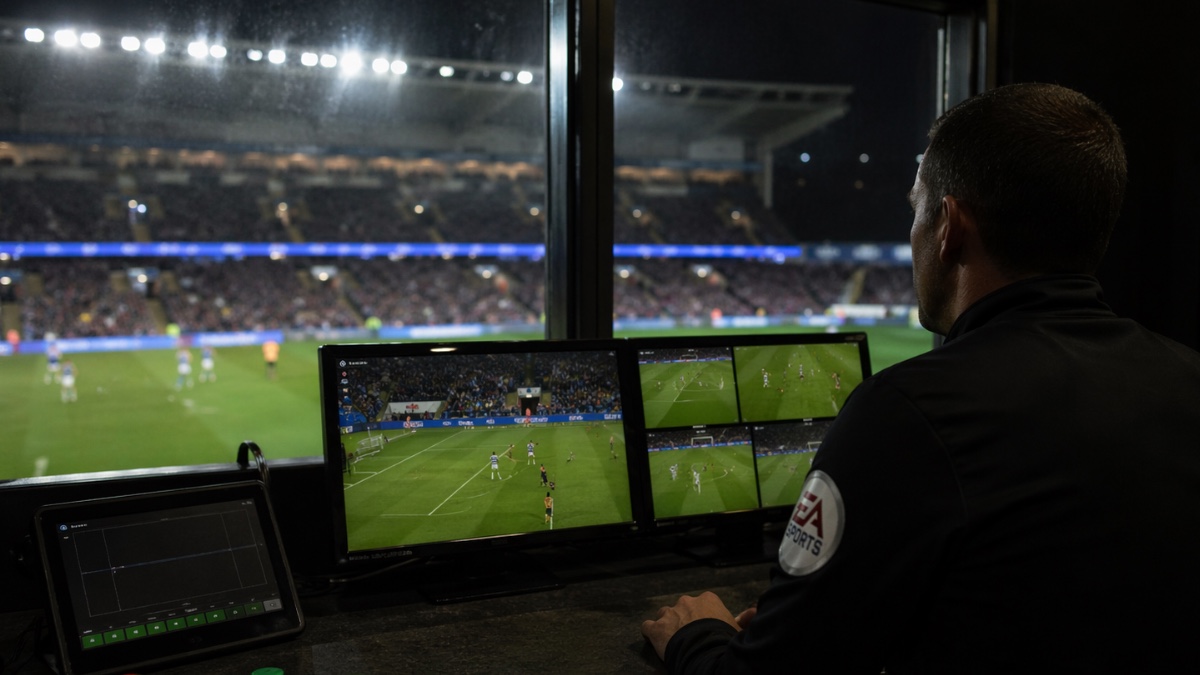
Teams within England’s Championship have opted against implementing a simplified video review system for the upcoming season, thereby delaying the expansion of advanced officiating technology beyond the Premier League. The proposed system, known as Football Video Support (FVS), was conceived as a more economical alternative to the Video Assistant Referee (VAR), utilizing fewer cameras and granting team managers a restricted number of challenges per match.
Championship Clubs Reject FVS
This decision emerged following extensive consultations with clubs, where significant opposition ultimately proved decisive. While some managers advocated for additional officiating tools to mitigate errors, club executives remained unconvinced that FVS would deliver consistent outcomes without introducing further disruptions to gameplay. Unlike the comprehensive VAR system, FVS does not incorporate a dedicated video official and is activated only upon a coach's request for a review.
Current Technology and Future Outlook
The Championship currently employs goal-line technology, ensuring precision in determining scoring plays. Lower divisions are proceeding with greater caution; League One is scheduled to vote in June on the potential introduction of this same system. However, more sophisticated review mechanisms appear unlikely to gain widespread acceptance in the near future, with VAR effectively ruled out for at least the next year.
Impact on Officiating
The rejection means that referees in the Championship will continue to operate without video-assisted reviews beyond goal-line incidents. Consequently, contentious decisions—including those pertaining to penalties, red cards, and offsides—will continue to rely solely on the judgment of on-field officials. Managers who had supported video intervention now face another season without the ability to challenge crucial calls during matches.
Disparity in English Football
This outcome underscores a broader disparity within English football, highlighting the contrast between the substantial resources available to top-tier leagues and the financial and operational constraints faced by lower-league clubs. While the Premier League manages the considerable cost and complexity associated with VAR, clubs outside the top flight remain apprehensive about systems that could introduce delays without guaranteeing accuracy. FVS was intended as a compromise solution, yet its limited scope raised concerns regarding inconsistent application and potential misuse.
Lessons from FVS Trials
Trials conducted in other regions have further fueled this skepticism. Canada’s premier football division has been testing FVS alongside experimental rule modifications, including a revised interpretation of offside calls. Early implementation has already revealed complications. In one instance, a failed appeal for a red card initiated a broader review, which ultimately led to a second yellow card and dismissal, followed by a decisive goal scored during extended stoppage time that resulted from the review process.
Uncertain Future for Video Review
For the immediate future, the Championship will proceed without expanded video assistance, although sustained pressure may materialize if high-profile officiating errors persist. Any reconsideration of the system is improbable in the short term, given the extensive opposition from clubs. The central question remains whether ongoing trials and refinements elsewhere can effectively address concerns regarding fairness and the flow of the game, or if they will instead reinforce resistance to adopting such systems outside of the sport’s most affluent leagues.