Global Regulators Simulate Bank Collapse in DC
Central banks will run a Saturday war game in Washington to test cross-border responses to a simulated collapse of a major global bank.
Atlas Newsdesk ·
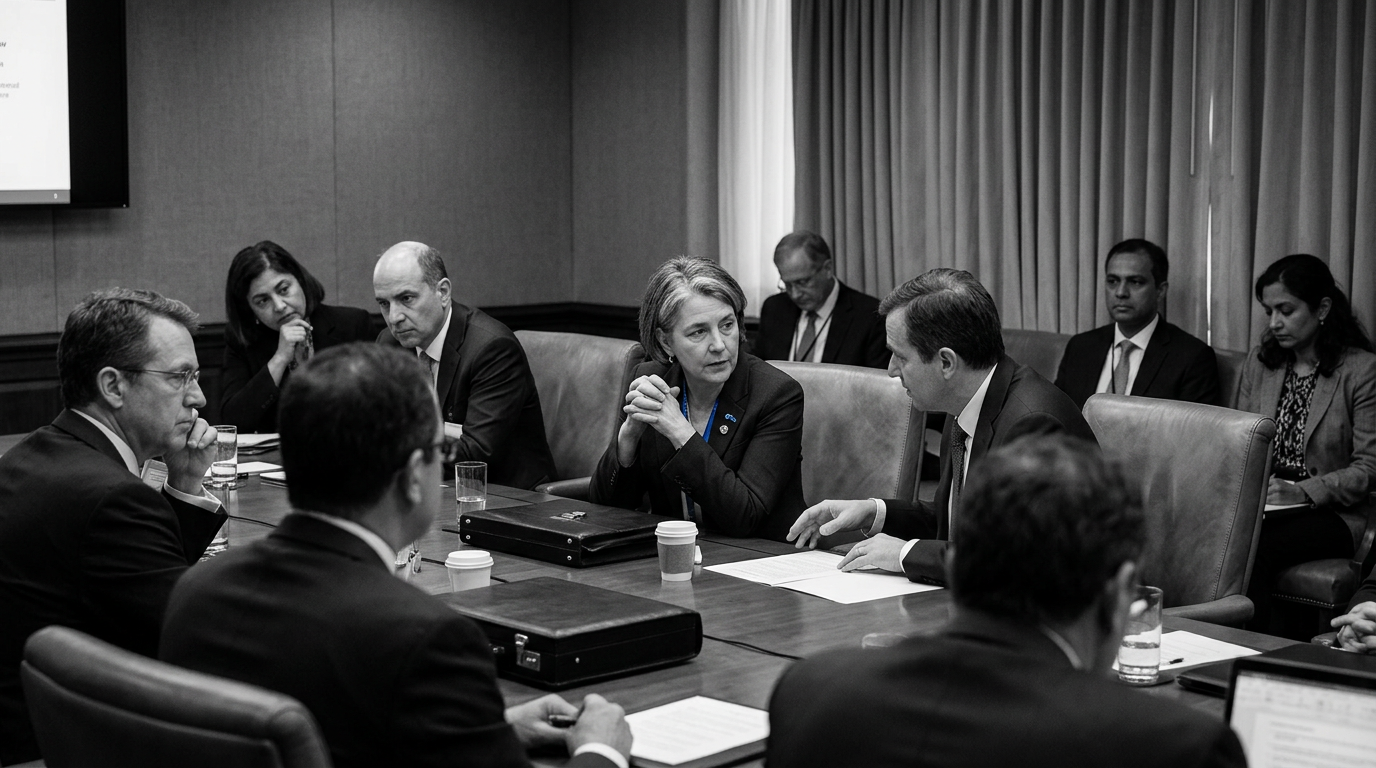
Senior financial officials from the United States, the United Kingdom, and the European Union are set to take part in a financial “war game” in Washington on Saturday focused on how authorities would respond if a globally significant bank failed. The exercise is scheduled to be held at the Federal Deposit Insurance Commission (FDIC) offices and is designed to test coordination among regulators when a bank’s operations and creditors span multiple jurisdictions.
Officials expected to attend include representatives from the US Federal Reserve, the European Central Bank, and the Bank of England, including Governor Andrew Bailey. The event is described as a desktop stress test, with participants working through decision points and communications challenges that could arise during a fast-moving crisis.
The stated aim is to improve cross-border cooperation for bank resolutions, where authorities must act quickly while aligning legal and operational steps across countries.
The scenario is intended to mirror the type of systemic shock associated with the 2008 Lehman Brothers collapse, using a simulated failure of a global systemically important bank. By design, such a case would force regulators to confront questions around liquidity, continuity of critical services, and the sequencing of actions among home and host authorities.
The FDIC said the exercise is meant to strengthen understanding of resolution regimes for global systemically important banks (G-SIBs) and to build confidence that an orderly resolution can be achieved.
The simulation comes as banking regulators flag a more complex risk landscape for financial stability. Officials have pointed to the rapid development of artificial intelligence (AI), the growth of private credit lending, and the possibility of market disruption linked to geopolitical tensions, specifically the US-Israel conflict with Iran.
In this context, the war game is positioned as a practical test of whether existing playbooks and lines of communication are sufficient when multiple risk factors could amplify stress at the same time.
Regulators have also highlighted concerns about AI models and related technology risks. AI systems, including Anthropic's Mythos, have been cited by some experts as potential sources of vulnerability for IT systems, with possible implications for financial institutions.
The exercise, however, is focused on resolution coordination rather than evaluating any single technology provider, and it is not clear from the information provided how directly AI-driven incidents are incorporated into the simulated failure.
What remains uncertain is how the lessons from the desktop test will be translated into operational changes across agencies and jurisdictions, or whether additional exercises will follow. Still, the participation of US, UK, and EU officials underscores the cross-border nature of modern banking and the need for aligned crisis-management procedures when a large institution’s distress could transmit rapidly through global markets.