California billionaire tax faces costly fight on November vote
California’s billionaire tax is set for the November ballot after labor leaders refused to withdraw it, setting up a high-cost statewide fight.
Lauren Collins ·
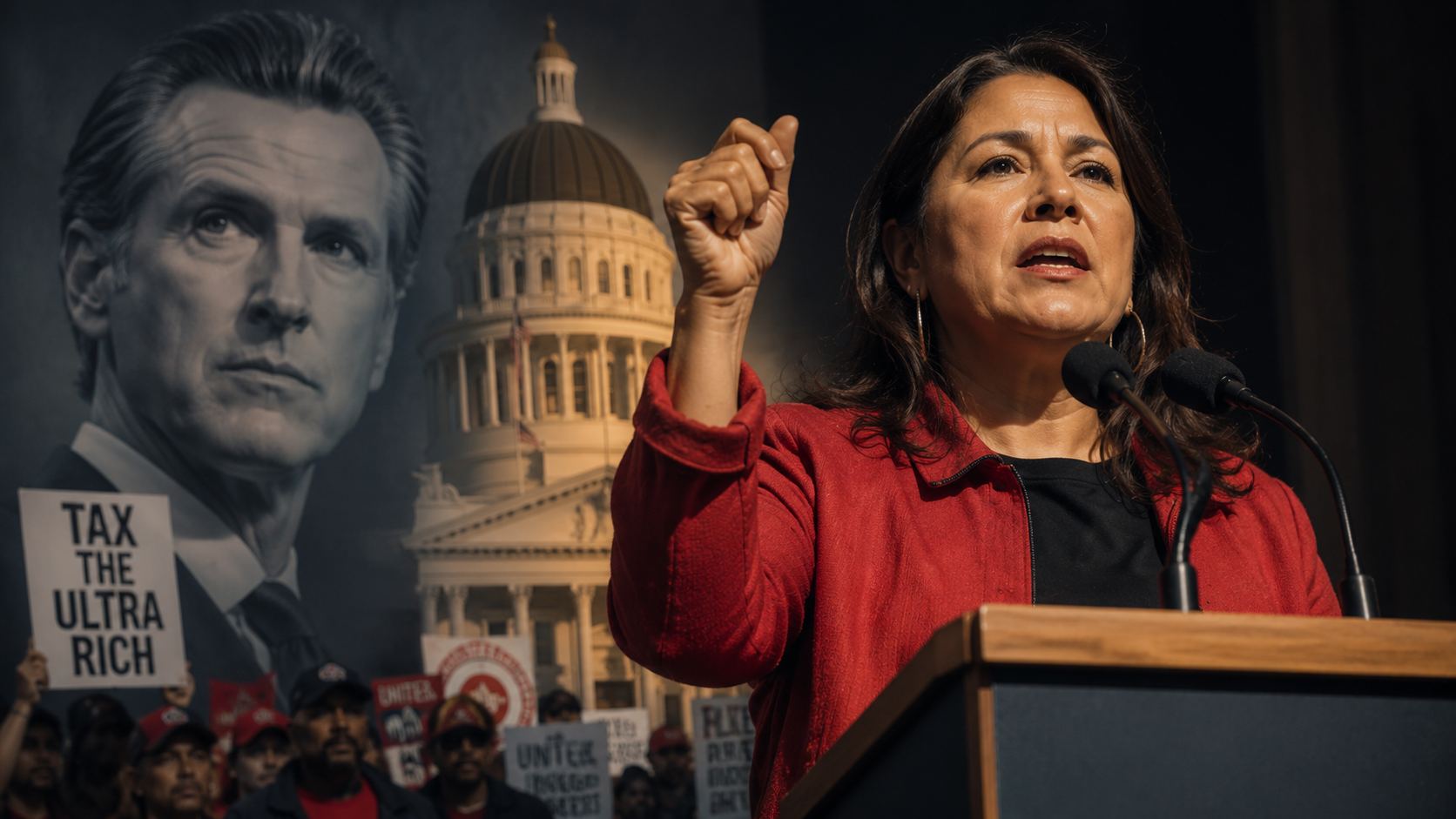
California’s billionaire tax is moving toward a November statewide vote, setting up a costly campaign that pits organized labor and progressive allies against Gov. Gavin Newsom and many of the state’s wealthiest donors.
The proposal would impose a one-time 5% charge on the assets of California billionaires. Supporters declined to pull the initiative by a deadline this week, despite heavy pressure from the governor’s political operation.
Labor leaders press ahead after qualification spending
The initiative is backed by the Service Employees International Union-United Healthcare Workers West (SEIU-UHW). At a Thursday news conference, the union’s chief of staff, Suzanne Jimenez, said proponents were seeking additional financial support after spending about $7.3 million to get the measure qualified.
The decision to keep the measure alive immediately locks both sides into a high-stakes contest for voter attention in a crowded general-election ballot. Supporters are preparing for a campaign in which they expect to be outspent by wealthy opponents.
Backers are betting that voter frustration over economic inequality will outweigh warnings about potential economic fallout. They are also tying the issue to national politics, arguing that federal policy choices on health care and spending have raised the stakes for state revenues and public services.
National Democrats, inequality politics shape the fight
The clash comes as Democrats nationwide debate how aggressively to tax wealth, with progressives emphasizing redistribution and moderates warning about unintended economic effects. The California campaign is unfolding alongside renewed progressive momentum in other states, including a prominent contest in New York last week.
Supporters include Rep. Ro Khanna and Sen. Bernie Sanders of Vermont, who frame the initiative as a response to federal spending cuts. They argue reduced federal support could translate into hospital closures and job losses, and say new state revenue tools are needed to cushion communities.
Opponents dispute that a one-time asset-based levy is a workable solution. They argue it would weaken California’s business reputation and encourage high-net-worth individuals to relocate, potentially reducing personal-income-tax collections that already rely heavily on top earners.
Silicon Valley money lines up against the proposal
Newsom is among the measure’s most prominent critics, and several ultra-wealthy tech figures are aligned against it. Google co-founder Sergey Brin has been cited among Silicon Valley billionaires opposed to the initiative.
Those opponents have already spent millions of dollars on parallel political efforts, including support for competing ballot measures and efforts to influence policy debates in the state Legislature. With the billionaire tax now headed to voters, political strategists expect the anti-tax side to ramp up spending significantly.
For proponents, the central challenge will be building a statewide message that can compete with a flood of television, digital, and direct-mail advertising financed by wealthy individuals and business interests. For opponents, the task will be persuading voters that concerns about economic competitiveness and taxpayer flight outweigh the appeal of targeting a narrow, politically unpopular group.
The next major milestone will be campaign fundraising disclosures and the rollout of formal campaign committees, which will offer the clearest early indicator of how lopsided the financial playing field may be. Voters can also expect an intensifying debate over whether California can raise additional revenue without increasing long-term volatility in a tax base already sensitive to the fortunes of top earners.