Russia cuts personnel at Iran nuclear plant to essential crew amid regional security risks
Bushehr nuclear plant staffing fell sharply as Rosatom said 108 staff left Monday, leaving 20 on site for safety amid regional risk.
Lauren Collins ·
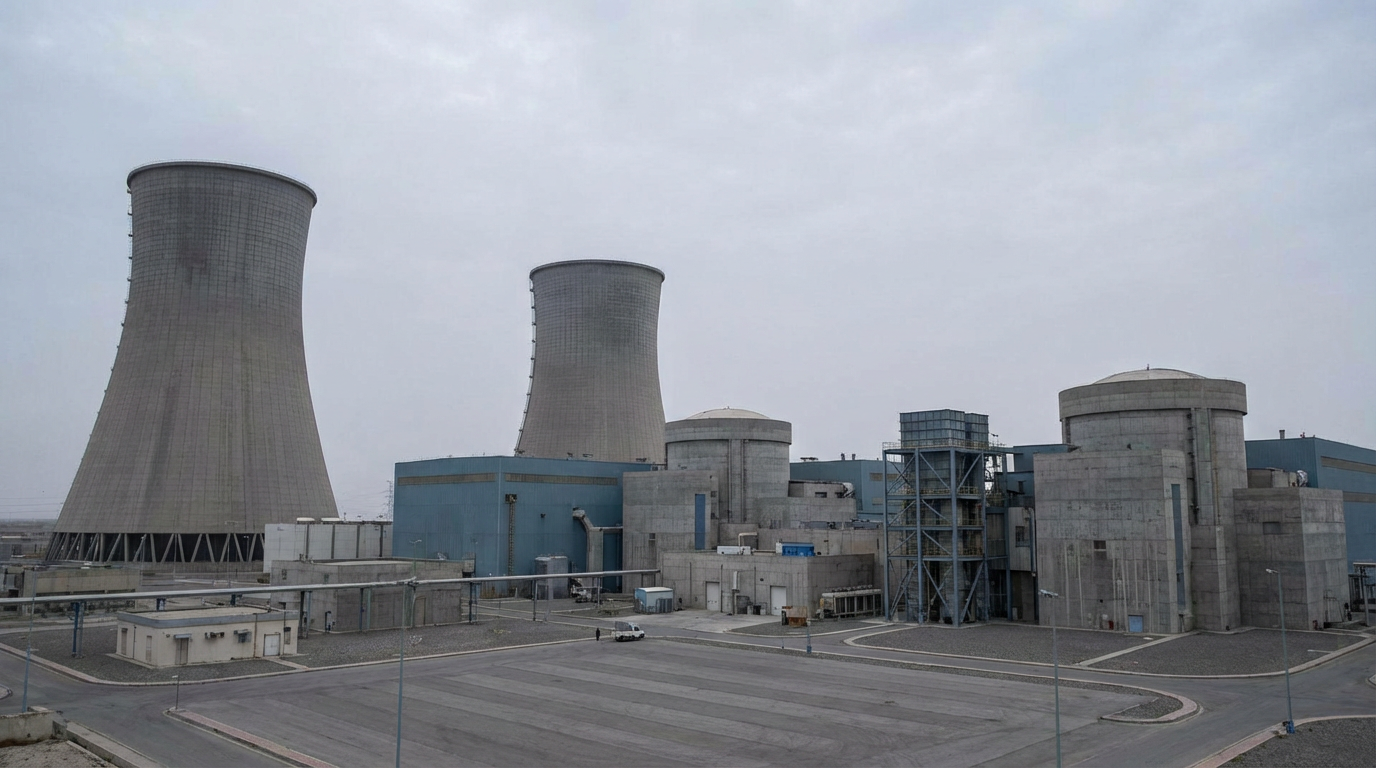
Russia’s state-owned nuclear energy company Rosatom has moved close to completing a major drawdown of its personnel at Iran’s Bushehr nuclear power plant, leaving only a small team on site to maintain safety and equipment stability. Rosatom Director General Alexey Likhachev said 108 employees left the facility on Monday, a departure that reduces the on-location presence to 20 people.
Officials described the remaining group as essential engineering and technical staff tasked with overseeing the safety of the plant’s core systems, according to Russia’s TASS state news agency.
The latest departure marks a sharp shift from earlier staffing levels at the southern Iran facility. Before the evacuation accelerated, about 700 Russian specialists were involved in operating and maintaining the power station. Russian officials began a phased evacuation after reports of a conflict involving Iran, the United States, and Israel, framing the move as a response to heightened regional risk.
This final stage of the pullback continued even as reports circulated of a U.S.-Iran cease-fire announced by former President Trump. The decision to proceed with the withdrawal alongside those reports indicates that Moscow’s approach is tied to a broader security assessment rather than a single short-term development. Rosatom’s stated posture, as reflected in the staffing plan, is to keep only the minimum required personnel to protect critical systems and equipment.
Bushehr is Iran’s only operational nuclear power plant and is central to the country’s civil atomic energy program. The facility was built with Russian assistance, and its operations have historically depended heavily on Russian technical expertise.
With staffing reduced to a small safety-focused contingent, the situation implies that electricity generation at the plant is significantly limited or potentially halted, while attention is directed toward basic maintenance and safeguarding key equipment.
The staffing change also introduces uncertainty around the plant’s operational timeline. The source material indicates that next steps will depend on Russia’s assessment of regional stability and whether it is willing to return a larger technical workforce.
For markets and policymakers, the development is being watched for what it signals about the operating environment for critical infrastructure in the region and the practical constraints that security conditions can impose on cross-border technical cooperation.