Bank of Japan rate debate shifts after yen support move
Bank of Japan rate expectations moved toward September after joint yen support, with the currency now near ¥158 per dollar versus ¥162.80 before intervention.
Andreas Keller ·
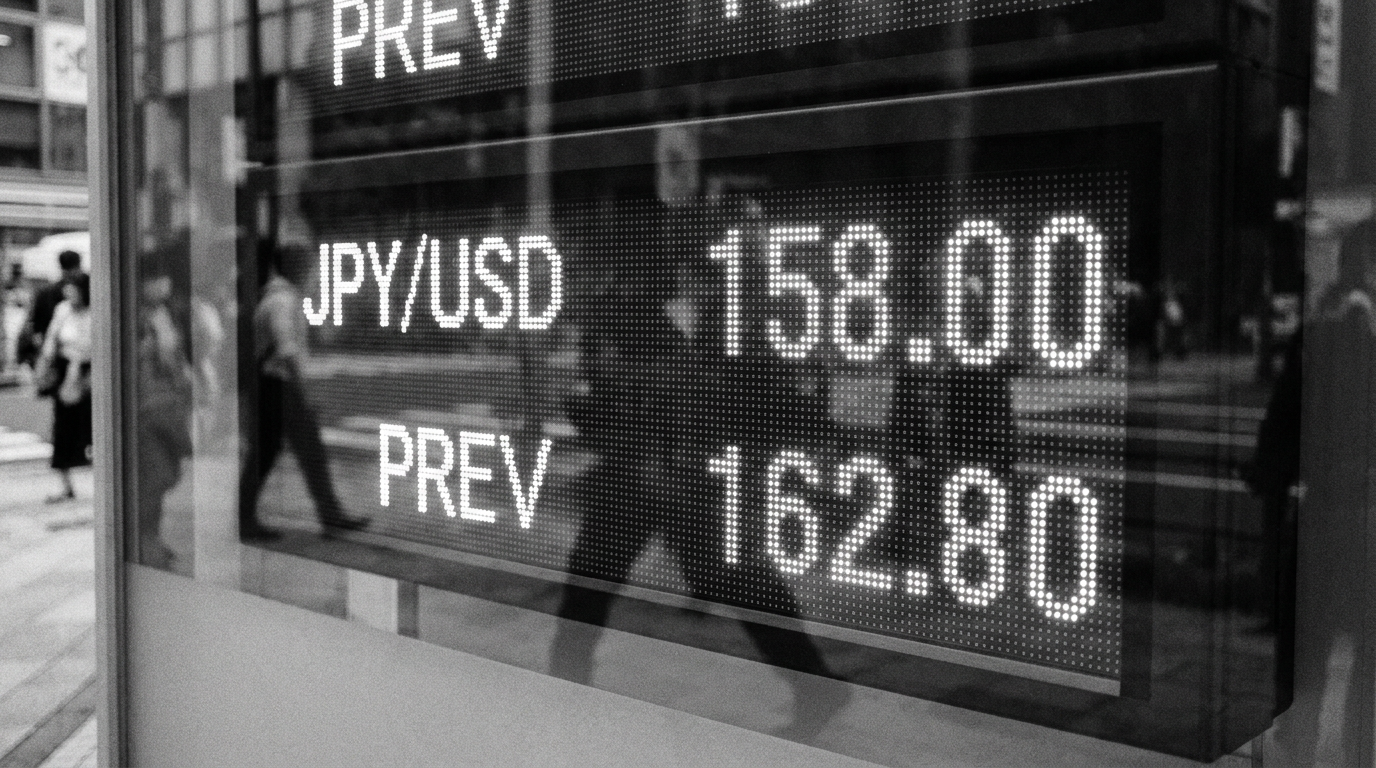
Bank of Japan rate expectations shifted toward September after yen support took the currency from ¥162.80 to about ¥155 per dollar.
Yen move changes timing
Until recently, most analysts had expected the next BOJ rate increase in December; the timing debate changed after the July 31 intervention by Japan and the United States. The operation, acknowledged by both countries, followed yen weakness to levels described in the source as unseen since the 1980s.
The currency move gave the rate discussion a tighter political frame. The yen is now around ¥158 per dollar, weaker than the post-intervention level near ¥155 but stronger than the pre-intervention area around ¥162.80.
Shintaro Inagaki, an economist at Mizuho Securities, linked the earlier rate timing to the joint currency action. "Because of this, the possibility of a rate hike in September or October is increasingly on the radar," Inagaki said.
Bessent adds policy pressure
Treasury Secretary Scott Bessent drew a connection from the US side on Tuesday, saying the market action would need a policy response. "It is going to require policy to follow up with the intervention. And I’m highly confident we’re going to see that," Bessent said in a television interview.
For Bank of Japan officials, a September or October move would bring monetary policy closer to the currency operation; a December move would keep the earlier consensus intact. The trade-off is that a faster increase may support the yen through interest-rate differentials, while a wait may leave intervention carrying more of the burden.
Policy choices feed markets
If the BOJ raises rates in September or October, the immediate macro channel would run through the yen and global bond positioning. A higher Japanese policy rate would narrow the incentive to fund positions in yen if US rates are unchanged, which can affect capital flows across currency markets.
For the Bank of Japan, that path would make the intervention look less isolated and could strengthen the signal that exchange-rate pressure is being met with policy. For Japanese banks, exporters and importers, the mechanism is uneven: lenders may benefit from higher rates, while companies with foreign revenues or dollar costs would face changes in translation and purchasing costs.
If the BOJ instead waits until December, the global impact would be slower and less forceful through interest-rate channels. The institution would preserve the timing analysts had expected until recently, but the yen could test whether the July 31 operation created lasting support without a near-term rate move.
A third path is a renewed yen slide toward the pre-intervention area around ¥162.80. In that case, attention would move back to whether Japan and the United States are prepared to act again, and currency-sensitive sectors would have less visibility on pricing, hedging and import costs.
The open questions are specific: whether the yen holds near ¥158, whether BOJ officials endorse an earlier timetable, and whether US officials keep pressing for policy follow-through. Those signals will determine whether the next rate debate stays centered on September and October or returns to December.