

AI-Generated Proofs Disrupt Traditional Academic Mathematics
Over 370 machine-generated mathematical proofs completed in three hours trigger structural concerns across universities and research programs.
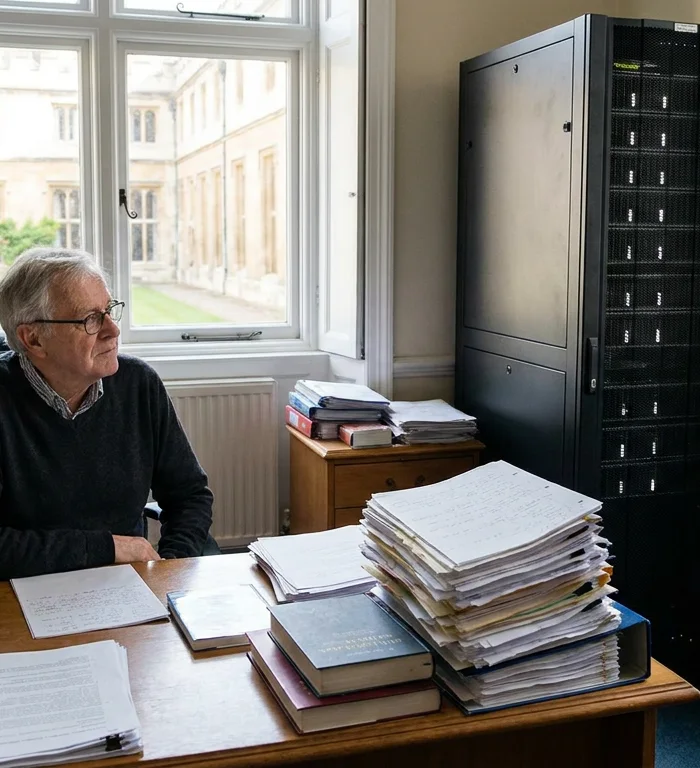
The publication of more than 370 automated mathematical deductions has disrupted the academic research establishment. Among the catalog of automated results are roughly 300 verified answers to unresolved mathematical questions, each produced within a single three-hour computing session. This concentrated computational output has swiftly outdated extensive human inquiry that spanned multiple specialized fields over several decades.
Vulnerabilities in University Grants and Degree Programs
University departments now encounter operational instability as automated theorem resolution impacts foundational academic frameworks. The sudden settlement of longstanding inquiries compromises active doctoral curricula, institutional grant pipelines, and the professional security of career scholars.
Because personal discovery serves as the core motivation for individual mathematicians, the automation of original derivations risks driving talent away from faculty rosters and graduate cohorts alike.
These developments undermine the established economic and educational rationale supporting academic departments. Without conventional discovery benchmarks, higher learning institutions are compelled to reconsider financial arrangements that fund prolonged human investigation across technical disciplines.
Governance Hurdles and Scientific Oversight
The unannounced dissemination of these machine calculations, conducted without prior engagement with global researchers, has raised significant administrative and ethical questions. The absence of an orderly adaptation schedule leaves institutional planners facing severe fluctuations in intellectual capital and strategic planning.
Scientific leaders now confront the task of assimilating rapid mechanical problem-solving into conventional verification and peer-review systems. Sustaining academic order will require new policy standards governing automated workflows alongside traditional scholarly procedures.
More stories
- DeepSeek updates AI model as speed and cost rivalry grows
- CoreWeave bond yields hit 15% as AI funding doubts deepen
- The Week in Games: Selective capital meets harder scoreboards
- Bhaag Neha Bhaag draws 2,700 players in CJP protest game wave
- Japan & Asia: Switch 2 leads Famitsu chart with 22,420 units
- Kotukh maps quantum side-channel edge to AES-128 rank 2^58.6
Latest news
- OpenWorld signs Blocksight deal for $1.1bn tokenization plans
- Zelenskyy offers Ukraine refinery halt for Patriot missiles
- Brazil election rallies draw Lula supporters across Rio
- Thailand faces fourth-quarter strain despite 18.9% export gain
- Lithuania probes Starlink arson as Russia-linked sabotage
- Brazil rivals rally before debate as runoff nears finish
- PD-L2 blockade reduces aging-cell buildup in mice
- France unrest brings 2,400 arrests as Macron appeals for calm