Middle East strikes jolt LNG and oil prices worldwide
Middle East strikes on Gulf energy sites on March 25, 2026 lifted global energy prices, raising LNG supply risks for Asia.
Lauren Collins ·
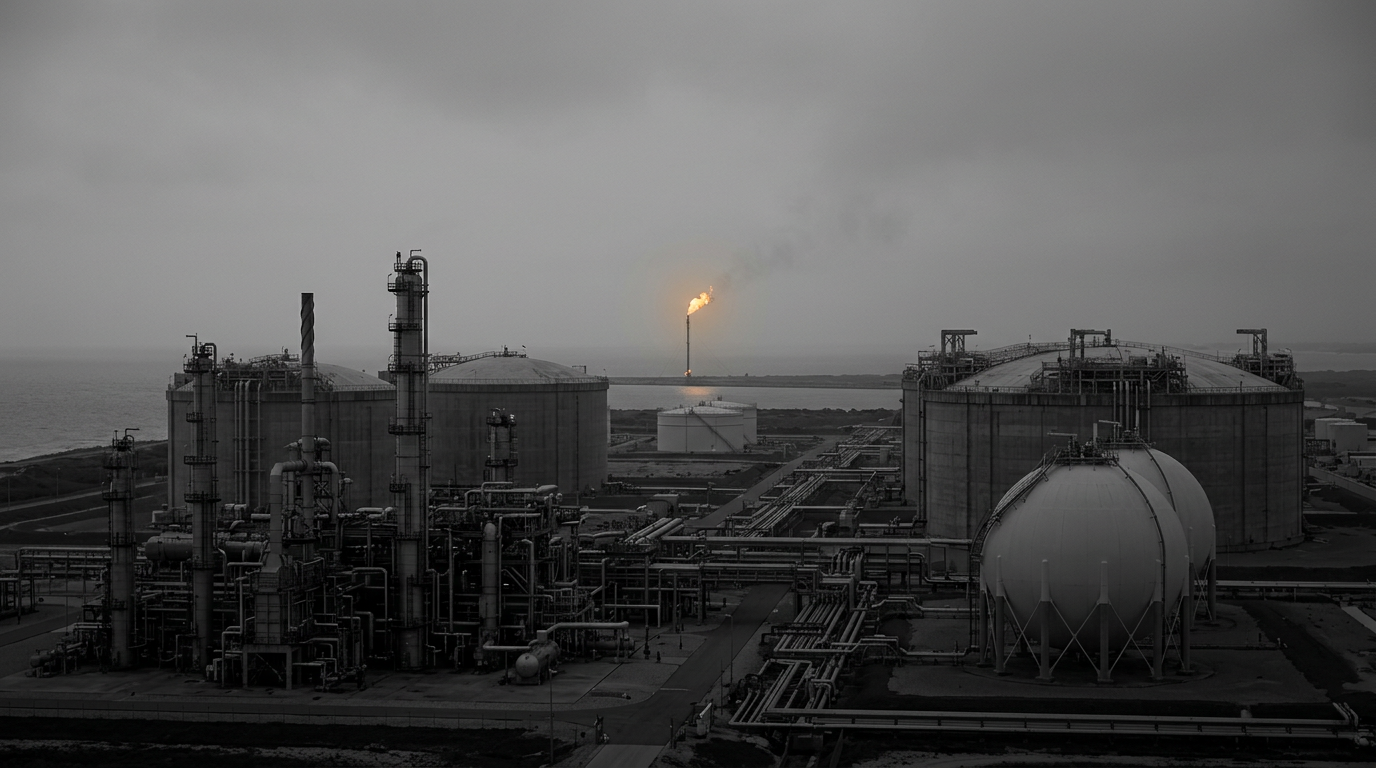
Energy markets were hit by a fresh geopolitical shock on March 25, 2026, after military actions in the Middle East spilled into attacks on fuel infrastructure across the Gulf.
The immediate market effect described in the available account was a sharp rise in global energy prices, driven by fears of disrupted supply rather than confirmed outages.
What happened
Iran targeted energy facilities around the Gulf, including Qatar’s liquefied natural gas hub, following an Israeli strike on an Iranian gasfield that occurred hours earlier.
The report frames the sequence as a rapid escalation: an Israeli attack on upstream gas assets, followed by Iranian strikes that widened the risk to export and processing sites.
Why this matters now
Energy infrastructure in the Gulf sits at the center of global fuel trade, so threats to production and export nodes can move prices quickly even before physical supply is visibly reduced.
The account highlights Qatar’s LNG complex as a critical point of vulnerability because it is described as the world’s largest LNG hub, making it systemically important for seaborne gas flows.
Who is most exposed
Asian economies are positioned as the most directly affected because Asia is identified as the largest LNG-buying region and relies heavily on Gulf cargoes for power generation and industrial use.
For importing countries, the near-term challenge is procurement: the report says buyers may need to secure alternative supplies, a process that can tighten spot markets and amplify price swings.
Market implications and transmission
The mechanism described is straightforward: military escalation increases perceived risk to supply, which lifts global energy benchmarks and raises costs for utilities, manufacturers, and transport users.
Because LNG is often priced through regional spot indices and oil-linked contracts, a shock centered on Gulf infrastructure can transmit across both gas and oil markets, affecting inflation-sensitive sectors worldwide.
Risks, unknowns, and limits of the information
The available material does not specify the extent of damage, whether exports were interrupted, or how long elevated risk conditions might persist, leaving the durability of the price move uncertain.
It also does not quantify the price increase or identify which facilities beyond Qatar’s LNG hub were hit, limiting precision on supply-side impacts and the scale of any disruption.