Abiy Ahmed set to extend rule in Monday's Ethiopia elections
Abiy Ahmed heads toward a new five-year mandate as Ethiopia votes, with opposition splintered and regions excluded from Monday’s parliamentary elections.
Lauren Collins ·
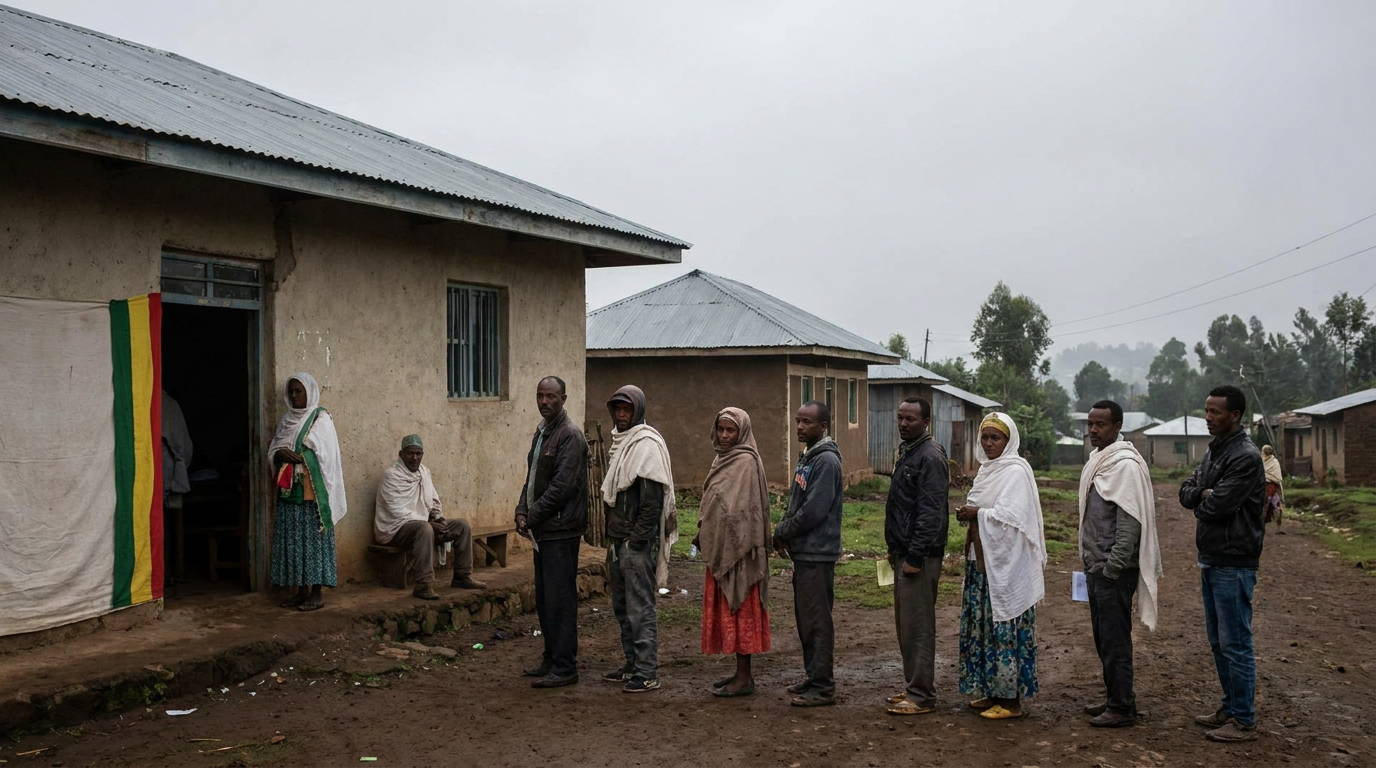
Abiy Ahmed heads toward a new five-year mandate as Ethiopia votes, with opposition splintered and regions excluded from Monday’s parliamentary elections.
Seats in the House of Peoples’ Representatives are on the ballot, and the chamber selects the prime minister. With the Prosperity Party dominant and rivals divided, the outcome is expected to reinforce Abiy’s position.
More than 50 million people registered to participate and 42 political parties are competing, according to election authorities. The contest arrives after a first term that began with swift liberalizing moves and later collided with civil conflict and regional frictions.
Fragmented opposition, simple math
The Prosperity Party enters with organizational reach and resources the opposition largely lacks. Many rivals are cash-strapped, locally concentrated, or both, limiting their capacity to convert votes into seats.
That dynamic favors the incumbent in a parliamentary system where a unified bloc can turn a plurality of seats into executive control. The likely result is continuity in leadership, though not necessarily consensus around policy direction.
Ballots without parts of the north
The National Election Board of Ethiopia said voting will not occur in 38 constituencies in Tigray and eight in Amhara. Cited reasons include security problems, unrest, and logistical constraints.
The gaps mean some citizens will not be represented when the new parliament convenes, at least initially. How and when those seats are filled will shape perceptions of the vote’s inclusiveness and the next government’s mandate.
Economy and regional strains set the stage
The election unfolds as the government confronts high inflation, a foreign-currency shortage, and mounting debt. Internal insecurity and tense ties with neighbors add to the uncertainty in Africa’s second-most-populous nation.
Households face rising prices and constrained job prospects, while businesses contend with currency pressures and import bottlenecks. In that climate, the Prosperity Party campaigns on stability and continuity, while opponents argue for accountability and political opening.
Abiy’s first years were defined by rapid changes that raised expectations. Subsequent conflict and regional tensions recast the political stakes, narrowing the space for compromise and elevating security as the organizing principle of governance.
Who gains now are national parties with established networks and access to state-aligned platforms. Those who lose include underfunded challengers and voters in constituencies where polling was postponed, whose representation will lag.
Next steps hinge on seat counts and how swiftly authorities schedule voting in the suspended districts. The new House’s composition will confirm whether Abiy extends his tenure and indicate how the government intends to navigate economic pressures and security risks.