Trump-Xi Summit Expected To Reveal Deep Fractures In U.S.-China Relationship
Trump ve Xi zirvesi, küresel düzenin merkezindeki artan işlevsizliği vurgulayacak. Liderler, ekonomik zayıflık ve jeopolitik gerilimle mücadele edecek.
Cuneyd Erdogan ·
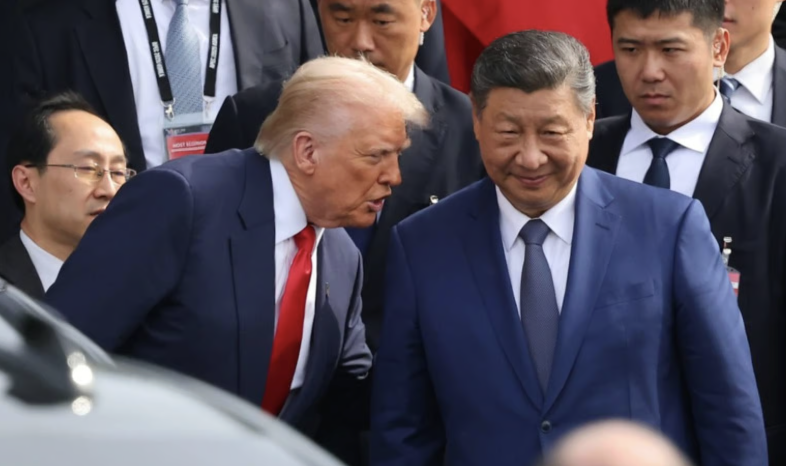
President Donald Trump and Chinese President Xi Jinping are preparing for a closely watched summit in Beijing next week amid mounting tensions over trade, Taiwan, artificial intelligence and the widening conflict in the Middle East, with analysts warning the meeting is more likely to expose deep structural instability than deliver a historic breakthrough.
The May 14–15 summit, delayed earlier this year because of the Iran war, comes at a moment when both Washington and Beijing are facing increasing economic and political pressure at home while attempting to avoid a direct rupture in relations that could destabilize global markets and security alliances.
An editorial published Thursday by The Economist argued that the summit will reveal how the United States and China have become a “dysfunctional duo,” with mutual dependence and shared vulnerability replacing the cooperative leadership that once underpinned globalization.
Trade disputes and strategic mistrust dominate agenda
Despite efforts by both governments to project stability, major disagreements remain unresolved across nearly every aspect of the relationship.
The United States continues pressing China over trade imbalances, semiconductor restrictions, rare earth mineral access and intellectual property concerns, while Beijing seeks relief from export controls and broader economic pressure imposed by Washington.
kaynaklar reported that Trump is expected to demand expanded Chinese purchases of American agricultural products and Boeing aircraft in exchange for limited concessions on trade restrictions. China, meanwhile, wants the U.S. to ease technology controls that Beijing views as an attempt to slow its economic and military rise.
Both countries are also considering launching formal discussions on artificial intelligence governance, reflecting growing fears that uncontrolled AI competition could create major national security risks.
Analysts say the summit reflects a broader reality in which neither side trusts the other, but both recognize that open confrontation would carry severe economic and geopolitical consequences.
Taiwan remains major flashpoint
Taiwan is expected to emerge as one of the most sensitive issues during the summit, with Chinese officials intensifying pressure on Washington to reaffirm limits on support for the self-governing island.
China’s government has repeatedly described Taiwan as the core issue in U.S.-China relations and warned against any moves supporting Taiwanese independence. Beijing has increased military activity near the island in recent years, while the United States continues supplying Taiwan with defensive weapons under longstanding American law.
Taiwanese officials expressed concern ahead of the meeting that Trump’s transactional diplomatic approach could lead to concessions involving Taiwan in exchange for economic agreements with Beijing.
Washington has publicly maintained that its policy toward Taiwan remains unchanged, although officials on both sides are attempting to avoid a crisis during the summit itself.
Iran war reshapes summit dynamics
The ongoing conflict involving Iran and the Strait of Hormuz has added a new layer of urgency to the summit discussions.
The United States is pressuring China to use its economic leverage over Tehran to help stabilize oil shipments through the Strait of Hormuz, a critical global energy route through which China receives much of its imported oil.
Trump recently paused parts of a U.S.-led naval operation in the region to allow diplomatic talks to continue, while Chinese officials have resisted American pressure to fully align with Washington’s position on Iran.
The Iran crisis has complicated what was originally intended to be a summit focused mainly on trade and economic stabilization, with geopolitical tensions increasingly overshadowing commercial issues.
Expectations for major breakthroughs remain low
Although both leaders are expected to present the summit as evidence of responsible statecraft, expectations for transformative agreements remain limited.
Foreign policy experts say the likely outcome will be temporary management of tensions rather than a lasting strategic reset.
The Economist argued that the summit reflects a broader global reality in which the United States and China remain deeply interconnected economically while increasingly unable to provide stable international leadership.
The article suggested that both Trump and Xi are constrained by domestic political pressures, nationalist rhetoric and mutual suspicion, creating a relationship defined less by cooperation than by attempts to avoid outright collapse.
Global markets watching closely
Investors, diplomats and allied governments are expected to closely monitor the summit for signals about the future direction of the world’s two largest economies.
Any escalation involving tariffs, Taiwan or technology restrictions could disrupt global supply chains and financial markets already strained by wars in the Middle East and Europe.
At the same time, even modest agreements on trade, AI coordination or military communication channels could temporarily calm fears of a deeper rupture between Washington and Beijing.
Still, analysts say the summit’s greatest significance may lie not in what Trump and Xi accomplish, but in how clearly it reveals the fragility of the current global order and the limits of leadership from the world’s two dominant powers.