Çatalhöyük Reveals Unique Matrilineal Social Structure
New research indicates Çatalhöyük had a more egalitarian and matrilineal societal structure, differing from contemporary settlements.
Hazal Anyalı ·
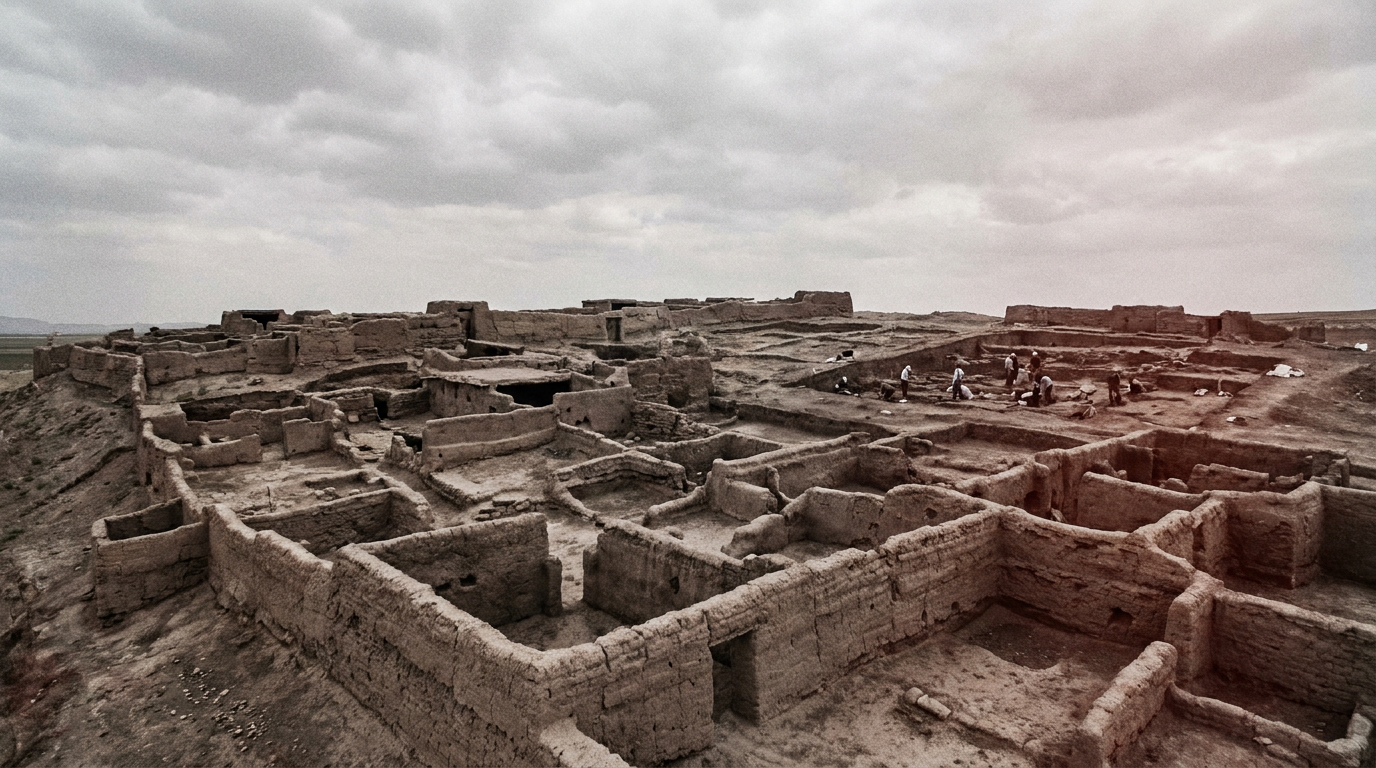
A recent study, published in Science by an international research team, highlights Çatalhöyük's distinctive social organization during the Neolithic period. This settlement, dating back approximately 9,000 years, challenges conventional assumptions about family structures and societal equality. Findings suggest that Çatalhöyük's population descended from a common maternal lineage.
Analysis of burial practices at Çatalhöyük, supported by DNA evidence, revealed this matrilineal system. The research indicates that living in the same homes for millennia and tracing lineage through mothers were fundamental characteristics of the community. These discoveries significantly alter established views on Neolithic societies.
Matrilineal Kinship and Community Bonds
Researchers examined genetic material from individuals who lived in Çatalhöyük over 12 generations. The analyses showed that all these individuals shared the same maternal ancestry, suggesting the village largely comprised a single extended family. This contrasts sharply with the patrilineal or mixed structures observed in other settlements of that era.
The study emphasizes that this matrilineal heritage profoundly influenced the settlement's way of life and culture, playing a crucial role in maintaining community cohesion. DNA from individuals buried beneath homes confirmed that these practices reinforced kinship ties. These findings offer significant implications for anthropology and archaeology.
An Egalitarian Societal Model
The distribution of artifacts and the general lack of inequality in burials at Çatalhöyük support the notion of an egalitarian society. Discoveries indicate that Çatalhöyük presented a different model for property and wealth accumulation during the transition from hunter-gatherer groups to settled farming communities. There was no discernible social hierarchy among individuals.
Researchers suggest this egalitarian system was strengthened by shared maternal ancestry and a collective sense of heritage. The role and importance of women in social life can also be seen as integral to this structure. This model provides new perspectives on Neolithic urbanization and social change.
Future Research and Implications
These discoveries at Çatalhöyük prompt a re-evaluation of how other Neolithic communities were organized. The study demonstrates that social structures of the period were not uniform but varied based on geographical and cultural factors. Future research could focus on understanding why and how the Çatalhöyük model evolved in this particular way.
These findings deepen our understanding of humanity's transition to settled life and the formation of early city-states. Çatalhöyük's matrilineal and egalitarian structure also offers important comparisons for contemporary societal analyses.