Atacama Desert Drowning in Fast Fashion Waste
Chile tackles textile waste in the Atacama Desert as 39,000 tonnes are dumped yearly; a new Iquique recycling plant targets 20 tonnes daily.
Ayla Demirhan ·
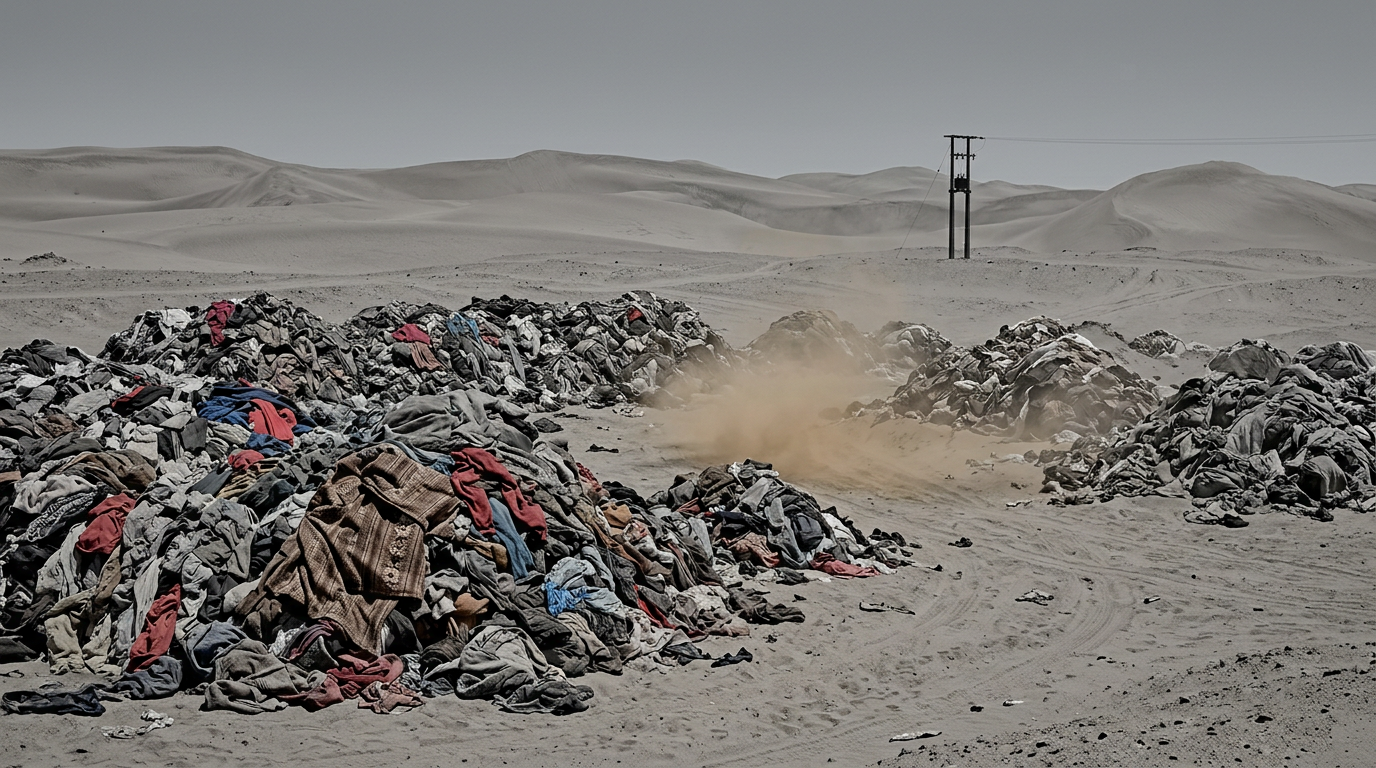
Chile is moving to curb a growing environmental problem linked to used clothing that is being illegally dumped and burned in the Atacama Desert. Officials and local authorities have been grappling with the scale of the waste, which is tied to the country’s position as a major entry point for second-hand garments moving through northern Chile.
Data cited in the initiative estimates that about 39,000 tonnes of used clothing end up discarded in the Atacama Desert each year. The flow of garments is connected to the Iquique Free Trade Zone (Zofri), which facilitates imports of roughly 123,000 tonnes of used clothes annually from sources that include the U.S., Canada, Europe, and Asia.
The dumping problem is driven by what happens to clothing that does not sell. According to the description of the issue, unsold items cannot be placed in municipal landfills, and some are instead burned or left in the desert. The account attributes this to efforts to avoid costs tied to re-exporting goods, paying taxes required for domestic sales outside the free-trade zone, or using authorized waste-management channels.
Local authorities in Alto Hospicio are described as facing practical barriers to enforcement. The desert terrain is vast and accessible, and officials have limited resources to track and stop repeated dumping across a wide area.
In response, a textile recycling factory is being developed in Iquique. The project is led by businessman Bekir Conkur and is intended to process 20 tonnes of unwanted clothing per day. The plan is for the facility to operate without using water or chemicals, turning garments into fibers and felt that can be used in products such as mattresses, furniture, car interiors, and insulation.
The factory initiative is aligned with changes to Chile’s Extended Producer Responsibility (Rep) Law. Recent amendments have added textiles to the framework, requiring clothing companies to finance and organize the collection, reuse, recycling, or proper disposal of their products.