DC Airports Resume Operations After FAA Outage
DC-area airports resumed operations on Friday after a 90-minute ground stop caused by an FAA equipment outage in Virginia, impacting air travel.
Ayla Demirhan ·
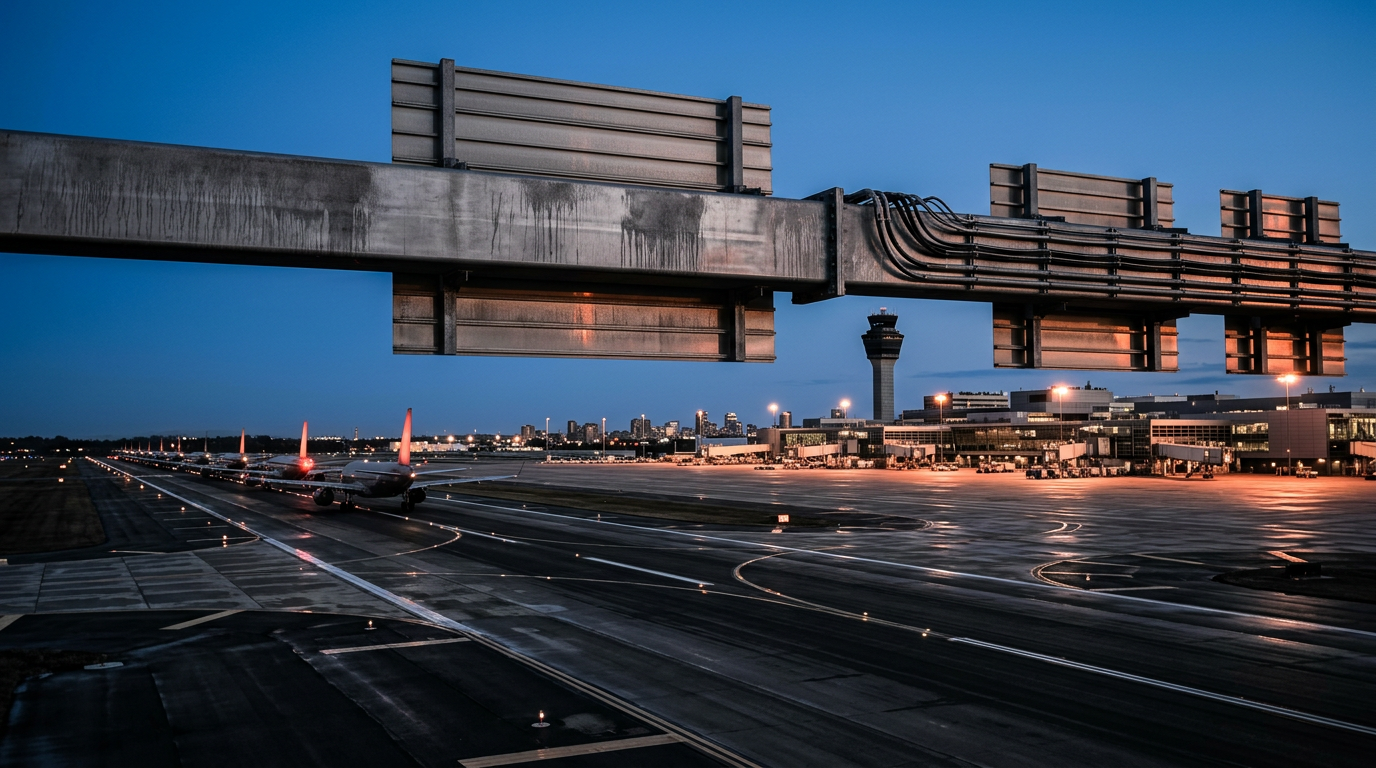
Air traffic control services for the Washington D.C. metropolitan area and surrounding regions were restored on Friday, March 13, 2026, following a temporary equipment malfunction at a Federal Aviation Administration (FAA) facility. The incident led to a ground stop at several key airports, including Reagan National, Dulles International, and Baltimore/Washington International (BWI) Marshall, for approximately 90 minutes.
The disruption originated from an overheated circuit board within the Potomac Consolidated Terminal RADAR Approach Control (TRACON) center in Virginia. This facility is critical for managing air traffic across the Baltimore-Washington and Richmond-Charlottesville corridors. The malfunction caused a strong chemical odor, prompting the evacuation of personnel and the subsequent halt of air traffic.
FAA Response and Resolution
Transportation Secretary Sean Duffy confirmed that the faulty circuit board was identified and promptly replaced. Air traffic controllers were cleared to re-enter the facility once the issue was resolved and the environment deemed safe. The ground stop, which began around 5:30 p.m. EST, was lifted by 7:00 p.m. EST.
Impact on Air Travel
While the immediate ground stop was brief, its effects extended beyond the initial 90-minute period. Significant ground delays were reported, affecting an estimated 25% to 33% of all departing flights from the impacted airports. These delays were expected to create ripple effects on flight schedules throughout the evening and potentially into the subsequent day, impacting travelers and airline operations.
Personnel Safety and Protocols
No serious injuries were reported among FAA personnel. However, some employees experienced mild symptoms due to the chemical smell and received evaluation from emergency medical services. No hospitalizations were required. This incident underscores the importance of robust safety protocols and rapid response mechanisms within critical air traffic control infrastructure.
Broader Implications for Air Travel
Such disruptions, even when quickly resolved, highlight the fragility of complex air travel systems. The interconnected nature of air traffic control means that an issue at one critical facility can rapidly cascade, affecting multiple airports and thousands of passengers. Airlines often face significant operational challenges in recovering from such events, including crew scheduling, aircraft positioning, and passenger rebooking.
The incident serves as a reminder of the continuous need for investment in infrastructure maintenance and contingency planning to ensure the resilience of national airspace systems.
Implications
Country Impact: The incident temporarily disrupted air travel in a critical region, impacting business and leisure travelers and potentially causing minor economic losses due to delays and cancellations.
Industry Impact: Airlines faced operational challenges, including rescheduling flights, managing crew, and accommodating passengers, leading to increased costs and potential customer dissatisfaction.
Market Impact: While a localized event, such disruptions can briefly affect airline stock performance due to operational concerns, though the short duration likely limited significant market impact.