Why the US Homeland Security shutdown is raising fears of airport delays
A partial U.S. DHS shutdown, starting February 14, leaves 50,000 TSA staff unpaid, causing airport delays and raising security concerns.
Lauren Collins ·
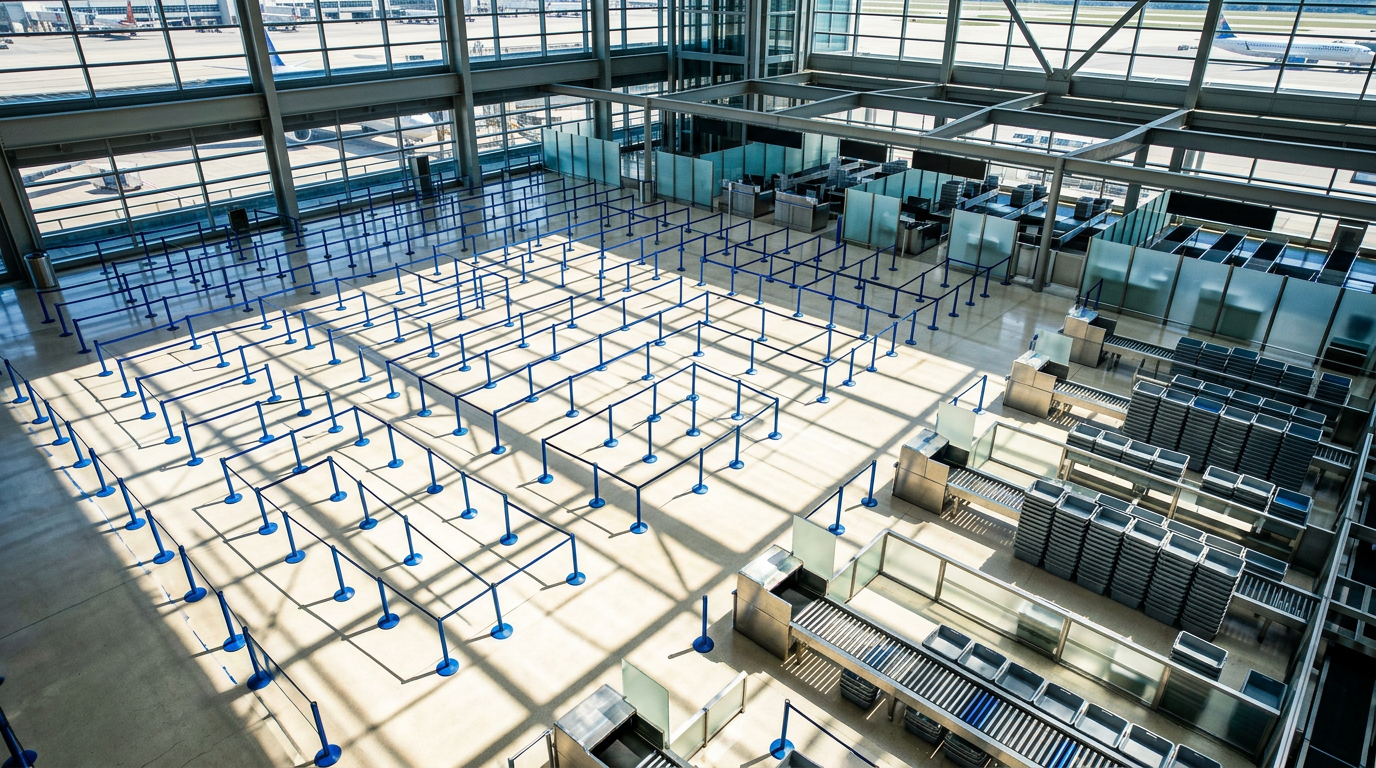
A partial shutdown of the U.S. Department of Homeland Security (DHS) has led to significant operational challenges, particularly affecting airport security screenings. The funding lapse, which began on February 14, has resulted in approximately 50,000 Transportation Security Administration (TSA) employees working without compensation. This situation has raised concerns about potential travel disruptions and the morale of federal workers.
The dispute centers on congressional disagreements over DHS funding, with Democrats advocating for changes to immigration enforcement policies. This political impasse has directly impacted the TSA, an agency under DHS responsible for passenger, baggage, and cargo screening at airports nationwide. Employees missed their last full paycheck on March 15, creating financial hardship for many.
Operational Strain on Airport Security
The absence of regular pay has prompted some TSA personnel to resign or take unscheduled leave, contributing to staffing shortages. These reductions in available staff have led to increased wait times and operational inefficiencies at various U.S. airports. The continuity of airport security operations relies heavily on these federal employees, whose financial stability is now compromised.
Broader DHS Context and Previous Lapses
The Department of Homeland Security, established in 2002, oversees a wide range of critical functions, including border control, emergency response, and cybersecurity, in addition to transportation security. While some DHS components, such as Immigration and Customs Enforcement (ICE) and Customs and Border Protection (CBP), have maintained operations through alternative funding mechanisms, the TSA has been directly affected by the current budget stalemate.
This marks the second time in recent months that federal workers within the DHS have faced unpaid labor. A previous 43-day government shutdown, which commenced on September 30, 2025, also saw these employees working without pay. Such repeated financial uncertainty can have long-term implications for federal workforce retention and operational readiness.
Industry Concerns and Economic Implications
Airline industry leaders have voiced strong concerns regarding the ongoing shutdown, urging Congress to find a swift resolution. They highlight the untenable conditions for both their employees and the traveling public, citing potential economic repercussions from widespread travel delays. Prolonged disruptions could impact tourism, business travel, and the broader economy.
Resolving the funding dispute is crucial for restoring full operational capacity and ensuring the stability of critical national security functions. The ongoing situation underscores the broader challenges of partisan gridlock in U.S. federal budgeting and its direct impact on essential public services and the livelihoods of federal employees.
Implications
Country Impact: The U.S. faces potential disruptions to air travel and national security operations. Public confidence in government functionality and federal employee morale are also at risk due to repeated funding impasses.
Industry Impact: The airline industry is directly impacted by potential airport delays and staffing shortages, leading to calls for swift resolution from airline CEOs. Economic sectors reliant on travel and tourism could experience negative effects.
Market Impact: While direct market impact is limited, prolonged disruptions to air travel could indirectly affect travel-related stocks and consumer spending. Uncertainty surrounding government funding can also contribute to broader economic sentiment concerns.