US Envoy's Kashmir Remarks Spark Diplomatic Protest
Pakistan summoned the top US diplomat in Islamabad following Ambassador Sergio Gor's remarks calling Indian-administered Kashmir an integral part of India…
Lauren Collins ·
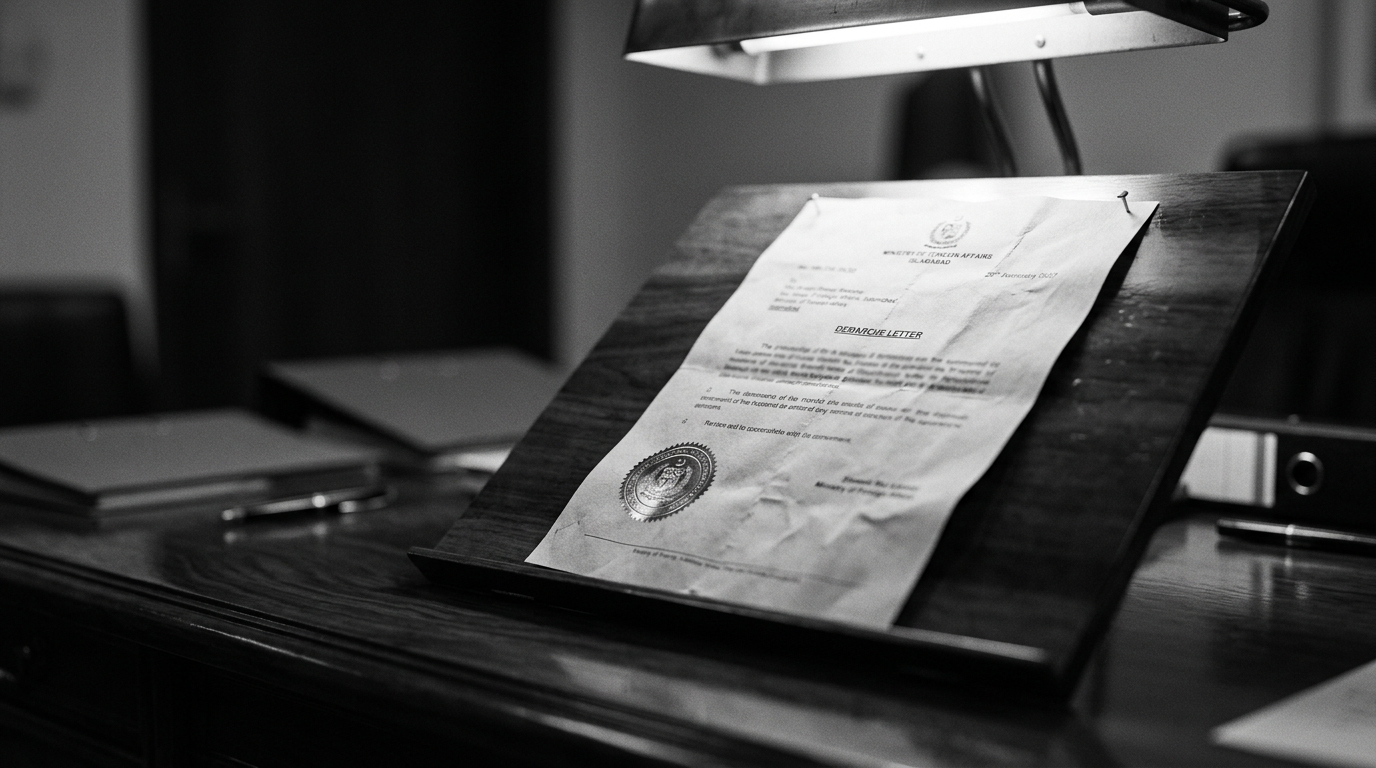
Pakistan’s Ministry of Foreign Affairs summoned the United States' senior diplomat in Islamabad on Wednesday, August 20, 2026, to protest remarks made by US Ambassador to India, Sergio Gor. Ambassador Gor had publicly stated that Indian-administered Kashmir constitutes an important part of India during a visit to Srinagar. This visit marked the first by a sitting US ambassador to the region since 2019, drawing a strong reaction from Islamabad.
During the diplomatic meeting, Pakistan issued a formal demarche, rejecting Ambassador Gor's characterization of Kashmir's status. Islamabad reiterated its long-held position that Kashmir is an internationally disputed territory, citing United Nations Security Council resolutions. Pakistani officials contended that Gor's comments contradicted Washington's traditional policy of neutrality regarding the final determination of the Himalayan region, which has been a persistent point of contention between India and Pakistan since 1947.
Shifting Diplomatic Stance
Ambassador Gor's public affirmation of India's territorial claim represents a notable deviation from established diplomatic norms. Historically, Washington has maintained that Kashmir's ultimate status should be resolved through bilateral discussions between India and Pakistan. This incident highlights the extreme sensitivity surrounding the region, where even subtle changes in rhetoric are closely observed by both nations as potential indicators of evolving geopolitical alignments and international support.
The diplomatic friction emerges as the United States navigates its strategic partnership with India while Pakistan intensifies its efforts to engage the administration of President Trump. Ambassador Gor, who also serves as President Trump’s special envoy for South and Central Asia, made the contested remarks following a two-day visit to Srinagar and Ladakh earlier this week. The timing and content of his statements have ignited debate over the future direction of U.S. policy in South Asia.
Historical Context of the Dispute
The Kashmir region has been claimed by both India and Pakistan since the end of British colonial rule in August 1947. Both countries govern portions of the territory but assert sovereignty over its entirety, leading to multiple conflicts over its status. A United Nations Security Council resolution adopted in 1949 called for a plebiscite to determine the territory's final status, an electoral process that has never been conducted.
This is not the first instance where diplomatic statements have sparked controversy. In June, European Union foreign policy chief Kaja Kallas signed a joint statement with Pakistan's foreign minister that included a reference to Kashmir, which India's Ministry of External Affairs subsequently rejected. Similarly, President Trump caused a stir in 2019 when he claimed Prime Minister Narendra Modi had requested his mediation on Kashmir, a claim the Modi government swiftly denied, underscoring the delicate nature of any external involvement in the dispute.
Balancing Regional Ties and Future Outlook
For Pakistan, international recognition of Kashmir's disputed status remains a crucial aspect of its diplomatic efforts. The U.S. State Department currently advises a 'Do Not Travel' warning for Jammu and Kashmir due to concerns over terrorism and civil unrest, although Ladakh and Leh are exempt. Ambassador Gor indicated that Washington was reviewing this travel advisory, citing perceived improvements in regional security.
The incident underscores the intricate balance the United States attempts to maintain in its relationships with both India and Pakistan. Future diplomatic engagements and statements will likely face intense scrutiny for any further shifts in language concerning the contested territory. Such developments could have significant implications for regional stability and Washington's broader strategic objectives in South Asia, including counter-terrorism efforts and economic partnerships.