White House Weighs Possible Dollar Lifeline for UAE as Iran War Strains Gulf Economy
Atlas Newsdesk ·
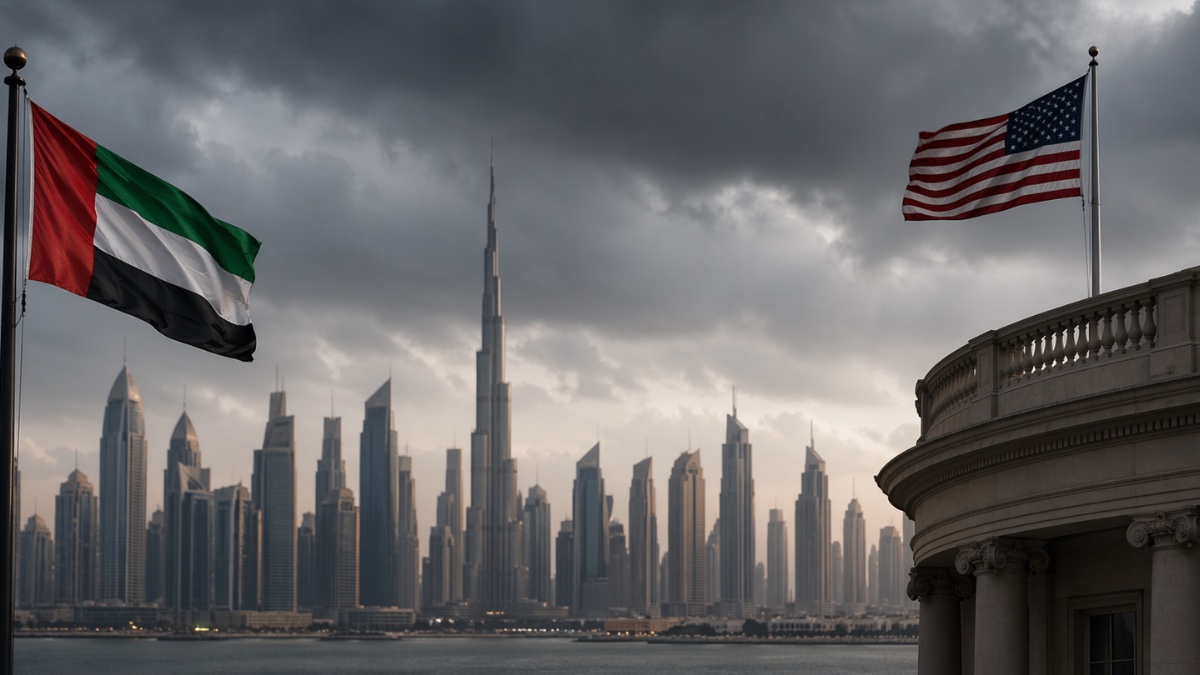
The White House is weighing whether to offer the United Arab Emirates a financial backstop as the U.S. conflict with Iran damages the Gulf country’s economy, according to a White House official familiar with the matter. The official said the UAE has not submitted a formal request for a currency swap line and no concrete plan is being drafted. Even so, the idea is being discussed inside the administration as pressure builds across the Gulf.
A swap line would give the UAE access to dollar liquidity at a moment when normal revenue flows are under strain. That matters because the country, despite its wealth, relies heavily on oil-linked cash generation and regional trade stability. The administration’s interest appears tied both to the scale of the disruption and to the UAE’s standing as one of Washington’s closest partners in the region.
Rising Pressure in the Gulf
The war with Iran has hit Gulf economies on multiple fronts. Iranian missile attacks have damaged economic infrastructure belonging to U.S. allies in the region, while Tehran’s closure of the Strait of Hormuz has sharply restricted oil exports. For the UAE, that bottleneck cuts into one of the main channels through which the state earns hard currency.
Those shocks have turned what might once have been a theoretical policy option into an active internal discussion. Officials are now looking at how far the U.S. should go in helping partners absorb spillover from a conflict that is reshaping trade and energy flows. The debate is no longer only military; it is increasingly financial.
UAE's Relationship With Washington
The UAE enters this moment with deep ties to the Trump administration. The country pledged more than $1 trillion of investment in the U.S. last year, a sign of how aggressively Abu Dhabi has sought to strengthen its position in Washington. Its leaders have also been reported to have links to President Donald Trump’s family business, adding another layer of scrutiny to any aid decision.
President Trump suggested publicly that he would be open to helping. Asked on CNBC’s “Squawk Box” whether a currency swap was under consideration, he said, “If I could help them, I would,” adding that the UAE had been “a good ally of ours.” That remark stopped short of a commitment, but it showed the idea has reached the president’s radar.
Potential Impact of Aid
For the UAE, access to dollar funding could help steady markets and reassure investors if export income remains constrained. It would also signal that Washington is prepared to support strategic partners facing direct economic fallout from the Iran conflict. In a region where confidence can move quickly, that kind of message can matter almost as much as the financing itself.
For the U.S., the domestic politics are harder. Any arrangement could be cast by critics as support for a wealthy foreign state while American households deal with higher prices. That makes the proposal vulnerable to attack from voters who see little reason for Washington to cushion an oil-rich ally during a period of strain at home.
Policy and Markets
A swap line would carry significance beyond the UAE itself. It would suggest the administration is willing to use financial tools, not only military force or sanctions, to manage the fallout from the war. That could shape how other Gulf states judge the reliability of U.S. backing if the regional crisis deepens.
It would also put fresh attention on the Treasury Department’s role. Sen. Steve Daines of Montana, who sits on both the Senate Finance and Foreign Relations Committees, said the U.S. should examine what support may be needed for such a strong Middle East ally. He also pointed to Treasury Secretary Bessent’s experience with currency swaps, a sign that congressional Republicans may be open to the idea, though hardly without reservations.
Next Steps
For now, the concept remains preliminary. The White House official described it as something the administration is still considering, not a policy in motion. That distinction matters because the risks are real: the war could intensify, oil disruptions could last longer than expected, and political blowback in Washington could rise before any formal decision is made.
The next question is whether economic damage in the Gulf worsens enough to force the administration’s hand. If export routes remain constrained and financial stress spreads, what is now an internal discussion could become a test of how far the U.S. is willing to go to protect an ally when war starts to hit balance sheets as hard as battlefields.