Canterbury Cathedral Appoints First Female Dean
Canterbury will install Sarah Mullally on Wednesday as the first female Archbishop, as safeguarding and internal disputes keep pressure on the Church.
Ayla Demirhan ·
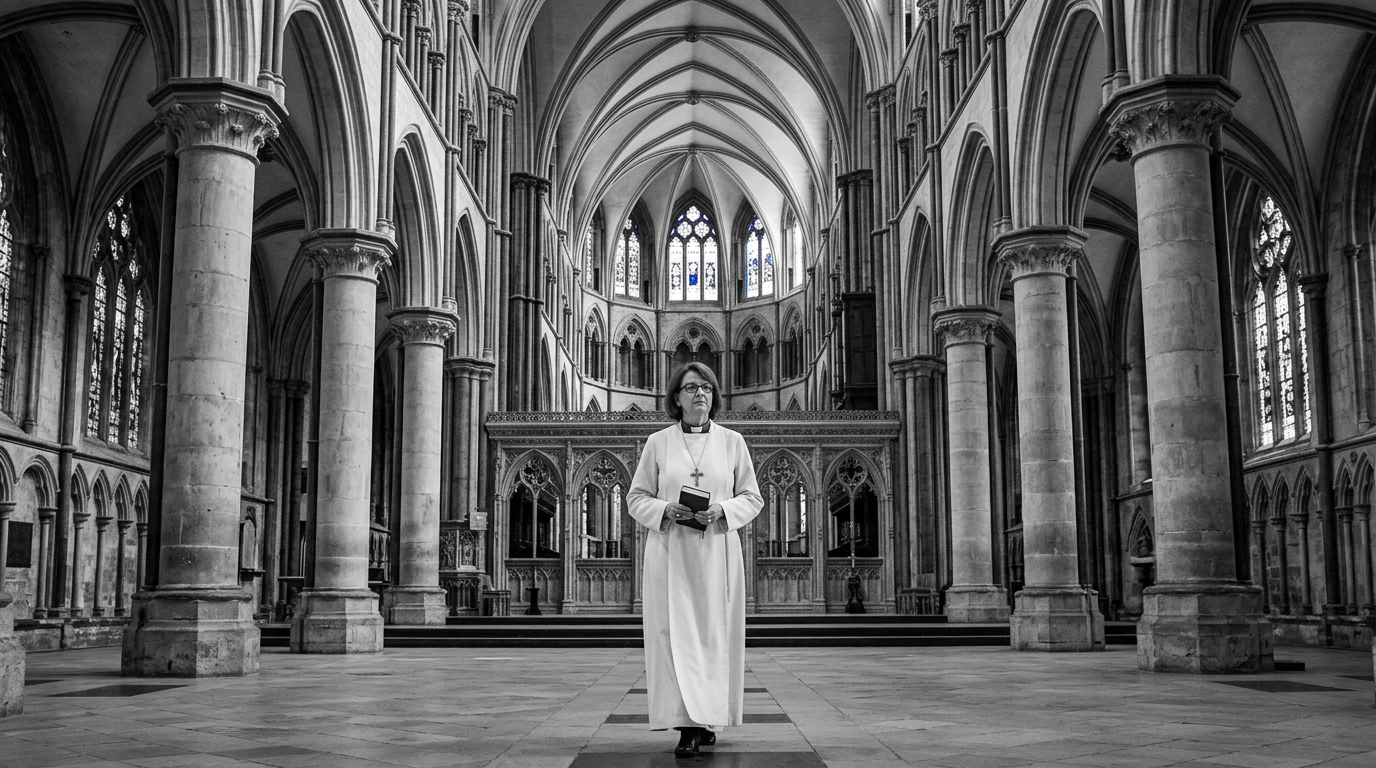
Sarah Mullally is scheduled to be installed on Wednesday as the 106th Archbishop of Canterbury, a milestone that would make her the first woman to lead the Church of England in its nearly 1,500-year history.
The leadership change lands at a time when the Church is facing sustained scrutiny over safeguarding, ongoing internal disagreements, and renewed debate about its place in modern British public life.
Leadership change under pressure
Mullally is set to succeed Justin Welby, with governance and institutional credibility described as central issues as the transition takes place.
The Archbishop of Canterbury carries global visibility because the office is linked to the wider Anglican Communion, even as the role is often portrayed as limited in its ability to force rapid change across a complex church structure.
Experience, and the limits of the office
Before being chosen for Canterbury, Mullally served as Bishop of London and previously held senior roles in the UK’s National Health Service, including as chief nursing officer.
Those credentials arrive in a job where many contentious decisions require agreement across multiple church bodies that may move at different speeds, which can slow reforms even when there is broad intent to act.
Safeguarding remains the key credibility test
Safeguarding is positioned as the most immediate measure of trust for the incoming Archbishop, following criticism of Welby’s handling of abuse allegations connected to John Smyth, who has been described as a prolific abuser.
Victims linked to Smyth have been estimated at around 130 boys, keeping the issue at the center of attention as leadership changes hands.
A major institutional marker cited is that, in 2025, the Church of England decided not to adopt a fully independent safeguarding model.
The same source material does not specify what alternative arrangements were selected, leaving uncertainty about how oversight and accountability will be strengthened in practice.
Divisions at home and across the Communion
Beyond England, parts of the Anglican Communion remain divided on gender and sexuality, including groupings that do not accept women priests.
That stance could shape how some constituencies respond to Mullally’s leadership, adding a cohesion challenge alongside domestic governance pressures.
Within the Church of England, the General Synod recently failed to reach agreement on reforms related to LGBTQ+ issues.
As a result, proposals that would have allowed blessings for same-sex civil marriages did not advance, and existing restrictions remain for clergy in same-sex civil partnerships.
Why it matters for politics and markets
In the UK, the Church of England remains a prominent national institution, and changes at the top can influence public debate on social policy and community cohesion.
The immediate expectation described in the source material is that Mullally will prioritize domestic challenges rather than attempt swift, Communion-wide realignment.
For global stakeholders, the main channel is institutional stability and governance standards in a major faith body with international reach, rather than direct economic policy.
Even without a stated market-moving mechanism, how safeguarding and internal disputes are handled can affect trust, engagement, and the credibility of the Church’s public interventions.