Waymo urges safer physical AI as robotaxi miles grow fast
Waymo co-CEO Dmitri Dolgov urged physical AI companies to build safety into systems as self-driving robotaxi services expand.
Atlas Newsdesk ·
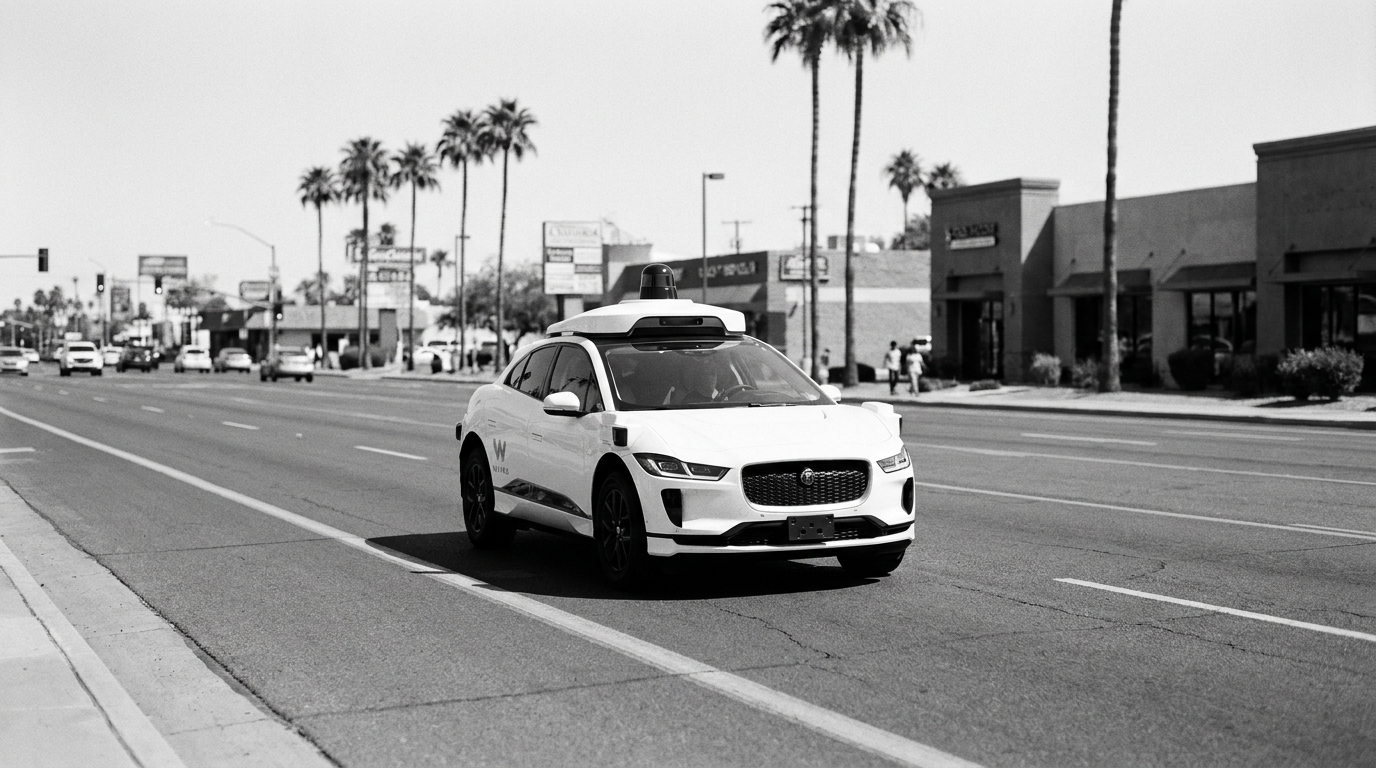
Waymo co-CEO Dmitri Dolgov urged physical AI companies to pair speed with safety as self-driving robotaxi operations expand.
Dolgov made the case in a Y Combinator interview released this week, according to the source account. His warning is aimed at developers building AI systems that act in the physical world, where software decisions can affect roads, machines, passengers and bystanders.
Dolgov rejects breakage culture
Dolgov argued against applying the technology sector’s older “move fast and break things” habit to physical AI. He said companies in the field should instead “move fast and ship safely,” a formulation that keeps pace in the model but removes breakage as an acceptable cost.
“There’s simply not an undo and a retry button,” Dolgov said in the interview. He said safety needs to be built into models, development methods and system architecture, rather than treated as a later compliance layer.
Robotaxi miles shape the warning
The comments draw weight from Waymo’s own operating history. The company began in Silicon Valley and, over roughly two decades, has followed a slower safety-first path while developing robotaxi services that now log millions of fully self-driven miles, according to the source account.
The account did not provide an exact mileage total, city count, incident rate or independent safety comparison. That leaves Dolgov’s argument rooted less in disclosed metrics than in Waymo’s stated operating philosophy: expand, but do so only after the system has cleared safety thresholds the company is prepared to defend.
Waymo’s approach contrasts with a startup culture that often rewards fast iteration before full deployment risk is known. In physical AI, the gap between a software test and a public service can be narrower, because a model output may become a braking decision, a steering move or a machine action in real time.
Safety test for physical AI
The broader issue is not confined to robotaxis. Physical AI covers systems whose decisions move through equipment, vehicles and other devices, making failure harder to reverse than in a purely digital product.
If Dolgov’s standard becomes common, physical AI firms may face longer validation cycles and higher upfront testing costs. At a macro level, that could slow the arrival of productivity gains from automation, while giving regulators and insurers a clearer basis for approval.
If developers instead prioritize faster rollout, the industry could see earlier commercial launches and quicker capital formation. The mechanism cuts both ways: a service failure or safety investigation could delay approvals, raise insurance costs and push customers toward companies with longer operating records.
For Waymo, a safety-led norm would support the company’s cautious expansion strategy and make its accumulated robotaxi experience more valuable. A faster rival cycle could test that position if competitors demonstrate safe service at lower cost or in more markets.
The open questions are specific: how Waymo defines safe expansion, how much operational data it will disclose, and whether regulators require comparable reporting across physical AI services. Those answers will shape whether Dolgov’s warning becomes an industry standard or remains one company’s view of deployment risk.