Waymo robotaxis face D.C. Council labor test at hearing
Waymo robotaxis face a D.C. Council test as the company expands local facilities and labor groups organize against the bill.
Sophie McAlister ·
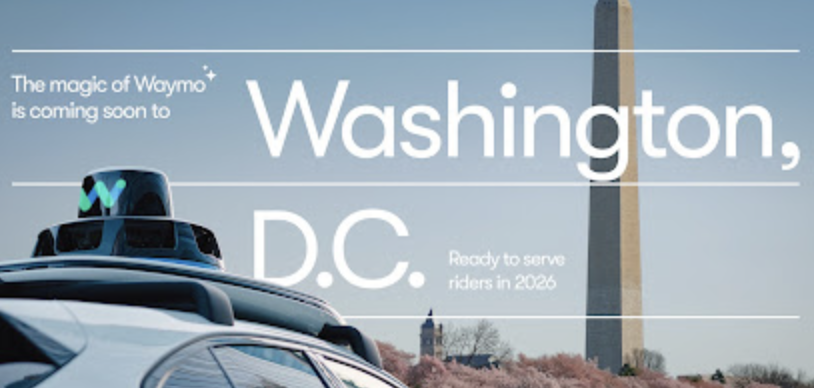
Waymo robotaxis face a D.C. Council test today as the company builds local sites and says approval could bring hundreds of jobs.
The debate lands at the Wilson Building with the District weighing how far to open city streets to commercial driverless service. Waymo is already testing in Washington with human safety drivers, but the council bill would decide whether the company can move closer to a public robotaxi operation.
Wilson Building hearing draws unions
Labor groups are making the hearing a public confrontation over work, wages and who benefits from autonomous-vehicle technology. Local Teamsters, transit union members and service workers plan to gather outside the Wilson Building as council members take testimony.
The opposition includes an effort to bring Uber and Lyft drivers into the hearing record against the proposal. In a press release, labor groups said the bill “enables Silicon Valley to profit off money that would otherwise strengthen the District's economy.”
The fight gives the robotaxi bill a political edge beyond transportation policy. Some of the same labor forces were important in Janeese Lewis George's mayoral primary victory, adding pressure for council members who are weighing technology access against worker concerns.
NoMa testing anchors D.C. push
Waymo now has dozens of employees working from a temporary lot in NoMa, according to the company. Those operations support testing that still keeps a person behind the wheel, a step short of the driverless service the company wants to launch.
The company says it is also preparing more permanent infrastructure east and northeast of downtown. Spokesperson Ethan Teicher said in an email, “Waymo recently committed tens of millions of dollars in Wards 5 and 7 to build the service centers and charging facilities needed to support our service.”
Those facilities would be used to charge vehicles and handle the daily work of keeping a robotaxi fleet on the road. Waymo says council approval would allow it to hire for roles such as fleet technicians and workers who clean, inspect and maintain vehicles.
The company points to its live robotaxi operations in San Francisco and Atlanta as examples of how staffing can support an autonomous fleet. Washington would present a different civic environment, with federal roads, neighborhood traffic patterns and a local government that has often treated transportation as a labor issue as well as a mobility issue.
Wards 5 and 7 carry stakes
The proposed service centers put Wards 5 and 7 near the center of the economic argument. For Waymo, those sites are part of the operating backbone needed to move from supervised testing to a larger service model.
For labor groups, the same facilities do not settle the core concern. Their argument is that robotaxis could redirect fare income away from drivers who already work in the District, including app-based drivers who rely on passenger trips for earnings.
The council hearing will test whether members view Waymo's promised hiring as enough to offset the concerns raised by unions and drivers. It will also show how much weight lawmakers place on local investment claims that have not yet been matched by a final authorization to operate.
Approval would reset deployment path
If the council advances the bill, the near-term effect for Waymo would be a clearer route from D.C. testing to a commercial service plan. The District would gain investment activity tied to vehicle operations, while the autonomous-vehicle industry would gain another dense urban market to measure against San Francisco and Atlanta.
If lawmakers slow or block the measure, Waymo's D.C. operation would remain centered on testing and site preparation rather than full service. That path would strengthen labor's hand locally and could signal to other cities that robotaxi expansion will face organized resistance before companies can convert technical readiness into public deployment.
The open questions are practical and political: whether the bill changes during council review, how many workers Waymo would ultimately hire, and how drivers make their case in testimony. Today's hearing will not settle every issue around driverless cars in Washington, but it will set the terms for the next phase of the fight.