US Airmen Die in Iraq KC-135 Crash Investigation
Six US Air Force personnel died on March 13, 2026, when a KC-135 Stratotanker crashed in western Iraq; investigation ongoing.
Lauren Collins ·
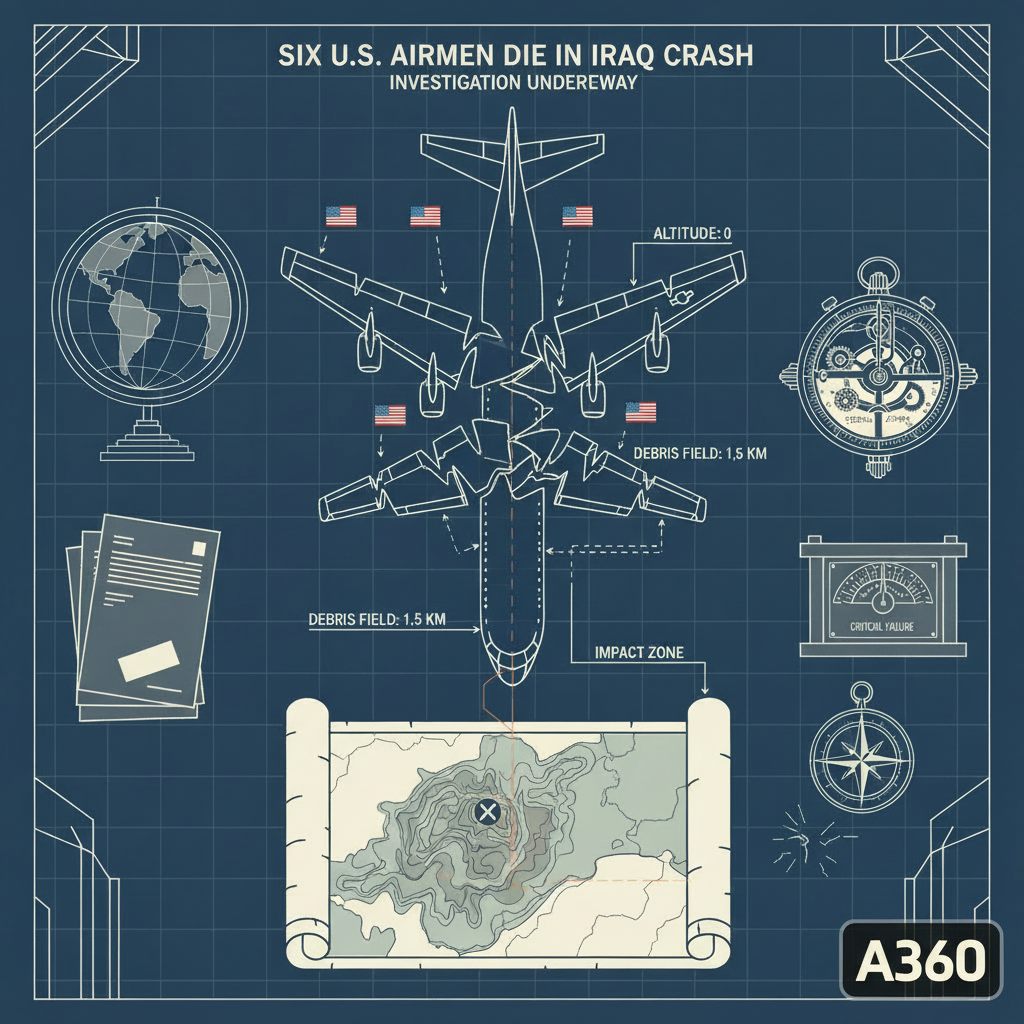
Six United States Air Force personnel died on Thursday, March 13, 2026, following the crash of a KC-135 Stratotanker refueling aircraft in western Iraq. The Pentagon confirmed the incident, stating that the crash was not caused by hostile action or friendly fire. An investigation into the circumstances surrounding the accident is currently underway.
The deceased airmen were identified by the U.S. military. Among them was Captain Ariana G. Savino, 31, from Covington, Washington, who served with the 99th Air Refueling Squadron. Captain Savino, commissioned in 2017, qualified as a KC-135 pilot in 2025 and had accumulated 348 combat hours across multiple deployments, supporting operations such as SPARTAN SHIELD, SENTINEL SENTRY, and EPIC FURY under United States Central Command.
Personnel Identified in Tragic Incident
Other service members who perished in the crash include Major John A. Klinner, 33, from Auburn, Alabama; Tech. Sgt. Tyler H. Simmons, 28, from Columbus, Ohio; Tech. Sgt. Ashley B. Pruitt, 34, from Bardstown, Kentucky; Captain Seth R. Koval, 38, from Mooresville, Indiana; and Captain Curtis J. Angst, 30, from Wilmington, Ohio. These individuals represented a significant loss to the Air Force's operational capabilities in the region.
Role of the KC-135 Stratotanker
The KC-135 Stratotanker is a critical component of the U.S. Air Force's global reach capabilities. Its primary function is aerial refueling, which significantly extends the operational range and endurance of fighter jets, bombers, and other military aircraft. This capability is vital for maintaining air superiority and projecting power in various theaters of operation, including the Middle East.
Beyond its refueling role, the KC-135 can also be configured for cargo transport and aeromedical evacuation missions. Its versatility makes it an indispensable asset for military logistics and support. The loss of such an aircraft, particularly with its experienced crew, impacts ongoing operational readiness, even if temporarily.
Ongoing Investigations and Regional Context
The U.S. military's immediate confirmation that the crash was not due to hostile fire helps to clarify the initial context of the incident, preventing speculation about potential escalations in the region. However, the investigation will focus on mechanical failure, human error, or environmental factors as potential causes. Such investigations are thorough and can take considerable time to conclude, often involving detailed analysis of flight recorders and wreckage.
This incident underscores the inherent risks associated with military operations, even those not directly involving combat. The U.S. maintains a significant military presence in Iraq and the broader Middle East, conducting various missions ranging from counter-terrorism efforts to training local forces and providing logistical support. The safety and maintenance protocols for all military assets, especially those critical to operations like the KC-135, are under constant scrutiny.
Implications
Country Impact: The incident represents a significant loss of life for the U.S. military, impacting morale and potentially prompting a review of operational safety protocols for aircrews deployed in the Middle East. It also highlights the ongoing risks associated with military presence in the region.
Industry Impact: The defense aviation sector may face increased scrutiny regarding aircraft maintenance and operational procedures, particularly for aging fleets like the KC-135. Manufacturers and service providers could see renewed emphasis on safety upgrades and training.
Market Impact: While unlikely to have a direct market impact, such incidents can subtly influence defense spending debates and public perception of military engagements, potentially affecting defense contractor stock performance if linked to broader systemic issues.