Washington weighs Beijing no-fly signal after tower crash report
A reported Chinese move to restrict airspace around Beijing after a light aircraft crash would test how Washington separates aviation safety from broader…
Lauren Collins ·
Washington weighs Beijing no-fly signal after tower crash report
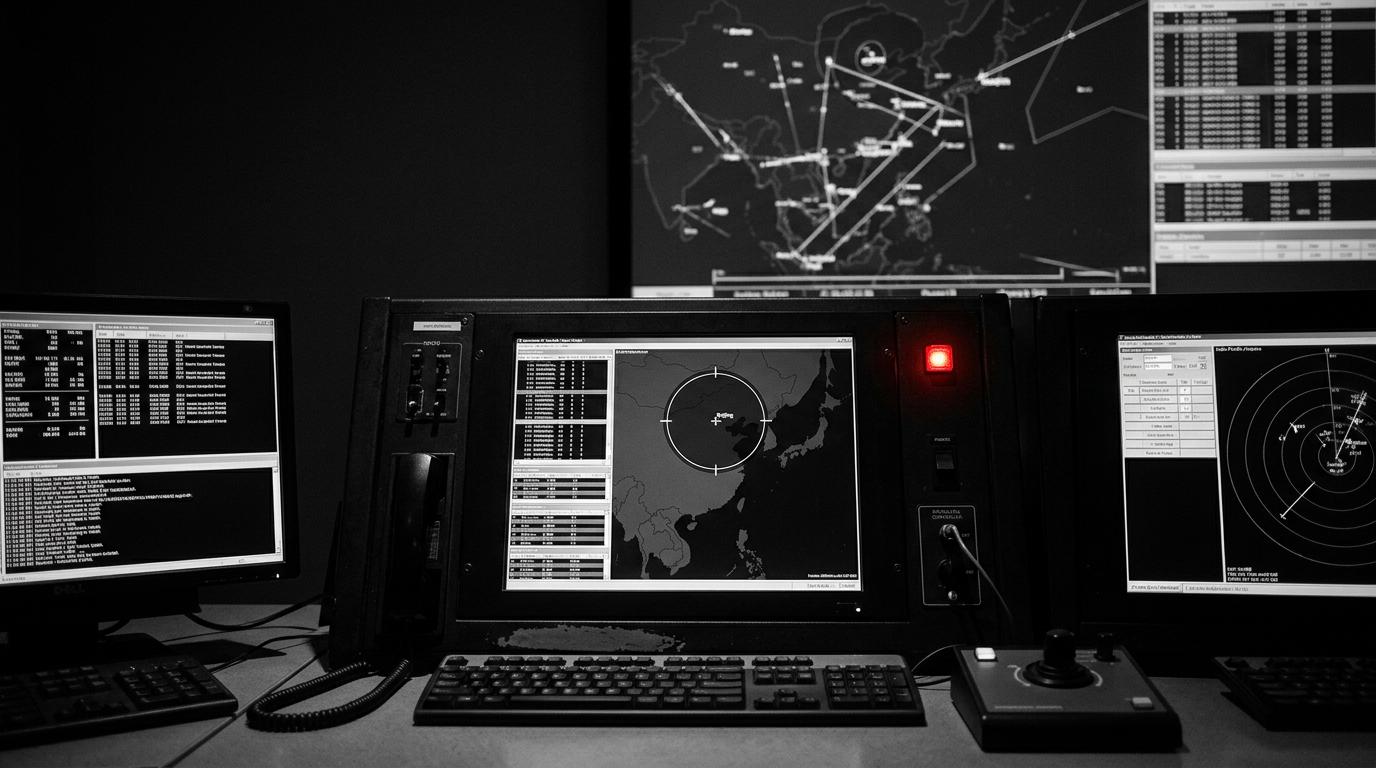
Washington entered Monday with no public U.S. response to a reported Chinese plan to impose a no-fly zone around Beijing after one light aircraft crashed into the city’s tallest tower. The immediate policy problem for the White House, State Department and Pentagon is whether Beijing treats the step as a narrow safety measure or as a precedent for broader airspace control.
The reported move matters in Washington because China’s airspace is already governed through a dense civilian-military system, with the People’s Liberation Army retaining a central role in access and allocation. If Beijing formalizes a capital-area restriction, U.S. officials and allied governments will look first at its boundaries, duration and legal label.
China has long managed its skies differently from the United States, where civil aviation authorities control most routine airspace and the military normally coordinates within that framework. In China, the Civil Aviation Administration of China operates alongside a military system that has historically held stronger authority over airspace use, especially around politically sensitive areas and major cities.
That distinction matters for the phrase “no-fly zone.” In Washington policy circles, the term often carries a military meaning, shaped by conflicts in Iraq, the Balkans and Libya, where outside powers used air patrols and threats of force to deny access to aircraft. A domestic Chinese restriction around Beijing would not automatically carry that meaning unless Beijing defines enforcement terms, publishes coordinates and connects the measure to security rather than flight safety.
White House
The United States has its own capital-area model. Washington, D.C., is protected by restricted airspace and special flight rules developed after September 11, 2001, with civil aviation, homeland security and defense agencies sharing roles. That precedent gives U.S. officials a basis to acknowledge capital security as legitimate while still pressing China to clarify scope and avoid framing the measure as a broader sovereignty claim over contested regional airspace.
For the Biden-era and Trump-era national security bureaucracy, the machinery would be familiar even if the facts are still incomplete. The National Security Council would coordinate the political message, the State Department would handle diplomatic language with Beijing and allies, and the Pentagon would assess whether regional flight operations need any adjustment. Congress could press for briefings if the Chinese declaration appears to affect U.S. carriers, allied routes or Taiwan-related deterrence messaging.
The first uncertainty is factual. The available signal points to a reported Chinese move after a crash, but it does not provide an official Chinese notice, coordinates, enforcement rules or duration. Without those details, Washington cannot know whether it is dealing with a temporary urban safety restriction, a politically framed security order or a message aimed at foreign audiences.
The second uncertainty is political. Beijing could describe the measure as routine civil aviation control after an accident, which would reduce immediate diplomatic friction. It could instead use state-linked messaging to emphasize airspace sovereignty, public order or military readiness, which would draw closer scrutiny from U.S. defense planners and Indo-Pacific allies.
If the restriction remains tightly bounded around Beijing, the macro effect would likely be limited to aviation procedures and diplomatic messaging rather than markets or military posture. The company at the center of the episode, if Chinese authorities identify the aircraft operator or tower owner, would face the direct safety and liability questions. The wider aviation sector would watch for stricter low-altitude rules, especially for small aircraft, drones and urban mobility projects.
If Beijing links the restriction to national security, the signal travels farther. Washington would likely coordinate language with Japan, Australia, the Philippines and Taiwan to avoid treating a domestic Beijing order as a template for restrictions near disputed waters or air routes. The Pentagon’s concern would be less the Beijing zone itself than any attempt to normalize more assertive airspace claims elsewhere.
Taiwan is the most sensitive parallel. China regularly uses military aircraft activity around Taiwan as a pressure tool, while the United States avoids recognizing Chinese control over the island’s surrounding international airspace. A Beijing-only order would not change that legal position, but Chinese rhetoric around it could complicate U.S. efforts to keep crisis communications narrow and precise.
Commercial aviation would read the formal
notice, not the slogan. Airlines and insurers would focus on whether routes, approach corridors, private aviation permissions or low-altitude operations are affected.
If the measure is temporary and procedural, the industry impact stays local; if it becomes part of a wider regulatory tightening, foreign operators may seek clearer advance notice from Chinese aviation authorities.
By December 13, the test is whether China issues a clearly bounded capital-area flight restriction with coordinates, duration and a stated safety rationale, followed by coordinated but measured U.S.-allied statements. That would support the view that Washington can keep the episode inside an aviation-safety frame while preserving deterrence language for Taiwan and allied routes. The call is wrong if Beijing avoids a formal declaration, or if U.S. and allied responses split into competing messages that make a local airspace issue harder to contain.