Warsh’s Jackson Hole Debut Puts Treasury Curve, September Hike in Focus
Long-term yields are elevated and futures markets remain divided over whether the Fed will raise borrowing costs next month.
Atlas Newsdesk ·
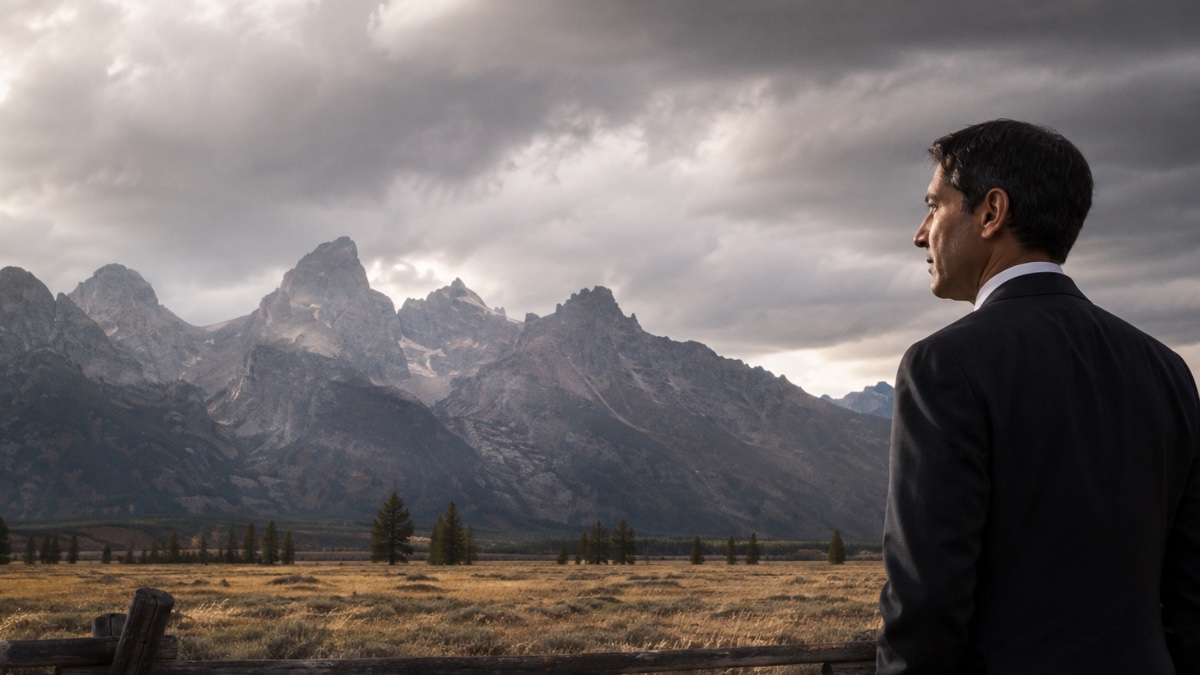
Warsh Takes the Wyoming Stage
Federal Reserve Chair Kevin Warsh will step into one of the most closely watched events on the global economic calendar Friday, Aug. 28, when he delivers keynote remarks at the Kansas City Fed’s annual Jackson Hole gathering at 10 a.m. Eastern time. It will be Warsh’s first appearance at the symposium as chairman after taking office on May 22, succeeding Jerome Powell, and his remarks will arrive just 19 days before the Fed’s Sept. 15-16 policy meeting. The conference runs Aug. 27-29 and this year centers on financial innovation and its consequences for payment systems and economic policy, although markets will be listening primarily for clues about inflation, interest rates and Warsh’s broader philosophy for running the central bank.
A 9-3 Vote Hangs Over Friday
Warsh arrives in Wyoming with a Federal Open Market Committee that has become visibly divided over how much more restraint the economy needs. At its July 28-29 meeting, the Fed kept its policy rate between 3.5% and 3.75%, but Cleveland Fed President Beth Hammack, Minneapolis Fed President Neel Kashkari and Dallas Fed President Lorie Logan opposed the decision and favored a quarter-point increase, producing a 9-3 vote. The minutes said inflation remained above the central bank’s 2% objective even as economic activity continued at a solid pace, leaving policymakers to weigh renewed price pressures against signs that demand and employment are losing momentum. As of Aug. 21, futures-derived pricing showed roughly a 38% probability of a quarter-point September increase, meaning Warsh will speak to a market that sees a hike as plausible but far from certain.
July Jobs Complicate the Inflation Story
The difficulty for Warsh is that the latest data do not point cleanly in one direction. Employers shed 23,000 jobs in July while unemployment held at 4.1%, a weak payroll reading that sharply reduced expectations for an immediate rate increase, but consumer prices were still 3.4% higher than a year earlier; excluding food and energy, CPI inflation was 2.5%. The Fed’s preferred personal-consumption price gauge presents an even less comfortable picture: June PCE inflation was running at 3.7% from a year earlier, with its core measure at 3.3%, both well above the central bank’s stated goal. Warsh therefore has to explain how the Fed intends to preserve its inflation-fighting credibility without appearing indifferent to a labor market that may be weakening faster than policymakers expected.
Treasury Yields Turn Up the Pressure
Financial markets have added another complication by pushing long-term U.S. borrowing costs sharply higher even without another Fed increase. The 10-year Treasury yield recently approached 4.70%, while the 30-year yield moved above 5%, levels that raise financing costs for mortgages, corporate investment and a federal government carrying more than $40 trillion in debt. Treasury Secretary Scott Bessent has responded by expanding government bond buybacks, but the relief in yields has proved limited, reinforcing investor concern that fiscal supply, inflation risk and uncertainty over monetary policy are combining to lift long-term rates. Warsh cannot directly control those forces, but a speech that leaves investors less certain about the Fed’s reaction to inflation could add to the risk premium already embedded in longer-dated bonds.
Five Task Forces, Less Guidance
The speech also matters because Warsh is attempting to change how the Fed communicates and potentially how it conducts policy. In July, the central bank created five outside-assisted task forces examining communications, its balance sheet, economic data, productivity and employment, and inflation frameworks, an unusually broad review only weeks into Warsh’s tenure. He has simultaneously shown less enthusiasm than recent chairs for detailed forward guidance, arguing that markets should focus more on economic fundamentals than on trying to anticipate every signal from policymakers; critics counter that less guidance can increase volatility because traders still have to infer the Fed’s intentions. That debate has consequences well beyond bond desks: banks price loans from interest-rate expectations, housing depends heavily on Treasury yields, and technology companies financing enormous AI investments are increasingly exposed to higher long-term borrowing costs.
Payments Theme Meets Global Tightening
The formal Jackson Hole agenda gives Warsh room to think beyond September because the 2026 symposium is focused on how financial innovation is changing payments and policy, a subject that fits his broader review of the Fed’s operating framework. The Kansas City Fed has hosted the gathering since 1978 and moved it to Jackson Hole in 1982, where it evolved into a meeting of central bankers, economists, government officials and market participants from around the world; the event now draws officials representing central banks from roughly 40 countries. That international audience matters because U.S. rates help set the price of dollar financing globally, while movements in Treasury yields and the dollar can tighten or loosen conditions far outside the United States. Warsh may therefore use the platform to discuss technology, productivity, balance-sheet design or central-bank communication, but investors will still translate those structural ideas into assumptions about how aggressively the Fed will respond to inflation.
Wednesday’s PCE Sets the Last Marker
Warsh will not have the luxury of finalizing his message against today’s data alone: the Bureau of Economic Analysis is scheduled to publish July personal-income, spending and PCE inflation figures at 8:30 a.m. Wednesday, Aug. 26, just two days before he speaks. A softer inflation reading would strengthen the argument for patience after July’s payroll decline, while an upside surprise could give the three July dissenters more ammunition ahead of September; either interpretation is an inference, not a predetermined Fed response. The uncertainty is especially important because the August jobs report does not arrive until Sept. 4, meaning the committee will still receive another major labor-market reading before deciding rates on Sept. 16. Whatever Warsh intends as a long-term speech, markets are likely to treat every reference to inflation, employment and policy discipline as evidence about the next meeting — making Jackson Hole an early test of whether his less prescriptive communication strategy can reduce dependence on Fed guidance without increasing confusion around it.