Supreme Court to Hear Geofence Warrant Challenge
Geofence warrants are under Supreme Court review in Chatrie v. United States, testing Fourth Amendment limits on broad smartphone location data requests.
Lauren Collins ·
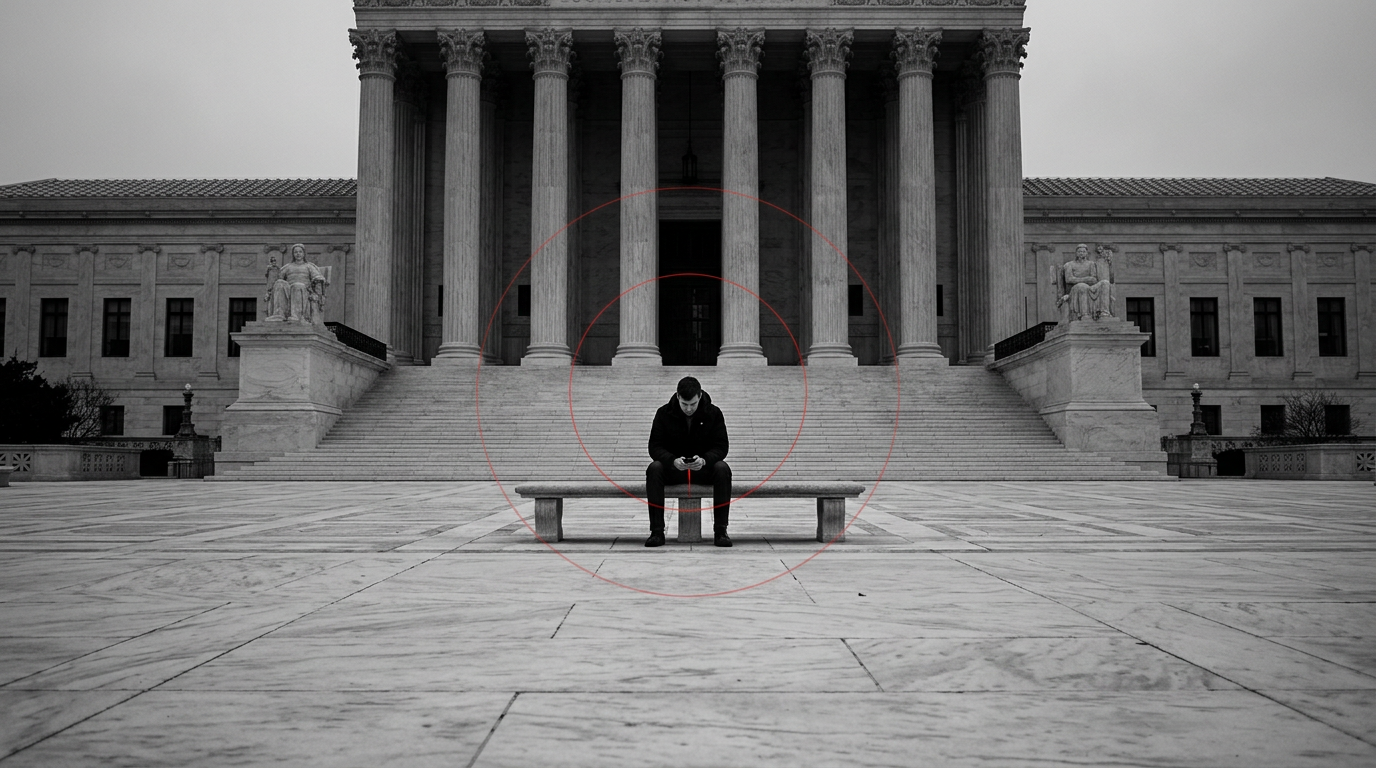
S. Supreme Court is weighing whether geofence warrants comply with the Constitution, a question that could shape how police obtain smartphone location data from technology companies. The justices heard arguments Monday in Chatrie v. United States Investigators used a geofence warrant to obtain location information that helped identify and apprehend Okello Chatrie, according to the case record described in court.
The dispute now centers on whether that method of collecting location data amounts to an unreasonable search under the Fourth Amendment.
Chatrie v. United States and the 2019 Richmond robbery
Geofence warrants are designed to pull data from all electronic devices detected within a defined geographic boundary during a specific time window. Law enforcement agencies use them when other investigative paths have not produced leads, seeking to narrow a suspect pool by reviewing which devices were present near a crime scene.
In the Richmond case, police obtained Chatrie’s location data through this type of warrant, and that information contributed to his arrest. The Supreme Court is now assessing whether the breadth of such warrants is compatible with constitutional limits on searches and seizures.
Justice Department privacy argument versus Fourth Amendment claims
The U.S. Department of Justice told the Court that people do not have a reasonable expectation of privacy in their movements in public when they carry a smartphone. The government also argued that this is especially true for users who have opted into location tracking services.
Chatrie’s lawyers countered that geofence warrants are inherently sweeping because they can capture data from many people who are not suspected of wrongdoing. They argued that collecting location information from innocent bystanders in this way violates Fourth Amendment protections against unreasonable search and seizure.
Concerns about dragnet collection and shifting data sources
Privacy advocates and legal experts have raised alarms that geofence warrants can function as a broad dragnet. Their concern is that the technique may enable surveillance of individuals who have no connection to a crime, simply because they were in the wrong place at the wrong time.
The case also arrives as companies and investigators adjust their practices. Google has changed how it stores certain location data in ways that reduce its ability to comply with some geofence warrants, according to the description of developments cited in the dispute.
At the same time, law enforcement agencies are increasingly seeking comparable location information directly from cellular providers. The Supreme Court’s eventual ruling is expected to set an important precedent for digital privacy rights as surveillance tools and data collection methods continue to evolve.