US opposition to UNIFIL extension pushes Lebanon toward UN-backed alternative
Washington’s opposition to extending UNIFIL has opened a new diplomatic track over southern Lebanon.
Lauren Collins ·
US opposition to UNIFIL extension pushes Lebanon toward UN-backed alternative
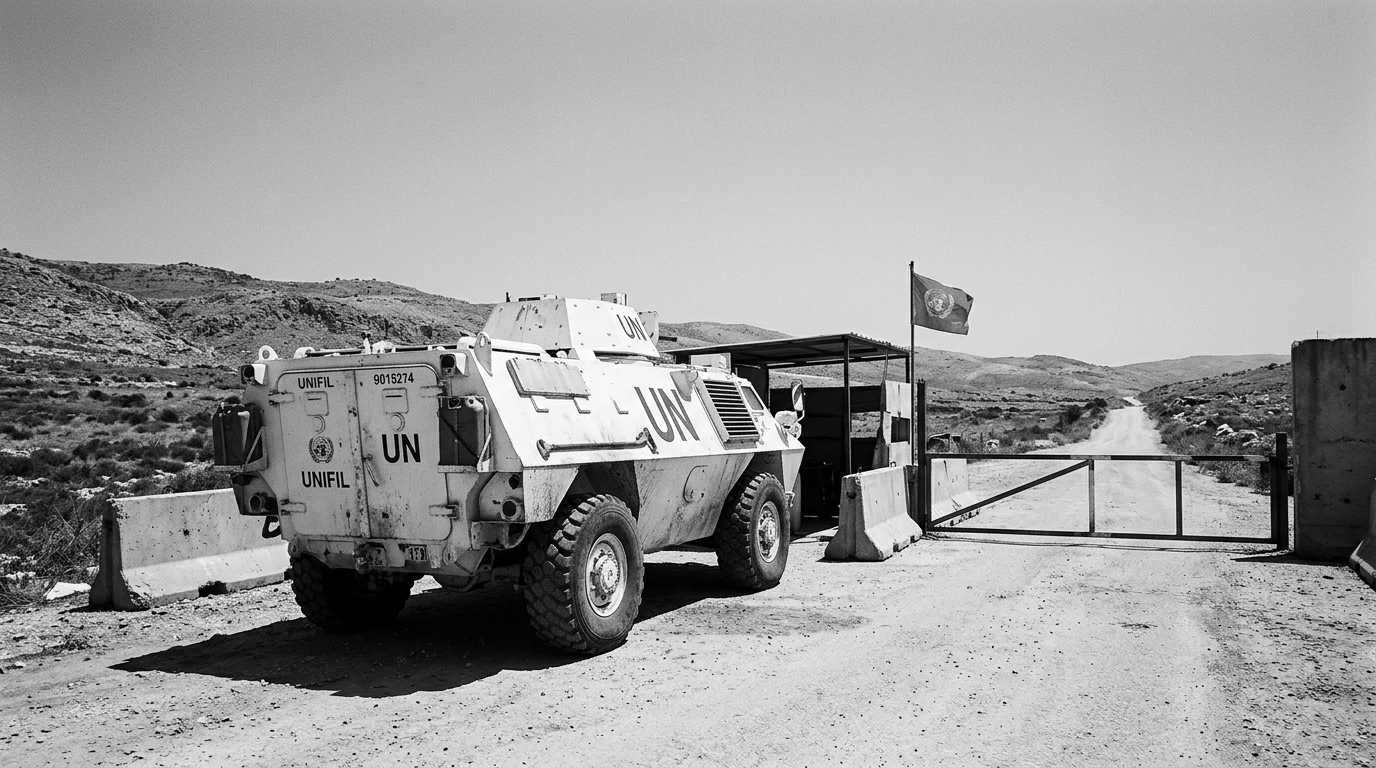
Washington has opposed extending UNIFIL’s mandate in southern Lebanon as Beirut seeks a UN-backed replacement, setting up a Security Council fight before the mission is expected to expire at the end of 2026. The dispute matters because UNIFIL is the main international mechanism tied to Resolution 1701, the 2006 framework meant to stabilize the Israel-Lebanon border after the war between Israel and Hezbollah.
For President Trump’s foreign policy team, the issue is not only whether another blue-helmet mandate survives. It is whether Washington can shift the southern Lebanon file toward a structure it sees as more useful for deterrence, border control and burden-sharing, without creating a vacuum that Hezbollah, Israel or local armed actors could exploit.
UNIFIL has operated in southern Lebanon for years as part of the UN architecture around Resolution 1701. That resolution called for a cessation of hostilities and a security zone in which the Lebanese state, supported by UN forces, would be the central armed authority south of the Litani River. In practice, the arrangement has always depended on political consent from Beirut, cooperation from the Lebanese Armed Forces and restraint by Israel and Hezbollah.
The mandate has become harder to defend in Washington because critics see the force as costly and limited, while supporters argue that even an imperfect mission provides channels, patrols and reporting that can reduce miscalculation. The United States has leverage because Security Council mandates require diplomatic support and because Washington is central to UN funding debates, congressional oversight and regional security planning.
Any replacement would have to define who commands
Lebanon’s push for a UN-backed replacement reflects a different political calculation. Beirut wants international legitimacy and cost-sharing, but it also has to avoid appearing to invite an outside force that overrides Lebanese sovereignty. Any replacement would have to define who commands it, how it coordinates with the Lebanese Armed Forces, what its rules of engagement allow and how it handles areas where Hezbollah retains influence.
That makes the next stage a Washington problem as much as a UN problem. The State Department would normally drive Security Council diplomacy with partners, the National Security Council would coordinate policy across agencies and the Pentagon would assess risks for US personnel, partners and regional posture. Congress would then weigh funding, restrictions and oversight, especially if a new mission requires American money or indirect security commitments.
The French role will also matter. France has long treated Lebanon as a priority file and is likely to be part of any serious discussion on a successor arrangement. If Washington and Paris align on a new framework, Beirut gains a more credible diplomatic path. If they diverge, Lebanon’s proposal could become another statement of preference rather than a workable mandate.
The core issue is Hezbollah. A replacement force that looks stronger on paper but lacks access, intelligence-sharing and political backing could inherit UNIFIL’s weaknesses. A smaller or looser arrangement could reduce costs but leave fewer buffers along a border where tactical incidents can move quickly into wider escalation.
Washington’s opposition to a straight extension suggests the administration wants more than procedural renewal. It may seek a narrower mandate, a different multinational format, greater Lebanese security-force responsibility or clearer benchmarks tied to border calm. None of those options works unless Security Council members, troop contributors and Lebanon’s government agree on the mission’s legal basis.
For Beirut, timing is difficult. Lebanon needs outside support, but it also has to manage domestic politics around Hezbollah and the Lebanese Armed Forces. A replacement mission that appears designed mainly in Washington could face resistance. A mission that is too deferential to local constraints may fail to satisfy the United States.
The regional stakes are broader than Lebanon.
If the border mechanism weakens, Israel may rely more heavily on unilateral military pressure. Hezbollah may test limits if it reads the transition as confusion. Gulf states and European governments would watch for signs that Lebanon is drifting toward another security vacuum, which could affect aid flows, refugee policy and diplomatic engagement.
The macro channel is indirect but real. A stable southern Lebanon reduces one source of Middle East risk that can feed energy-market anxiety and shipping-risk pricing. A failed transition would not by itself determine oil prices or global inflation, but it would add another variable to a region already sensitive to military escalation and US security commitments.
By December 14, 2026, the clearest test will be whether a new Security Council draft, a high-level US statement or a Lebanese government plan identifies a replacement mission with a mandate, funding route and lead participants. If that happens, Washington can argue it has converted opposition to renewal into a more disciplined stabilization framework, with lower escalation risk for the region and a clearer burden-sharing model for partners. If no such plan emerges, the choices narrow to a renewed UNIFIL mandate, a vetoed or lapsed mission, or an improvised multinational effort with uncertain authority, each of which would leave southern Lebanon more exposed to miscalculation and congressional scrutiny in Washington.