Musk’s Merger Hint Puts a Fundamental Tesla Re-Rating on the Table
Elon Musk's strongest statements yet on a Tesla-SpaceX merger force investors to consider a radical shift in Tesla's business model, valuation, and risk…
Jurgen Goldmeier ·
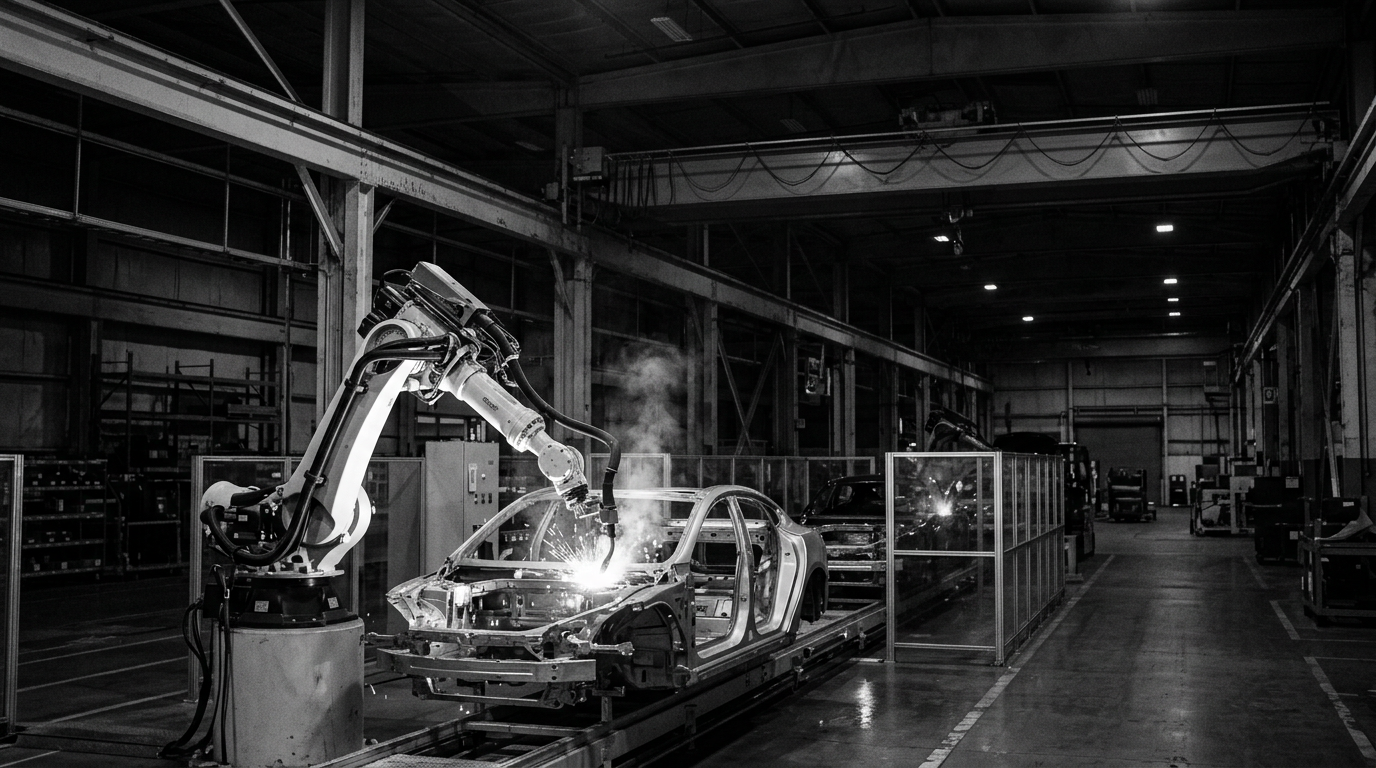
Musk’s Merger Hint Puts a Fundamental Tesla Re-Rating on the Table CEO Elon Musk’s recent public statements, described as his strongest hints yet about combining Tesla with SpaceX, have introduced a significant new variable for Tesla shareholders. The long-rumored merger would fundamentally alter Tesla's business from a high-growth automaker and energy company into a sprawling industrial conglomerate with assets in space launch and satellite internet, forcing a complete re-underwriting of the stock. ## Background Tesla currently trades at a high multiple—its share price relative to its earnings per share (EPS)—based on expectations of sustained growth in its electric vehicle and energy storage divisions. Yet the tape shows the stock has been under pressure amid rising EV competition and questions about global demand. Positioning ahead of this commentary has been split, with significant short interest balanced by a large institutional and retail base committed to the company's long-term technology roadmap, which management frames around autonomous driving and robotics. SpaceX, by contrast, is a private entity valued in the hundreds of billions during its last funding round. Its value is driven by its near-monopolistic position in Western launch services and the massive, capital-intensive rollout of its Starlink satellite internet service. Unlike Tesla, its financials are not public, and its business is asset-heavy. Its most ambitious project, Starship, carries enormous long-term technical and financial risk, funded by private capital with a much longer time horizon than public market investors. ## Why it matters A merger would force a complete re-evaluation of Tesla. The combined entity’s financial profile, capital structure, and risk exposure would be unrecognizable to an investor focused on the automotive sector. This is not just about adding new revenue streams; it’s about combining a public company that must answer to quarterly earnings pressure with a private one that burns cash on decades-long projects. Hypothetical synergies, such as integrating Starlink into vehicles or sharing materials science, would be weighed against the massive, ongoing capital requirements for Starship and Starlink and the complexities of integrating two vastly different corporate cultures. Investors holding Tesla for its comparatively straightforward, albeit high-growth, automotive and energy narrative would be on the wrong side of such a change. Their position would be diluted by the inclusion of a speculative, capital-intensive space business with a different risk profile and cash flow horizon. Conversely, short-sellers betting against Tesla based on automotive-sector fundamentals could be forced to cover. A merger would introduce the growth narrative and scarcity value of SpaceX, making the combined entity a fundamentally different, and harder, company to value and bet against. ## What to watch The key observable is any formal announcement or SEC filing from either Tesla or SpaceX concerning merger discussions. Absent a formal move, further concrete public statements from Musk confirming exploratory work would serve as a catalyst. The market will look for this by July 31, 2024. A formal proposal viewed as accretive, with a clear strategic rationale and a valuation of SpaceX seen as fair by the market, would likely force an upward re-rating of Tesla shares. If the hints fade, or a proposal surfaces that suggests heavy dilution for existing Tesla holders without a clear path to combined profitability, the added uncertainty could weigh heavily on the stock.