US Destroyers Enter Hormuz for Mine-Clearing Drills
U.S. destroyers transited Hormuz on Saturday to start mine-clearing after mine assessments; shipping remains low despite a ceasefire.
Lauren Collins ·
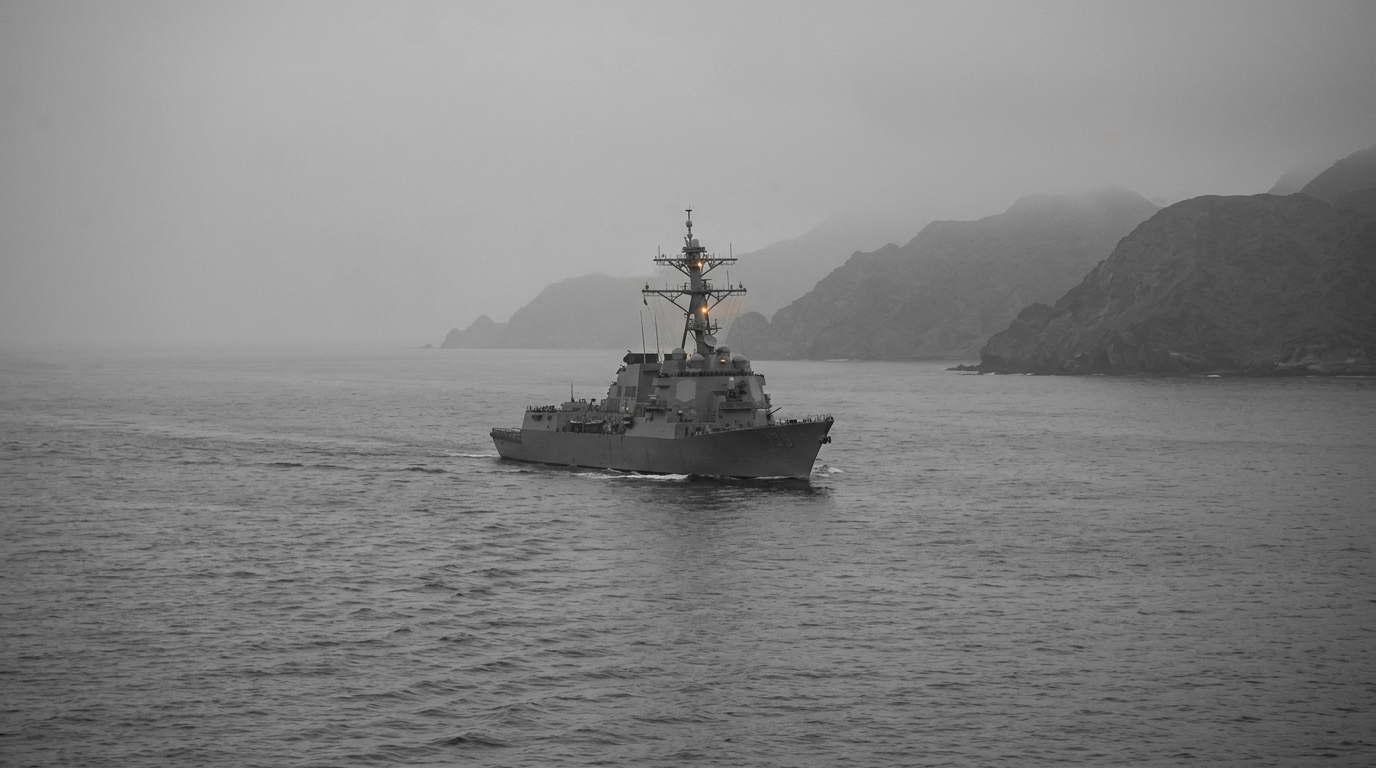
Two U.S. Navy destroyers operating under U.S. Central Command (CENTCOM) transited the Strait of Hormuz on Saturday to begin mine-clearing operations in the waterway, according to the information provided. The move comes after intelligence assessments indicated that at least a dozen underwater mines had been placed, contributing to a severe disruption in maritime traffic that has lasted six weeks.
The mines cited in the assessments include Iranian-manufactured Maham 3 and Maham 7 devices. The stated objective of the U.S. deployment is to re-establish safe passage through the Strait of Hormuz, described as a critical chokepoint for about 20% of the world’s oil supply. The clearance effort is expected to expand, with additional U.S. forces, including underwater drones, slated to join in the coming days.
The operation is unfolding alongside diplomatic activity. Direct trilateral talks involving the U.S., Iran, and Pakistan are taking place in Islamabad, and the discussions were described as the first face-to-face meeting between U.S. and Iranian officials since 1979. The timing links maritime security actions in the Gulf with parallel political engagement, even as the situation at sea remains constrained.
Despite a two-week ceasefire established on Tuesday, marine transit data indicates commercial shipping through the Strait remains low. The continued weakness in traffic suggests that restoring confidence and normal operating patterns may take time even if mine-clearing progresses. The information provided also notes that the disruption has already been prolonged, with six weeks of severely affected maritime movement.
Analysts cited in the material project that global oil supply disruptions could persist for several months, even if normal traffic resumes. The reasons given are practical and operational: damaged energy infrastructure may require time to repair, and shipping companies may need additional time to reactivate operations in the region.
For global markets, the Strait’s role in oil flows makes the pace and effectiveness of clearance operations closely watched by energy traders, shipping firms, and governments reliant on stable supply routes.