U.S. jobs report shows June payrolls cooling as wages rise
The U.S. jobs report showed 57,000 June payroll gains, 4.2% unemployment and sector splits that point to softer labor demand.
Atlas Newsdesk ·
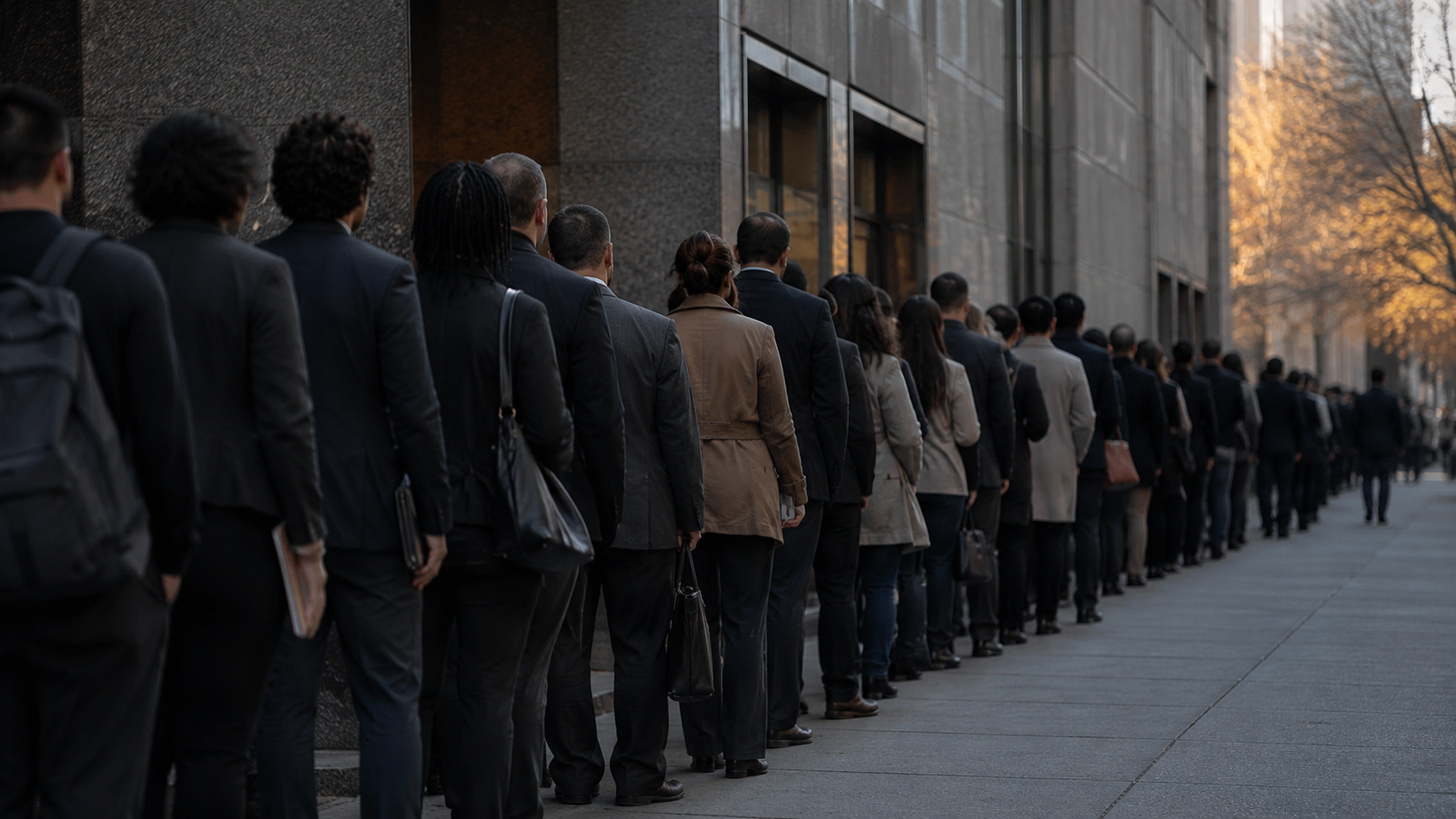
The U.S. jobs report showed payrolls rose by 57,000 in June, with unemployment at 4.2% and hiring concentrated in services.
The U.S. Bureau of Labor Statistics said the headline labor measures moved only slightly, but the mix underneath was less even. Professional and business services, social assistance and health care added jobs, while leisure and hospitality cut payrolls.
June hiring narrows
The 57,000 gain in total nonfarm payrolls was close to the 36,000 average monthly increase over the prior 12 months, according to the agency. The report also lowered earlier estimates: April was revised down by 31,000 to 148,000, and May was revised down by 43,000 to 129,000.
Together, those revisions removed 74,000 jobs from the previously reported April and May totals. Revisions are a routine part of the payroll process, reflecting later reports from businesses and government agencies as well as recalculated seasonal factors.
The household survey showed 7.1 million unemployed people in June, little changed from May and from a year earlier. The unemployment rate was 3.9% for adult men, 3.7% for adult women, 14.6% for teenagers, 3.6% for White workers, 6.6% for Black workers, 3.9% for Asian workers and 5.2% for Hispanic workers.
Services carry payroll gains
Professional and business services added 36,000 jobs in June, extending a recovery from a recent low in October 2025. The industry has gained 172,000 positions since that point, making it one of the main supports for payroll growth.
Social assistance increased employment by 25,000, led by a 17,000 gain in individual and family services. The sector had averaged 16,000 jobs a month over the previous 12 months, so June’s rise came in above that recent pace.
Health care added 22,000 jobs, still positive but below its 38,000 average monthly gain over the preceding year. Hospitals accounted for 9,000 of the increase, while the broader sector remained a steady source of labor demand.
Leisure and hospitality moved in the other direction, shedding 61,000 jobs as seasonal hiring came in weaker than usual. The industry has posted little net change so far in 2026, a sign that demand for labor in restaurants, hotels and entertainment has not matched the strength seen in other service categories.
Workers stay on the margins
The labor force participation rate fell 0.3 percentage point to 61.5%, and the employment-population ratio slipped 0.2 percentage point to 59.0%. Both readings were little changed over the year after annual population control adjustments, the agency said.
Long-term unemployment remained a pressure point even as the headline jobless rate held steady. The number of people out of work for 27 weeks or more was 1.9 million in June, up 286,000 from a year earlier, and represented 27.3% of all unemployed workers.
Other measures showed limited movement but still pointed to slack outside the headline rate. The number of people working part time for economic reasons was 4.7 million, while 6.0 million people outside the labor force said they wanted a job but were not counted as unemployed.
Among those outside the labor force who wanted work, 1.8 million were marginally attached, meaning they had searched sometime in the prior 12 months but not in the four weeks before the survey. Discouraged workers, who believed no jobs were available for them, were essentially unchanged at 477,000.
Wages rise as hours stall
Average hourly earnings for all employees on private nonfarm payrolls rose 13 cents, or 0.3%, to $37.64 in June. Over 12 months, pay increased 3.5%, while production and nonsupervisory workers earned an average $32.38 after a 7-cent monthly gain.
The average workweek for all private-sector employees held at 34.3 hours. In manufacturing, the workweek edged down to 40.3 hours, while overtime rose to 3.2 hours.
If payroll growth remains concentrated in a few service industries, the broader economy would depend more heavily on health care, social assistance and business services to absorb workers. That path would support the U.S. labor market but leave leisure employers and lower-hours workers more exposed.
If leisure and hospitality weakness spreads to other major sectors, the payroll slowdown could become more visible in wages, hours and participation. If instead June proves to be a seasonal soft patch, steady earnings growth and contained unemployment would point to a labor market cooling without a sharp break.